
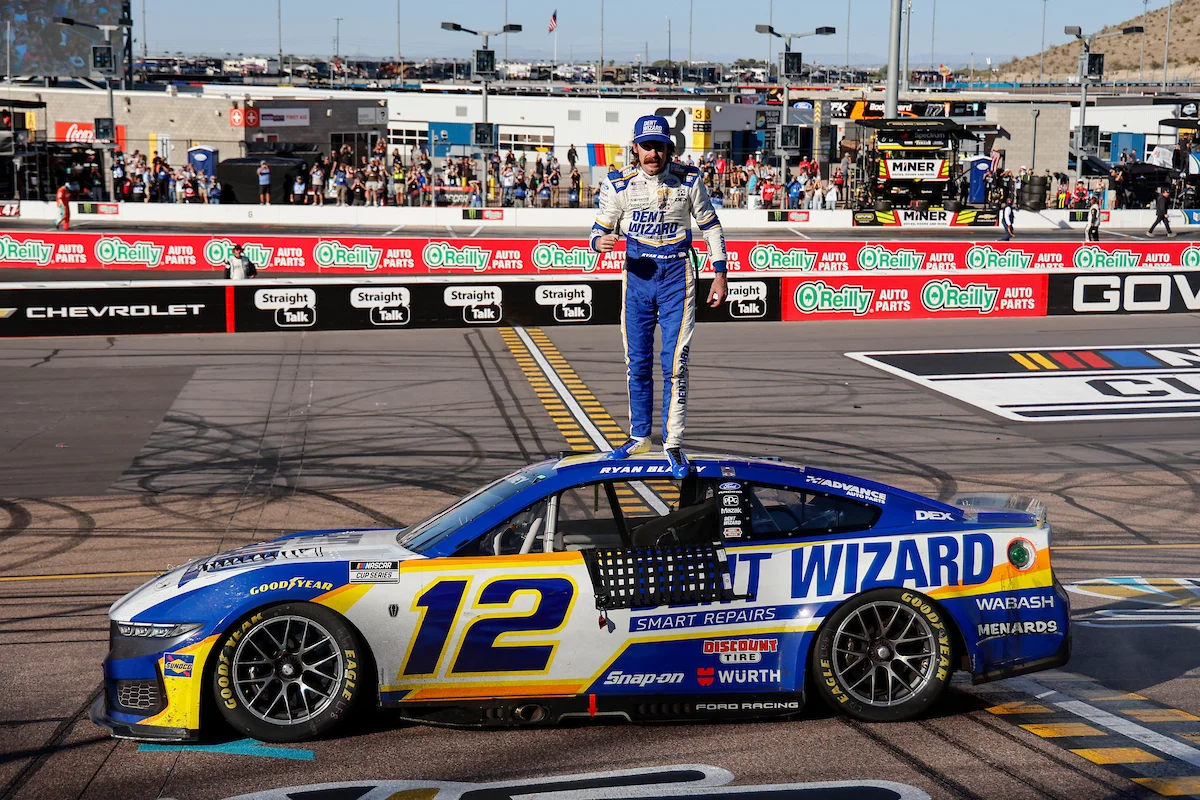
Ryan Blaney claimed victory in the Straight Talk Wireless 500 at Phoenix Raceway in Avondale, Arizona, marking a significant moment not only for him but for NASCAR’s competitive landscape. His win, powered by the Team Penske No. 12 car, showcased the impact of NASCAR’s updated 750-horsepower package and Goodyear’s tire advancements on this challenging one-mile oval course.
Blaney’s triumph was remarkable because he recovered from setbacks on pit road that required him to move from the back of the field to the front, demonstrating the improved competitiveness and balance the current rules package brings to the sport. The performance showed how NASCAR’s deliberate adjustments on power and tire grip have transformed racing dynamics at Phoenix.
Innovations in Car Performance and Tire Technology
The race at Phoenix was widely regarded as the best in the history of the seventh-generation car’s competition on this layout, underscoring months of development in car packages and tire performance. Previously, the NextGen cars struggled on such short tracks due to limited power and excessive grip combined with aerodynamic factors, which made overtaking and long runs challenging.
With Goodyear’s tire improvements and the introduction of higher horsepower, the cars responded differently on the track, offering drivers new opportunities to manage speed and tire wear strategically throughout the race. This evolution elevated the quality of the race and renewed confidence in the Phoenix Raceway as a competitive venue.
Blaney praised the tires:
“I thought it wore really good. You could make it angry and pay a penalty for it at the end of the run. I thought that added horsepower stepped that up, too. You could really buzz the right rear if you weren’t careful.”
— Ryan Blaney, driver
Strategic Variations Amid Tight Competition
The improvements meant that drivers had to balance aggression with tire conservation as cars frequently spread across the racing surface seeking speed advantages and handling tire degradation. Despite dirty air affecting some attempts to pass, it was manageable and allowed multiple viable strategies, especially toward the race’s conclusion.
Crew chiefs faced critical decisions about whether to take two or four tires during pit stops, with the two-tire strategy ultimately prevailing. Christopher Bell, who finished close behind Blaney, acknowledged this dynamic and reflected on the horsepower boost’s significance:
“I thought the racing was great. The horsepower was really, really necessary and I would love to keep bumping it up. This really put it in the drivers’ hands and the teams’ hands. You saw Blaney be able to work his way back a couple of times. I ended up in the back once and the cream was able to rise to the top.”
— Christopher Bell, driver
“More horsepower is a lot better.”
— Christopher Bell, driver
While the race experienced several tire failures, resulting in multiple cautions, these incidents reflected the high-risk strategies teams employed trying to push tire limits in this tightly controlled spec car era.
Drivers Credit Tire Performance for the Race’s Quality
Denny Hamlin commended Goodyear’s tires after the event, emphasizing how they empowered drivers to control their racing fate:
“It really allows the drivers and teams to be in control of their destiny. It’s always going to be a battle of how far can you push it. I thought the racing was great and overall, a lot of cautions because restarts, and people getting into each other. That’s part of it.”
— Denny Hamlin, driver
Echoing Hamlin, Blaney dismissed criticism related to tire blowouts, attributing failures mostly to teams’ attempts to lower air pressure dangerously for speed advantages:
“As far as the tire failures go, that’s just people pushing air pressure. When tires wear out a lot, people are going to push air pressure. How low can we get? You’re going to see blowouts. What’s the basement without having a problem?”
— Ryan Blaney, driver
The Final Laps and Tactical Gambles
The closing stages highlighted multiple storylines as nearly ten teams found different strategies that had the potential to work. Blaney and Ty Gibbs opted for two tires late in the race to maintain cleaner air and track position, with Blaney’s move prevailing in the intense battle against Gibbs. Conversely, Bell took four tires but fell just short, missing a crucial opportunity to overtake Kyle Larson one lap earlier or push the race one lap farther.
This diversity of strategy and the ability to come from deep in the pack exemplified the progress NASCAR has made in creating more exciting and unpredictable races, especially on tracks like Phoenix, where winning was often limited to drivers who started at the front.
A Milestone Victory on a Personal Level
Beyond the technical achievements and team efforts, Blaney’s win carried extra meaning as his first as a father. Although his wife Gianna and their son Charley were not present, their importance to him was clear:
“Looking forward to getting home tonight and seeing them. It just changes your perspective. Whenever I get home Sunday nights and see her and him, it just completely changes everything.”
— Ryan Blaney, driver
“For days like today, it’s just the cherry on top. Really, really lucky to have a healthy son and a healthy wife. Hopefully we can do it at some point where they’re here. Yeah, pretty cool.”
— Ryan Blaney, driver
This victory not only underscores the rising competitive balance in NASCAR but also humanizes one of its top drivers, adding a poignant layer to the high-stakes environment of professional racing. As teams and NASCAR continue refining car setups and race conditions, the Phoenix win serves as a beacon for potential shifts in dominance and thrilling finishes ahead.
