
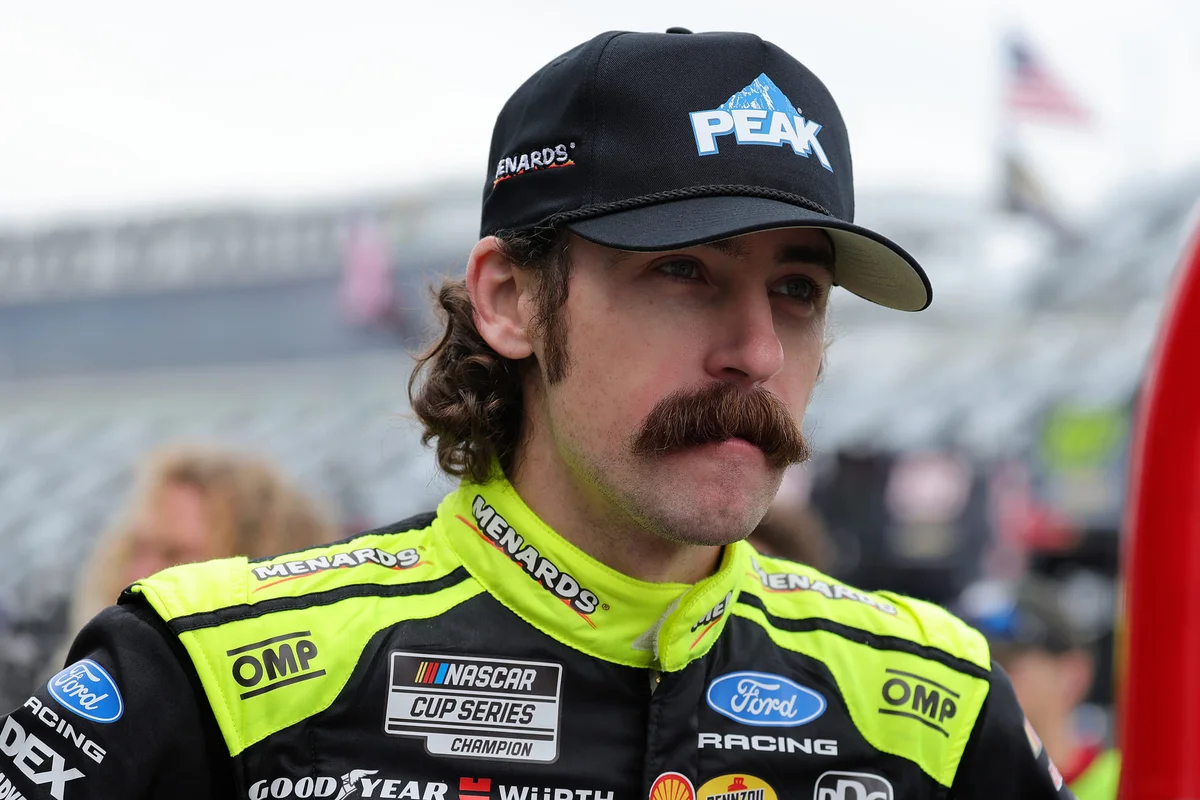
Starting in fifth position, Ryan Blaney maneuvered through the field twice during the race at Phoenix Raceway to secure his second consecutive win at the venue. This spring victory stands out as the entire Team Penske was present during the inaugural NASCAR and IndyCar doubleheader on an oval track, highlighting the significance of the moment. Blaney’s performance was a defining factor in a weekend marked by intense competition and strategic gambles.
Early Race Developments and On-Track Incidents
Despite teammate Joey Logano beginning on pole position, Blaney was not initially the front-runner for Team Penske’s success. Logano’s day was hampered by repeated loose wheel issues and a series of accidents. In one incident, Logano inadvertently caused Ross Chastain to spin into Anthony Alfredo and fellow teammate Austin Cindric, forcing both Alfredo and Cindric out of the race. Shortly after, Logano was involved in another accident after crossing in front of AJ Allmendinger, which resulted in a multi-car collision collecting Josh Berry and Daniel Suarez.
Dominance and Strategy from Christopher Bell
While Blaney faced challenges, Christopher Bell of Joe Gibbs Racing (JGR) emerged as the race’s early leader, seemingly on track to claim a third consecutive Spring Phoenix victory. Bell stretched a solid lead over Ty Gibbs, with Blaney engaged in a tight battle alongside Kyle Larson and Tyler Reddick, who was aiming for a fourth consecutive win. Bell’s strong position put pressure on other competitors as the race progressed into its later stages.
Crucial Pit Decisions and Final Restarts Shape the Outcome
Blaney’s path to victory was impeded during the final stage after being held up on two restarts, once from the front row and again while contending with Reddick and Larson. Meanwhile, Bell pulled ahead with a three-second advantage. However, key decisions on the last pit stop before the penultimate restart influenced the race’s conclusion. Both Ty Gibbs and Blaney opted for two tires, maintaining their positions on the front row, while Bell gambled on taking four tires to attempt to charge through the field. Bell advanced to second but was unable to surpass Blaney, who swiftly moved past Gibbs and took the lead with ten laps remaining, holding on for the win.
Championship Implications and Team Penske’s Historic Weekend
This victory elevated Blaney to second place in the championship standings, narrowing Tyler Reddick’s lead to 60 points. Notably, Reddick’s streak ended, but his consistency remained impressive as the only driver to finish every race in the top ten, securing eighth place at Phoenix. Blaney’s triumph this weekend was particularly notable as he shared the spotlight with teammate Josef Newgarden, who won the Saturday IndyCar race, underscoring Team Penske’s strong performance during their 60th year in motorsports under Roger Penske’s leadership.
Broader Race Results and Remarks from Top Drivers
Christopher Bell finished second, followed by Kyle Larson in third. Larson acknowledged that without strategic calls on tires and pit lane gambles, his team would not contend for a win at Phoenix. Ty Gibbs and Denny Hamlin completed the top five, while Bubba Wallace, William Byron, Tyler Reddick, Michael McDowell, and Erik Jones rounded out the top ten. Shane van Gisbergen demonstrated resilience by recovering from two crashes to finish 11th, showcasing determination despite setbacks.
Significance of Blaney’s Phoenix Victory Within the Season
Blaney’s win at Phoenix marks a shift in the competitive landscape, as his improved standing and strong finish signal mounting pressure on the championship leader. The race illustrated the unforgiving nature of NASCAR’s spring schedule, where split-second decisions and on-track battles can make or break a driver’s championship hopes. With Team Penske’s sweep of both NASCAR and IndyCar events at Phoenix, the weekend stands as a milestone in motorsports history, with momentum now firmly in favor of drivers like Blaney who have capitalized on their opportunities.
