
After the Daytona 500 at Daytona International Speedway on February 15, 2026, NASCAR Cup Series driver Ryan Blaney openly criticized the prevalent fuel-saving strategies used during races. Speaking on SiriusXM NASCAR Radio, the Team Penske driver explained how fuel-saving has shifted the focus away from pure racing, impacting the competitiveness and excitement of the sport.
Blaney emphasized that drivers often throttle back to only 50 to 70 percent capacity and slow their pace significantly to conserve fuel, which reduces genuine racing action. This approach results in drivers riding in packs while calculating fuel consumption rather than pushing full speed, which he finds frustrating.
Concerns Over Racing Losing Its Competitive Edge
Blaney expressed strong dissatisfaction with how fuel-saving affects the Saturday speedway events, asserting that it takes away from the true spirit of racing. He criticized the tactic, stating:
“I want that to change. I hate that. That’s a thing and a topic we talk about, because it takes away from the racing aspect of it. Like, at that point we’re not really racing. It’s just fuel saving, riding in line, and waiting for the green flag stop, and you hope you saved more than the others and executed more than the other guys around you.”
While acknowledging the difficulty of finding an immediate remedy to this issue, Blaney highlighted how the situation especially disadvantaged drivers running further back in the pack, including himself:
“So, and I don’t know what a fix is; I don’t have a solution today for what the fix would be on that side of it, but yeah, that definitely stunk for the guys that were in the back, like us, but because I wasn’t really calling anybody out over it, but I just wanted to point out the unfortunate situation, that kind of evolved,” he concluded.
Daytona 500 Outcome Affected by Late-Race Crash
Ryan Blaney began the 2026 Daytona 500 from a strong starting position, qualifying fifth. However, a major crash triggered by Justin Allgaier blocking Denny Hamlin late in the race unfortunately involved Blaney, causing him to finish in 27th place. This incident underscored the unpredictable and often harsh nature of superspeedway racing.
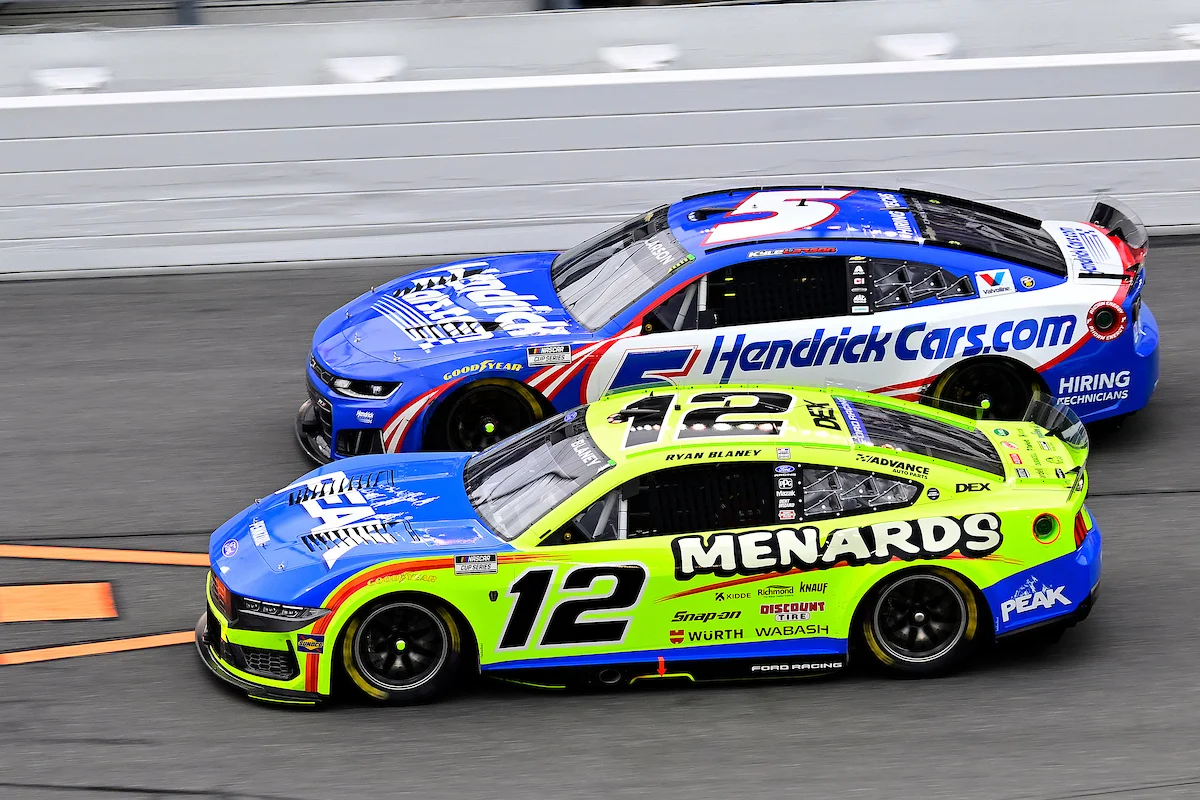
Blaney’s Victory and Connection to a “Cursed” Paint Scheme
Looking back at the 2025 season, Blaney captured his second win at the Coke Zero Sugar 400, also held at Daytona International Speedway. This victory was notable as he celebrated with victory lap donuts in his Ford Mustang Dark Horse carrying a distinctive black Advance Auto Parts paint scheme, which fans have dubbed “cursed” due to repeated misfortunes experienced while using it.
Despite usually refraining from elaborate celebrations, Blaney performed a rare burnout because of the special significance the win held with this paint scheme. He recalled the moment, sharing:
“Also, I mainly did it for Advance Auto Parts because that paint scheme at speedways has been cursed. I’ve gotten right hooked with that scheme more times than I can count. The CEO, Shane (O’Kelly), told me, ‘I think we’ve paid our dues with that paint scheme at speedways.'”
Challenges and Competition Beyond Daytona
Following the momentum from his Daytona success, Ryan Blaney faced challenges later in the season, including the loss of his winning streak at Martinsville Speedway in the fall. That event was won by Hendrick Motorsports driver William Byron, who then secured a position in the Championship 4 race at Phoenix, illustrating the intense competition present throughout the season.
Implications for NASCAR’s Future and Fans
Ryan Blaney’s critique of fuel-saving highlights a growing concern among drivers and fans about how strategic conservatism may be diminishing the excitement and authenticity of NASCAR superspeedway racing. As drivers adjust to balance fuel management with competitiveness, the sport faces pressure to explore changes that could restore more aggressive, wheel-to-wheel competition. How NASCAR and its teams respond in upcoming seasons will be critical in shaping the future spectacle of races, particularly on high-speed oval tracks like Daytona and Martinsville.
https://twitter.com/SiriusXMNASCAR/status/2024177945158266955
