
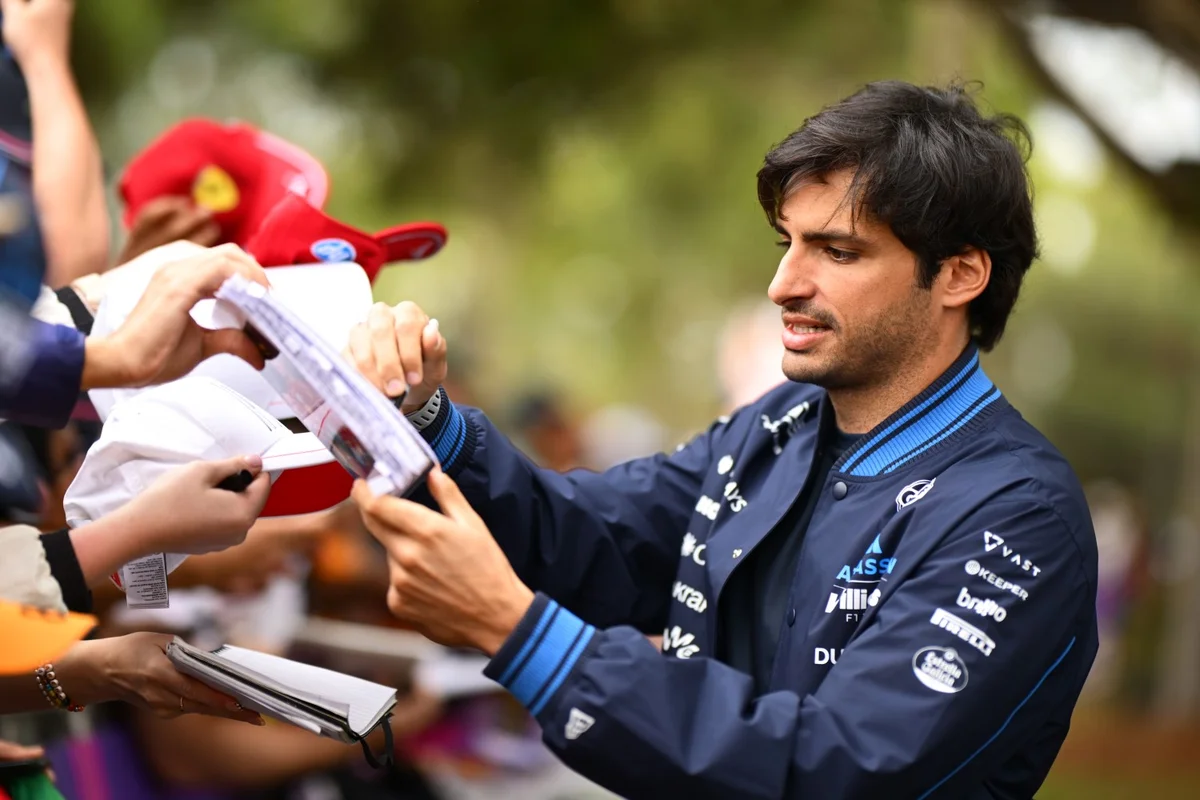
During the Australian Grand Prix, Williams driver Carlos Sainz encountered significant difficulties caused by a malfunctioning front wing, affecting his race performance. Despite starting from the back of the grid, Sainz’s front wing issues undermined his efforts to gain positions, highlighting ongoing struggles within the team early in the 2026 Formula 1 season.
Williams’ season began on a weak footing, with the car reportedly overweight compared to rivals, compounded by the team missing the Barcelona shakedown—a vital preparation event. Amid Aston Martin’s visible pre-season troubles, Williams’ poor form went largely unnoticed, but the Australian race underscored the depth of their problems.
How the Front Wing Replacement Impacted Sainz’s Performance
F1 analyst Ted Kravitz reflected on Williams’ performance, describing the weekend as a “downer” and noting the frustration of both Williams drivers. Sainz finished 15th, while teammate Alex Albon placed 12th, neither scoring points despite strategic pit stops during the virtual safety car period.
Kravitz highlighted the front wing issue as a crucial factor:
“Carlos said, ‘I can’t race like this.’”
Sainz had to replace the front wing flap actuator after diagnosing a faulty active aero mode on the front wing, which had severely compromised his car’s aerodynamic balance. This fix came at the cost of losing valuable race time.
Carlos said, “I can’t race like this.”
Sainz
So, that’s why they changed it. But he did lose a lot of race time.
Ted Kravitz, F1 analyst
Sainz’s Race Start Showed Promise Despite Setbacks
Although Sainz began the race from the last row, his start was impressive as he moved up to 12th position before the first corner. This surge notably surpassed expectations, even overtaking contenders like Max Verstappen, who struggled to charge his battery at the race’s outset.
However, the initial progress was disrupted by the persistent aerodynamic problems. Sainz explained in his post-race debrief that the front wing issue was not new and had caused a substantial loss of aero balance, resulting in increased understeer and accelerated tire degradation throughout the race.
We’ve got homework ahead of us, but I trust we can put together a good plan to make those improvements.
Carlos Sainz, Williams driver
This ongoing issue transformed the Australian Grand Prix into more of a test session for Williams, with the team needing urgent technical resolutions if they aim to improve their competitive position in the short term.
Williams’ Prospects After Melbourne and the Need for Rapid Improvement
The Australian Grand Prix exposed the severity of Williams’ technical woes early in the season. With Carlos Sainz and Alex Albon both expressing clear dissatisfaction, the team faces pressure to rethink its strategies and engineering solutions. Maintaining their standing as the fifth-best constructor will demand meaningful changes.
Ted Kravitz emphasized that unless significant developments occur, Williams’ ambitions for the season are at risk:
“So, something drastic is needed, I think, at Williams if they’re to stay in this lofty position of fifth in the constructors.”
Williams’ struggles in Australia not only affected their drivers’ race outcomes but also underscored the critical impact of aerodynamic functionality, specifically the front wing, on competitive performance. How swiftly the team addresses these issues could shape their trajectory for the remainder of the championship.
