
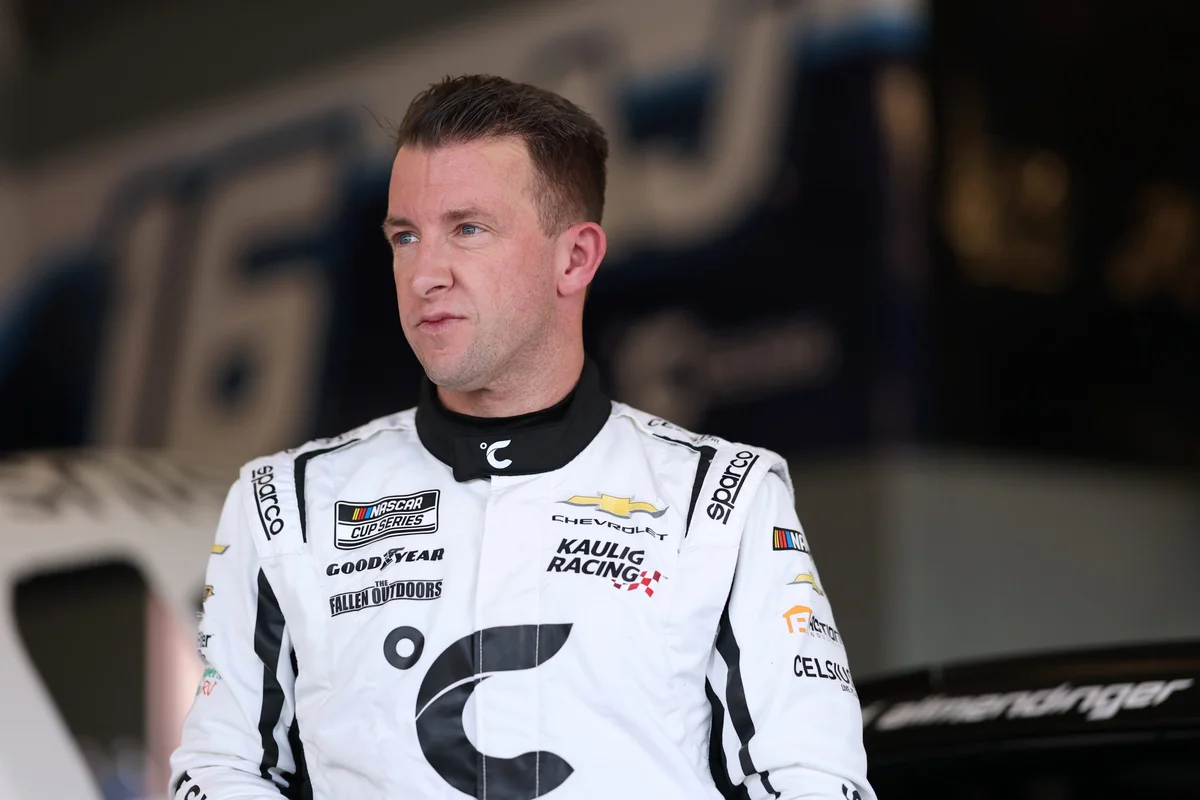
During the recent NASCAR Cup Series race at Circuit of the Americas (COTA) in Austin, AJ Allmendinger struggled with a failure of his cool suit on a sweltering day that presented a significant physical challenge. The malfunction affected the 44-year-old driver profoundly, although he managed to complete the race and finish ninth.
After the race, Allmendinger collapsed on pit road and was promptly taken to the infield care center for treatment. Four days later, he assured Jeff Gluck of The Athletic that he was recovering well and feeling fine.
Got a little hot in the race car and needed to get out as quick as possible once the race was over. The medical team did a great job of getting me IVs and iced up, and I would say I was back to 90 percent at least within the hour flying back home.
?AJ Allmendinger, NASCAR driver
Understanding the Impact of Cool Suit Failures in NASCAR
Allmendinger’s cool suit, designed to keep drivers cool inside the car by lowering temperature to around 40-45 degrees Fahrenheit, failed during the race—an issue also experienced by Kyle Larson. Although these malfunctions are becoming more common in NASCAR, the cooling suits usually work effectively the vast majority of the time, around 95 percent according to Allmendinger.
The driver explained the intensity of the heat inside the vehicle and the added pressure that comes from being confined in a tight space without an option to exit during the race.
Put yourself in the smallest box possible where you’re sitting down in it and there’s nowhere to move and crank the heat up as high as it goes. The heat is one thing, but, at the end of the day, the anxiety starts building where you know you can’t get out. It’s almost like panic sets in a little bit,
Allmendinger said.
You’re just like, ‘OK, I just don’t wanna be here anymore, but I gotta focus, I gotta do the best that I can.’ … It’s a struggle. These cars are hot. That’s something that’s part of it. … You just fight through it and make the best of it.
?AJ Allmendinger, NASCAR driver
Allmendinger’s Determination to Finish Strong Despite Physical Strain
At several moments during the grueling race, Allmendinger could have safely pulled off to avoid further risk, but he chose to persevere in his No. 16 Chevrolet. His resilience earned him a top-10 finish and secured the fourth-highest points tally among competitors at COTA.
He described the mental battle required to withstand such conditions, highlighting how moments like caution periods provided brief relief that helped him reset and refocus.
It’s just mind over matter at that point,
Allmendinger said. “It was definitely certain parts of that race where it was a struggle. Probably fortunate that that caution came out with 17 to go for a couple reasons, just to be able to pit there and get some water so I could at least dump on me to kind of reset myself. I felt like when I would dump cold water on me down my shirt, it would at least reset me for about eight to 10 laps and make me kind of forget about it before it came back.
At the end of the day, it’s just trying not to give up for my team. We had had a pretty good day going. We had planned to — with the way the points are now — if we felt like we didn’t have a real shot to win the race, go out there and try to get stage points in both stages knowing that would put us behind in the third stage and just do the best possible race in the third stage as we could, and I thought it worked out well. … Being hot and sick in the race car, the way I felt, I couldn’t give up. I did not want to give up and it was tough but that’s all part of it sometimes. You got to deal with it.
?AJ Allmendinger, NASCAR driver
Context of the Incident and Its Importance in NASCAR Racing
Heat management is a critical factor in motorsport safety and performance, especially during races held under high temperatures like the one at COTA. The cool suits play an essential role in protecting drivers from heat exhaustion, but failures pose serious health risks as demonstrated by Allmendinger’s experience.
His steadfastness in handling the adversity without sacrificing performance highlights the physical and mental endurance required in professional racing. This episode also sheds light on the ongoing need for improved reliability in cooling technology to prevent similar health scares in the future.
Following this event, teams and NASCAR officials may reassess cool suit standards and monitoring systems to ensure driver safety remains a top priority during extreme weather conditions.
