
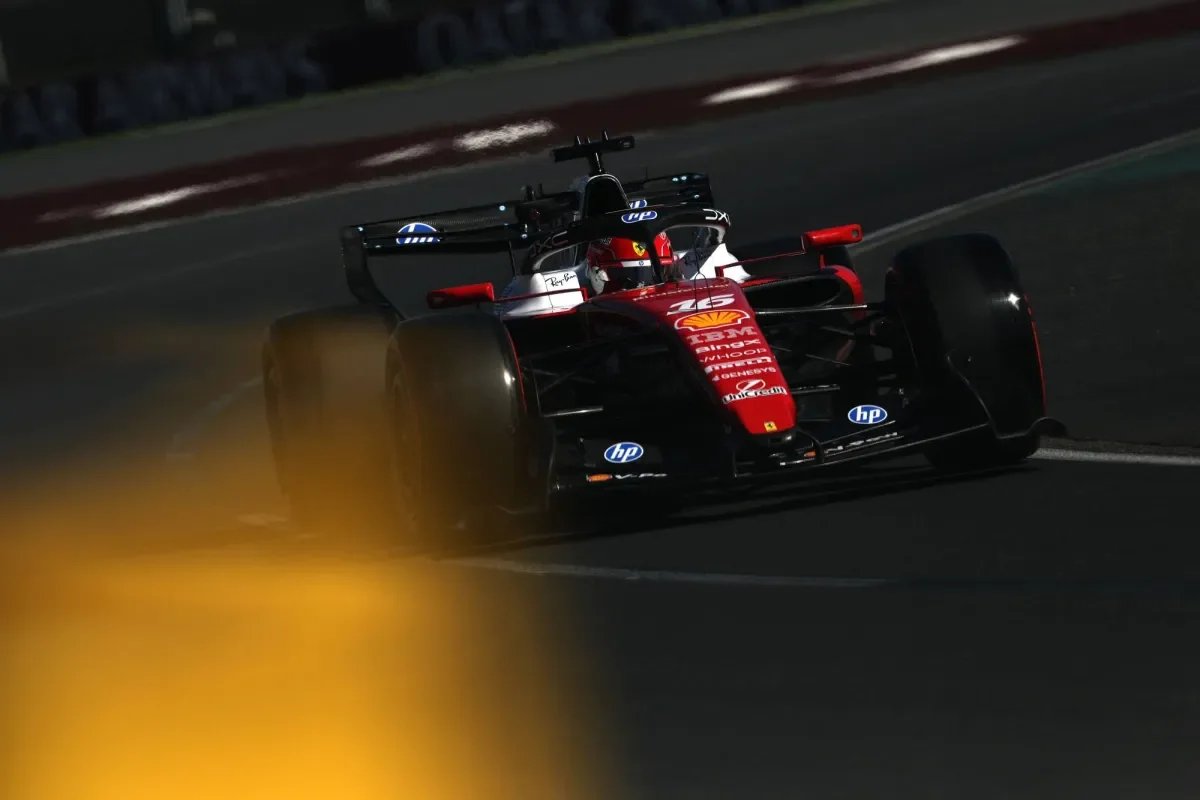
During the 2026 Australian Grand Prix at the Albert Park Circuit, Charles Leclerc took an impressive early lead, outrunning George Russell and teammate Lewis Hamilton at the start. Despite his strong pace and determined efforts throughout the 58-lap race, Leclerc finished third, behind the Mercedes pair. The Monegasque driver does not hold Ferrari responsible for their race strategy, which influenced the outcome.
Leclerc’s initial move to the front set the tone as he battled lap after lap with Russell, who ultimately overtook him on the fourth attempt. The contest remained intense, with Leclerc and Hamilton staying close behind, keeping pressure on the leading Mercedes cars.
Key Incident with Virtual Safety Car Alters Ferrari’s Pit Strategy
The race’s turning point came on Lap 12 when Isack Hadjar’s RBPT-Ford engine failed, prompting a Virtual Safety Car (VSC). Mercedes reacted by double-stacking their drivers for pit stops under these conditions, believing Ferrari’s cars would follow a two-stop plan. Ferrari, however, decided to leave Leclerc and Hamilton on track, anticipating another VSC to make their stop more advantageous. They soon learned Mercedes were also running a one-stop strategy, forcing a rethink.
Leclerc acknowledged the strategic gamble and refused to regret it, saying,
“I mean, I don’t regret it,”
and adding,
“It was a wanted and conscious choice.”
He explained that the team had expected multiple VSC periods during the race, which influenced their decision to wait.
When a second VSC emerged due to Valtteri Bottas’ Cadillac becoming stranded, Ferrari’s chance to pit was thwarted as the FIA closed the pit lane while the car was being recovered. Leclerc described the situation as unlucky but remained convinced of their chosen plan’s validity.
“Of course, we didn’t know that this would happen. Reality is we’ve had other VSC after, and one which was particularly well placed, but unfortunately for this one, for us, the pit entry was closed and we couldn’t take it,”
he said.
“So, we were a little bit unlucky on that side, but it was a conscious choice again, and I don’t really regret it.”
Performance Factors and Areas for Improvement on the SF-26
While Leclerc matched Mercedes’ speed for most of the race, he noted that even pitting during the earlier VSC might not have improved his chances to beat Russell’s W17 due to performance differences. Instead, Leclerc pointed to power unit (PU) calibration as a critical area where teams, including Ferrari, could improve.
The start of the race illustrated this issue clearly. Despite taking the lead off the line, Leclerc revealed Ferrari’s launch was far from perfect, affected by unusually low battery levels that paradoxically helped him gain position but were a sign of suboptimal performance.
He commented,
“It looked from outside, but I think we all had the same problem for some reason.”
Regarding Ferrari’s reputed advantage with a smaller turbo at the start, Leclerc remained unconvinced, saying,
“I thought I would end up P8, P9, but then I started and I saw everybody had issues and I had the one with the least issues.”
He stressed that there is still significant room for improvement in starting procedures and power unit deployment, adding,
“It was very suboptimal, I think, for everybody.”
Leclerc also described how tight the margins are to achieve a flawless launch, saying,
“We kind of expected a messy start, and then I think on top of that as well, we are such on a fine line before getting everything right on the PUIs and the lights off very, very, very quick. I think it surprised on top of that everybody and made it even more critical, so it was kind of crazy.”
Implications for Ferrari and Leclerc Moving Forward
Despite the frustration of losing ground to Mercedes strategically and technically, Leclerc’s defense of Ferrari’s decisions reflects a tactical maturity and understanding of the complicated dynamics during a Grand Prix. The team’s choice to gamble on pit stops highlights the ever-present risks in strategy-driven motorsport battles.
This event underlines the need for Ferrari to refine their power unit mappings and start procedures to reduce vulnerabilities against rivals like Mercedes. Improving reliability in capitalizing on race interruptions such as VSC periods will be crucial for maximizing race outcomes in future events.
As teams continue to adapt to the new regulations introduced in 2026, Leclerc’s experience in Australia could serve as a valuable learning point for Ferrari to tighten operational execution and close the performance gap to their Mercedes competitors.
