
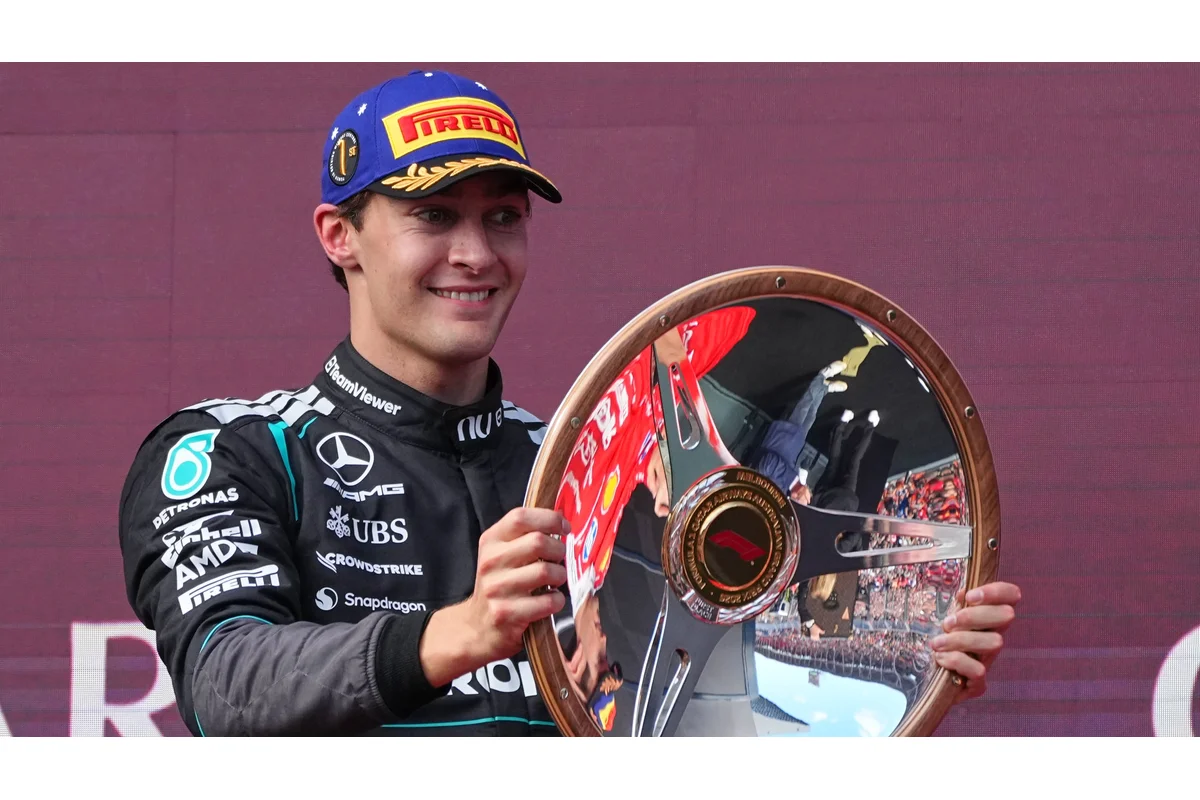
Questions have emerged about whether George Russell, the winner of the Australian Grand Prix, jump started the opening race of the Formula 1 season in Melbourne. Onboard footage circulating on social media shows Russell’s Mercedes W17 moving slightly before the race began, sparking debate about the legality of his start.
However, closer inspection reveals that while Russell’s car did roll forward as the starting light sequence began, it was stationary again the moment the five red lights extinguished, signaling the start of the race. This suggests that no false start took place.
Understanding the Rules Governing Race Starts
The Formula 1 sporting regulations for 2026 provide explicit criteria for identifying a false start. According to Article B5.11.1:
During any standing start or its resumption, cars must remain perfectly still in their assigned grid positions from the illumination of the red lights until the start signal is given (when all red lights go out).
In addition, vehicles must be correctly positioned so that transponders can accurately record the moment the car moves after the start signal, and no part of the contact patch of front tires should extend beyond the designated grid lines at that moment.
If a driver is found to have violated these requirements, stewards may impose penalties ranging from a 5-second or 10-second time penalty to a drive-through or stop-and-go penalty, depending on severity.
Assessing George Russell’s Start Against Regulations
Russell’s slight forward movement occurred before the third red light came on and paused immediately after. Because the regulations specify that the car must be stationary from the time the red lights illuminate until they go out, this temporary roll does not qualify as an early or false start.
The footage provides no evidence that Russell’s front tires crossed any grid lines at the start signal. It is important to note that the car’s front wing position does not factor into the false start rule, only the tire placement matters.
Thus, the existing data supports the conclusion that George Russell launched from a legal standing start, complying fully with the Formula 1 rules.
Other Steward Investigations Regarding the Start
The race stewards’ inquiries at the start primarily focused on incidents involving Franco Colapinto and Nico Hulkenberg rather than Russell.
Colapinto was penalized with a stop-and-go sanction after a team member touched his car following the 15-second signal, which is prohibited.
Hulkenberg faced scrutiny for not reaching the grid under his own power. Audi pushed his car back to the pit lane, meaning Hulkenberg did not participate in the start, so no infraction occurred in the end.
Implications and What to Watch Moving Forward
This controversy highlights the challenges of interpreting precise moments in racing where milliseconds and minor movements can generate confusion and debate. The regulations have clear definitions to prevent ambiguity, but the scrutiny placed on drivers’ actions during such critical times remains intense.
For George Russell and Mercedes, confirming a clean start preserves the integrity of his victory at the season opener in Melbourne. The stewards’ decisions also demonstrate their commitment to fairness in monitoring start procedures.
As the Formula 1 season advances, race officials and teams will continue to closely review similar situations to uphold competitive standards and ensure rules are consistently applied.
