
George Russell has identified a frustrating technical challenge within the new Formula 1 2026 regulations, which introduce engines powered equally by electric and biofuel sources. During recent testing in Bahrain, Russell revealed that he must now navigate corners that were once taken in third gear using first gear, in order to maintain turbocharger speeds. This adjustment feels counterintuitive to him, as it forces a driving style the cars were not originally designed to handle.
The new power units combine a 50/50 split between electric and biofuel energy, a development intended to push F1’s technological evolution. However, this shift requires drivers to alter their approach significantly, especially in maintaining high revs to keep the turbocharger functioning optimally, even at low speeds.
Varied Driver Responses to New F1 Regulations
The fresh 2026 F1 regulations have elicited mixed reactions from drivers as teams transition from the early tests in Barcelona to the first Bahrain test sessions. While reigning World Champion Lando Norris finds the updated cars enjoyable to drive, prominent figures such as Lewis Hamilton, Fernando Alonso, and Max Verstappen have voiced concerns about the new rules.
Verstappen, in particular, critiqued the regulations as “anti-racing,” dismissing the sport’s new direction with the phrase “Formula E on steroids.” Despite this blunt view, Russell takes a more measured stance.
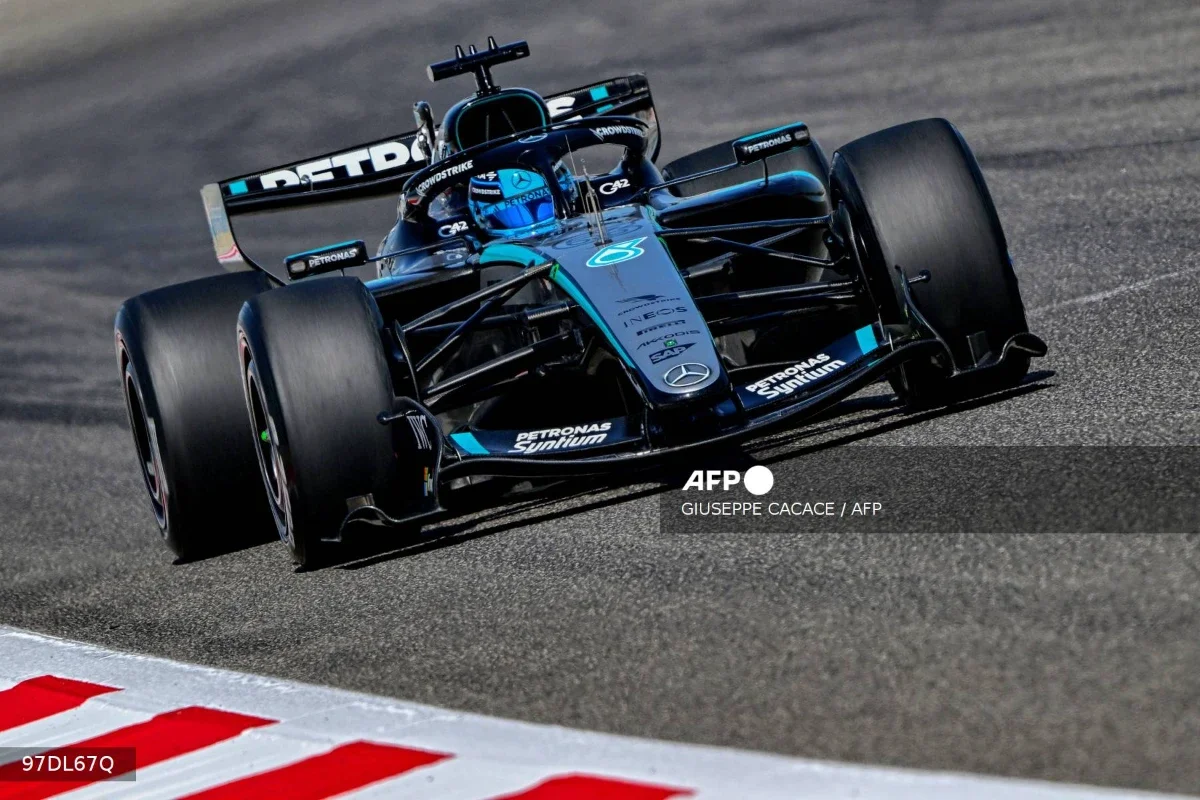
Speaking to PlanetF1.com at the Bahrain test, Russell stated,
“I do think it’s a step forward,”
and added,
“I always like to give things a chance. We’re four days into a set of regulations that’s going to be over three years long, and the progress everyone’s going to make in these early months is going to be massive.”
He praised the car’s agility and responsiveness, noting that the lighter, smaller design makes it more enjoyable to pilot than previous generations. However, he also acknowledged the increased complexity of the new engines, admitting that
“it’s probably causing more of a pain for all of the engineers than it is for the drivers.”
Russell cautioned that while initial tests have been on circuits relatively easy on engines like Barcelona and Bahrain, challenges will intensify at tracks such as Melbourne or Jeddah.
“It will be much more challenging for the engines and the energy once we get there,”
he said.
Specific Gear Usage Challenge in Technical Corners
Disagreeing with Verstappen’s “Formula E on steroids” comparison, Russell clarified the principal difficulty he faces concerns the necessity to shift into very low gears at corners that previously required higher gears. He described the Bahrain first corner, conventionally taken in third gear, now forced into first gear to maintain turbocharger rpm.
“To give an example, here in Bahrain, usually the first corner is a third gear corner in the previous generation. Now, we’re having to use first gear to keep the engine, the revs very high, to keep the turbo spinning,”
Russell explained.
He illustrated the awkwardness of this driving style with a metaphor:
“Imagine when you drive to the supermarket in your car and you get to the roundabout and you put it in third gear to drive around the roundabout, but suddenly, the person next to you says, ‘Put it in first gear,’ everything like, wham, revving, everything, like, you don’t go in the roundabout to the supermarket in first gear if you’re driving at a sensible speed.
“But this is the same thing. The car and the engine is kind of designed to go around this corner in third gear, but because of the turbo and the boost and all of this, you’ve got to keep the engine revs very high, which means you have to take first gear. So the car, it just isn’t really designed to do that. But, you know, we’re working around it.”
Russell admitted that shifting down to first gear sometimes feels like applying a handbrake mid-corner and acknowledged the slower corner speed in itself:
“I think this is the challenge we’re all facing, is, it’s slower in isolation to go around the corner in first gear instead of third gear, but then you would lose a lot of lap time in the straight.”
He further expanded on the difficulty of balancing energy usage across a lap:
“So that’s where we’ve got this big learning curve at the moment, knowing like how it affects you across the course of a lap. Whereas in the past, if you went around the corner quicker, or you tried something different and it worked, you know that’s positive, and you just carry that forward, whereas here you almost need to wait a full lap to actually learn what I did at Turn 1, has that cost me energy or not.”
Adjusting to Challenges and Fan Reactions
Russell remains curious about how fans will perceive the new rules and the potential changes to race dynamics. He noted,
“I am quite intrigued to see how the fans will take it and how the races will look on television.”
He also addressed the ongoing dissatisfaction drivers typically express toward their machinery, emphasizing the complexity in balancing driver preference with overall racing quality.
“Of course, we want the best cars. We want the fastest cars,”
Russell said,
“But, the fastest cars were the 2020 cars. And we were also saying that we want lighter cars, you know, similar to the mid 2000s, so then in the mid 2000s they were probably saying we want slick tyres and not grooved tyres.”
He candidly reflected on the nature of driver feedback:
“We as drivers like to complain, and the truth is, we’re sort of one of 20 people who get to experience this.”
Russell acknowledged the broader audience for the sport, noting the tens of millions who watch and the importance of delivering racing that remains compelling. However, he observed a notable performance gap between top and lower teams:
“And you can argue, potentially, the racing will be a bit more chaotic, but, the spread from the top team to the back teams at the moment seems far larger than we expected.”
Looking Ahead: What the Future Holds for F1 2026
The new regulations are designed to shape Formula 1’s future over the next three years, with teams and drivers still adapting to the evolving technology. George Russell’s firsthand experience reveals that while the cars themselves are innovative and promising, practical challenges—such as the unusual need for lower gear use in corners—require significant adjustment.
As testing continues beyond Bahrain, including future sessions at more demanding circuits, insight into the regulations’ true impact on racing will become clearer. Drivers like Russell, Hamilton, Alonso, and Verstappen each bring vital perspectives shaping the ongoing debate, highlighting areas for improvement and adaptation.
In the coming months, the sport will face a crucial phase of development as energy management strategies evolve and fans grow accustomed to a potentially more complex but technologically advanced era of Formula 1.
