
At the 2026 Australian Grand Prix, Red Bull’s new driver Isack Hadjar made an immediate mark by qualifying third and nearly leading the race at the outset before a power unit failure forced him to retire. The event took place in Melbourne, where Hadjar’s remarkable early pace captured attention, contrasting sharply with previous struggles faced by Red Bull’s second driver seat alongside Max Verstappen. Despite mechanical issues during preseason preparations, the 21-year-old demonstrated competitive speed, offering optimism to the team and fans alike.
Laurent Mekies Praises Hadjar’s Debut Performances and Resilience
Red Bull Racing’s sporting director Laurent Mekies lauded Hadjar’s weekend, emphasizing the rookie’s ability to perform strongly with limited testing mileage. Mekies noted that from the very first lap of Friday’s practice sessions, Hadjar was immediately quick and consistent. Entering qualifying with determination, Hadjar placed the car third, a position Mekies described as essentially the highest achievable on that Saturday under race conditions.
So, hats off, really and today, he was on his way to have a mega start before he realised we didn’t have the battery charge and I think the pace would have been good enough to fight with the McLaren.
— Laurent Mekies, Red Bull Team Principal
Hadjar’s Race Pace and Battle with Lando Norris Highlight Potential
Although Hadjar started from 20th on the grid due to a crash during the first qualifying session, he quickly climbed to sixth place during the race. He applied significant pressure on McLaren’s Lando Norris in the closing stages, hinting at what might have been an even stronger finish if not for the early technical setback. This performance underscored Hadjar’s potential to challenge established frontrunners when the car is fully operational.
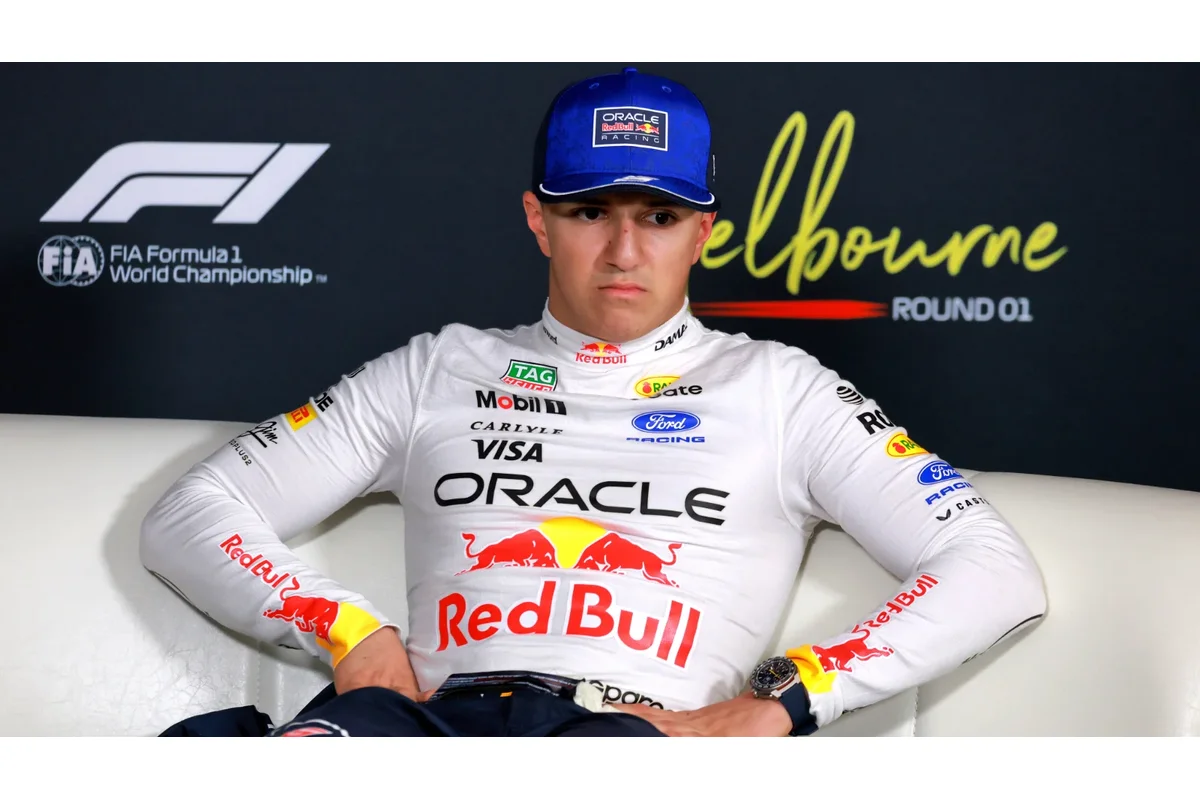
Technical Issues Cast a Shadow on Race Start for Both Red Bull Cars
The early race was severely affected by a lack of battery charge in Hadjar’s car, a problem that also affected Verstappen’s vehicle. Mekies acknowledged that this was an area where Red Bull fell short, particularly in managing the unique demands of the formation lap. Drivers must alternate between accelerating and braking to warm essential components like tyres and brakes, which challenged the battery management system and ultimately left the cars undercharged at the race start.
It’s our responsibility to avoid that situation,
— Laurent Mekies, Red Bull Team Principal
We had to build up that battery level through the first lap, which obviously was not enjoyable.
Strategic Challenges in Energy Management Highlight Areas for Improvement
The formation lap’s demanding pattern of acceleration and deceleration impacts battery charge and discharge, leading to the underperformance observed at the start. Mekies emphasized that such issues reflect on the team’s preparation and operational execution, suggesting that Red Bull must refine their energy management to avoid compromising race starts in future events. These challenges illustrate the fine margins in Formula 1 where technical efficiency directly influences race outcomes.
Significance of Hadjar’s Debut and Outlook for Red Bull’s 2026 Season
Isack Hadjar’s debut signals a promising chapter for Red Bull as the team appears to have found a qualifying and race pace threat capable of pushing Verstappen. This contrasts with the difficulties experienced by previous teammates, who struggled to match Verstappen’s performances. Overcoming the battery management setbacks and other mechanical issues will be crucial for both Hadjar and Red Bull to capitalize on their performance potential throughout the 2026 campaign. The strong individual showing in Australia offers a foundation on which Red Bull can build a more balanced and competitive team dynamic.
