
Isack Hadjar faced another tough outing at the Australian Grand Prix, continuing a challenging trend since his debut marked by an early crash during the formation lap last year. This time, driving Red Bull’s RB22 with a Red Bull Powertrains/Ford engine, the French driver started from the second row but was forced to retire after only eleven laps due to engine failure, cutting short what had been a promising performance.
Hadjar maintained a position in the top five following a strong qualifying session and an excellent start off the grid. However, the engine’s sudden failure ended his race prematurely.
“I knew the engine was going to explode after the first corner; the noise changed completely after the start,”
said Hadjar. He added,
“The only positive thing is that I get off to a great start, and then my battery dies.”
Promising Qualifying Puts Hadjar in Elite Company
Despite the race setback, Hadjar’s qualification in third place marked a notable achievement. He joined an exclusive group of Red Bull drivers who secured top-three grid positions in their debut Australian GP with the Austrian team. This list includes Daniel Ricciardo, who started second in 2014, and Sebastian Vettel, who began third in 2009. This accomplishment is especially impressive given the winter testing challenges faced by Red Bull.
Team principal Laurent Mekies praised Hadjar’s immediate adaptation to the new regulations and conditions:
“From the very first lap in FP1 on Friday, he was immediately up to speed. We were able to split the testing program between the cars and gather twice as much information. He approached qualifying with all that it entails for his first time under these regulations. He performed flawlessly.”
Mekies highlighted Hadjar’s qualifying effort as
“probably the best possible result on Saturday”
and commended his start before electrical issues arose, stating,
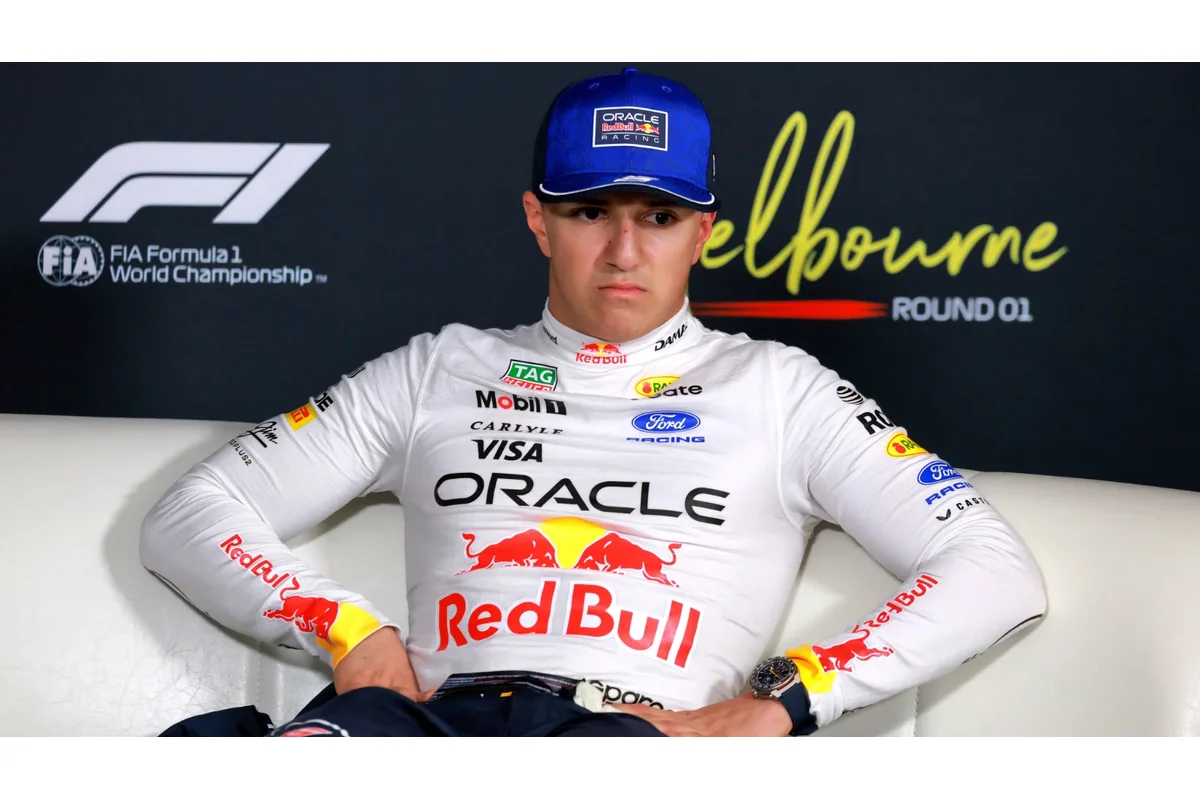
“Honestly, hats off to him. And today, he was on track for a blistering start before he realized we didn’t have enough battery charge.”
Encouraging Signs Despite Mechanical Problems
Hadjar’s race pace also impressed his team, with his boss expressing regret over the engine failure.
“It’s a shame we lost the engine with Isack. He had a great weekend, he managed to survive the first few laps, but that’s part of the game! It was the first race for our Red Bull Ford engine, we know there’s a lot of work to do,”
Mekies commented.
The race also showcased Max Verstappen’s formidable drive, as he staged a remarkable comeback that illustrated the potential of the Red Bull car when running smoothly. Verstappen’s performance contrasts with Hadjar’s misfortune but sets a benchmark for the French driver as he looks ahead.
Looking Forward to the Next Challenge in China
Isack Hadjar’s strong qualifying and initial race pace demonstrate his potential within the Red Bull team despite the mechanical setback. The upcoming Formula 1 round in China on March 15th presents an opportunity for Hadjar to capitalize on this promise and convert qualifying speed into race results. How the Red Bull Powertrains/Ford engine performs in future events will be crucial to his and the team’s success.
https://www.youtube.com/watch?v=LVV4NPuYwUk
