
George Russell has challenged Lando Norris‘s recent complaints about the Formula 1 cars for the 2026 regulations, suggesting that Norris’s criticisms would be less harsh if he were still winning races. After the Australian Grand Prix, where Russell took victory and Norris finished fifth, the reigning World Champion expressed strong displeasure at the new cars, describing them as the worst the sport has seen under current rules.
Russell accused McLaren drivers of remaining quiet on key technical issues such as porpoising when Mercedes raised alarms, particularly during periods when McLaren enjoyed competitive success. These remarks come amid growing debate about the performance and design of the new ground-effect cars set to dominate Formula 1 from 2026 onward.
Lando Norris’ Shift From Support to Criticism on New F1 Regulations
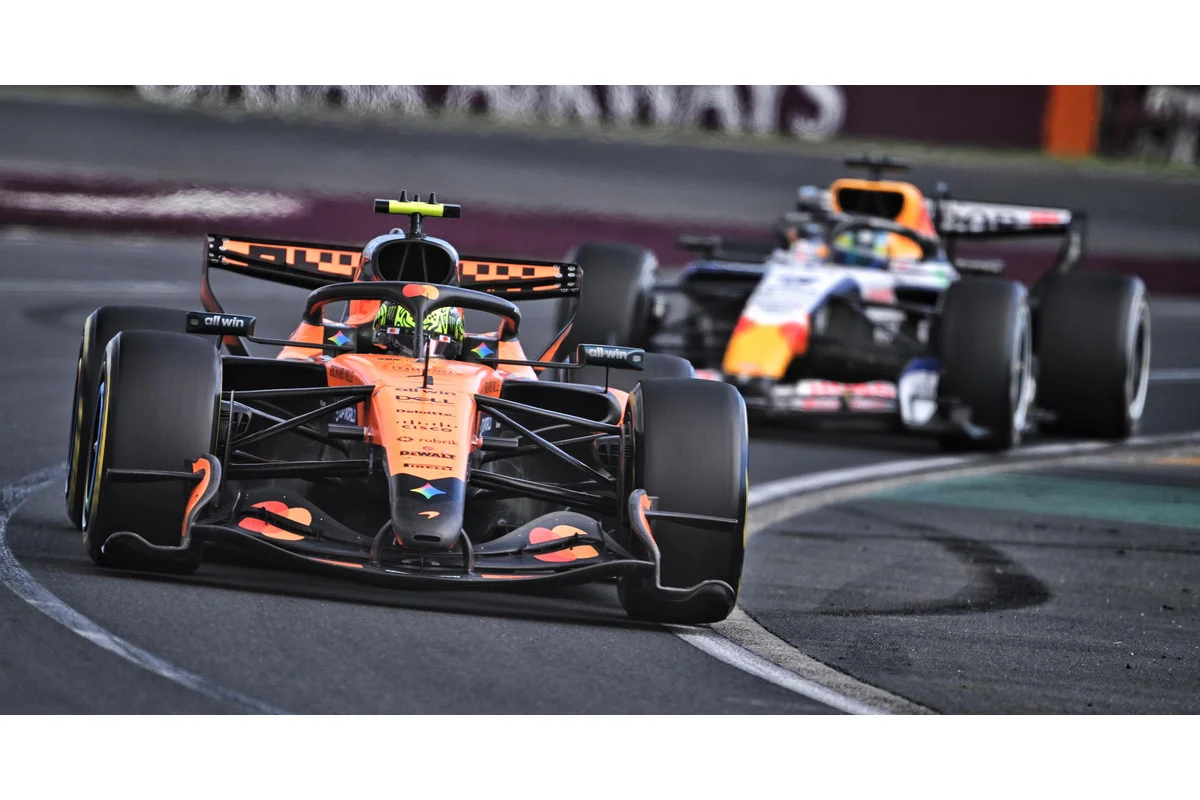
Initially supportive of Formula 1’s new generation of cars, Norris’s tone has changed dramatically, aligning him with other outspoken figures like Max Verstappen who have voiced concerns. Following the Australian race, Norris highlighted how overtaking has become overly reliant on battery deployment, reducing the natural competitiveness that fans expect. His lap was 51 seconds slower than Russell’s, underscoring his dissatisfaction.
Reflecting on these comments during the post-race press conference, Russell acknowledged the difference but emphasized the evolving nature of the regulations. He pointed out that not all circuits will present the same challenges, citing the upcoming Shanghai race with its long straight where energy management would shift strategies markedly.
Russell urged patience from critics:
“Everyone’s very quick to criticise things. You need to give it a shot, you know.”
He stressed the season’s progression would provide clearer insight into the new format’s benefits and drawbacks.
“We’re 22 drivers. When we’ve had the best cars and the least tyre degradation and when we’ve been happiest, everyone moans the racing’s rubbish. Now drivers aren’t perfectly happy and everyone said it was an amazing race. So, you can’t have it all, and I think we should just give it a chance and see after a few more races.”
— George Russell, Mercedes F1 Driver
Technical Issues and Performance Differences Highlighted in Disputes
The debate between Russell and Norris extends beyond subjective views, dealing with tangible technical matters such as porpoising, stiffness of the cars, and power unit balance. Norris has lamented that race-spec cars perform worse than qualifying, criticizing the near equal split between electric and internal combustion power for limiting overall potential.
Russell responded bluntly, implying Norris’s dissatisfaction is tied to his current results rather than objective evaluations. He pointed out past instances when McLaren drivers denied porpoising despite clear evidence and questioned their previous silence on these problems.
“If he was winning, I don’t think he’d be saying the same.”
— George Russell
Russell also addressed the competitive dynamics between teams sharing similar engines. Last season, despite having the same power units, McLaren outperformed Mercedes. Now, with Mercedes, McLaren, Williams, and Alpine using identical engines, Russell claimed his team had delivered better results so far this year, illustrating the ongoing battle for supremacy.
“The truth is last year we had the same engine as them and McLaren did a better job than us and they beat us. Now McLaren have got the same engine as us, the same as Williams and the same as Alpine, and so far we’ve done a better job than them. So that’s just how the game goes.”
— George Russell
Upcoming Challenges and Outlook for the 2026 F1 Season
The F1 2026 technical changes remain under intense scrutiny as teams adapt to new designs and regulations. The next race in Shanghai, with its differing circuit characteristics, is expected to test the cars’ varied energy strategies, potentially altering performance hierarchies and addressing some of the overtaking frustrations Norris described.
Toto Wolff has also recently defended Mercedes’ customer car approach in response to concerns raised by McLaren and Williams, highlighting the ongoing tension between teams as they navigate the new landscape.
As the season progresses, fan and driver opinions will continue to evolve. The significance of these early criticisms lies in their potential to influence rule refinements and team strategies ahead of the full 2026 launch.
