
Jo Shimoda surprised fans and competitors alike by securing a podium finish at the opening round of the 250SX East Division in Arlington less than three months after sustaining a neck injury around Thanksgiving. Participating in the Monster Energy AMA Supercross event, Shimoda demonstrated remarkable resilience by competing despite the recent setback, highlighting his rapid recovery and determination in a highly competitive field.
Impact of Red Light on Race Outcome
The weekend’s focus quickly shifted from Shimoda’s comeback to a critical incident involving a red flashing light during the race. Shimoda led for several laps but was forced to slow down after observing the red light on a double jump, which caused him to roll two doubles instead of clearing them. This loss of momentum allowed Pierce Brown to close the gap from over two seconds and eventually overtake Shimoda for the lead. Although Shimoda kept close pressure on Brown afterward, he was unable to regain the top spot, resulting in Brown taking the victory.
Following the race, Honda HRC Progressive filed a protest concerning this red-light event. However, investigations concluded with no penalties issued to Shimoda, confirming the race results.
Shimoda’s Perspective on the Red Light Incident
Shimoda addressed the red-light situation during a Saturday night interview, offering his viewpoint on the event. He explained the confusion and timing that forced him to reduce speed and roll the jump, which significantly affected his race pace and ability to contest the finish line.
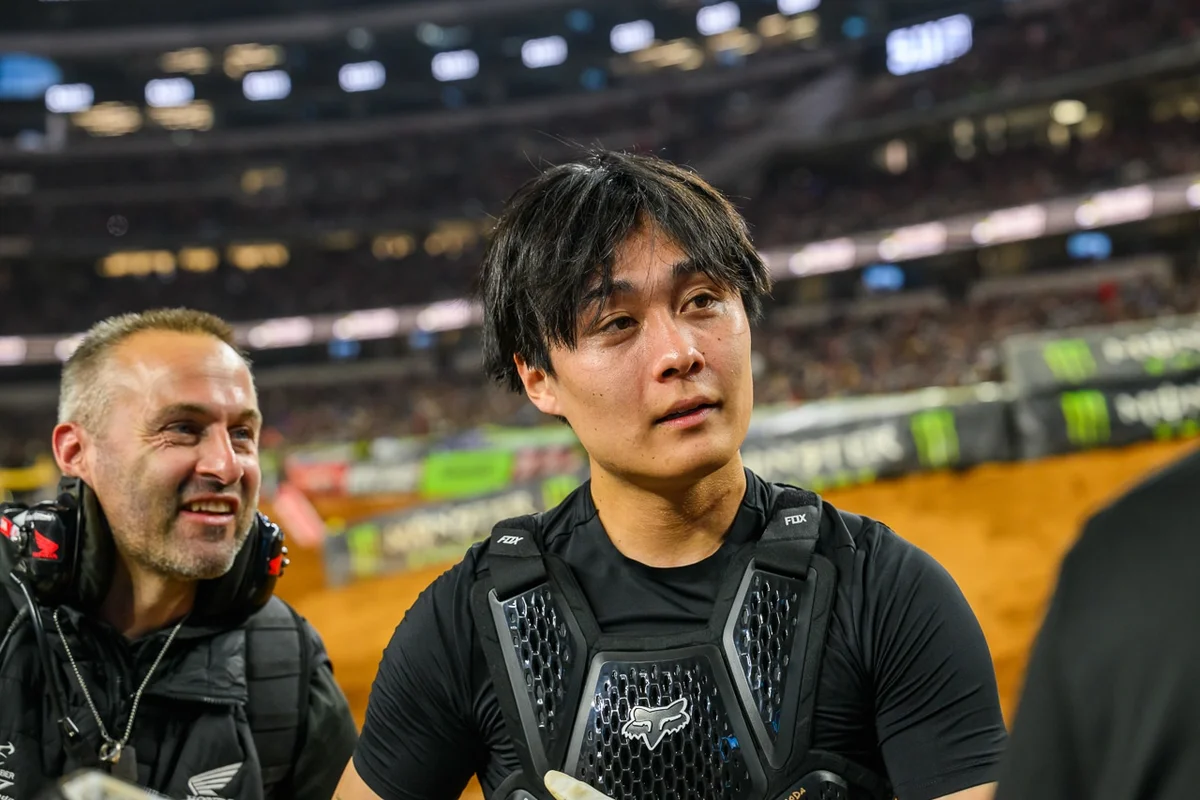
So, I think it’s under investigation right now,
Shimoda said.
I did see a red light on the double, so I had to slow down. I had to roll the jump, and I couldn’t get enough momentum to jump the finish line because the finish line [light] wasn’t on. But when I went through it was red, but no one was down. It wouldn’t make sense to me…if someone was down before I hit the jump and right when I rolled the jump, it turned off, it makes sense. But if not, then I think it’s fair enough to have the points given to me. I mean, I think it was like 2.5 or three seconds. I mean I couldn’t jump this whole rhythm section, so it was big. It was a big one and three points it’s matters maybe at the end of the year, but we’ll see. It’s under investigation right now.
Shimoda’s Race Strategy and Final Placement
In addition to discussing the red-light topic, Shimoda reflected on his tactical approach during the battle with Pierce Brown. Understanding the importance of a cautious start, he avoided aggressive moves that might compromise his health or season outlook, prioritizing consistency over risky maneuvers.
Yeah, because it’s my first round too, and it’s like I kind of had a pace to get him, but at the same time, do I really need it just run in?
Shimoda said.
Because the track felt like it had a lot of room to move around, but all the lines he was taking was out to in and I could have just kind of jump into the inside and make him pass, but I wasn’t really getting close enough to where I can do that. So, for tonight I’m fine with P2 and we just going to build from here.
Significance of Shimoda’s Performance for the Season Ahead
Jo Shimoda’s ability to reach the podium at Arlington so soon after a serious neck injury speaks to both his physical recovery and competitive mindset. His calm handling of the race’s challenging moments and strategic decision-making set a solid foundation for his 250SX East Division campaign. The lack of penalty following the red-light controversy allows Shimoda to maintain vital points early in the season, which could influence championship outcomes down the line. As the series progresses, Shimoda’s performance will be closely watched as a key indicator of his championship potential for Yamaha and the larger Supercross community.
