
During the opening weekend of the new Formula 1 season, McLaren’s Lando Norris sharply criticized the recent changes to F1 car regulations, describing the current cars as a steep downgrade from previous models. Norris expressed frustration with the latest technical rules, which he says have transformed the cars from “the best ever made” into “probably the worst.” The comments come amid the Australian Grand Prix weekend, providing a live test of how the new cars perform under race conditions.
This new era in F1, characterized by radical technical reforms, has sparked intense debate among drivers, teams, and fans alike. Norris, fresh off qualifying sixth and nearly a full second behind pole-setter George Russell, did not hold back his concerns about the state of the sport’s machinery and its effect on racing quality.
Challenges of the New F1 Cars Impact Driver Performance and Racing Dynamics
Norris elaborated on the difficulties these new cars present, emphasizing that many drivers share his pain. He highlighted issues such as the “50-50 split” setup not working effectively, and significant deceleration ahead of corners forcing drivers to lift off the throttle frequently. This results in a challenging balancing act for drivers attempting to maintain competitiveness.
He remarked,
“I could talk for hours. I think everyone knows what the issues are.”
Norris explained that the straight-line performance compromises cause widespread complications, including excessive braking before corners that disrupt racing flow.
“You have to lift everywhere to make sure the pack’s at the top, the pack’s too high, you’re also screwed,”
he added. Despite the struggles, he acknowledged the competitive advantage of his rival with light irony:
“But, yeah, it’s what we have. It doesn’t feel good as a driver, but I’m sure George is smiling, so doesn’t really matter in the end of the day. And just got to maximise what you’ve got.”
When questioned whether this kind of driving and car performance aligns with what F1 should be, Norris plainly responded, “Not really, no.”
New Car Complexity Leads to Damage and Concentration Challenges for Norris
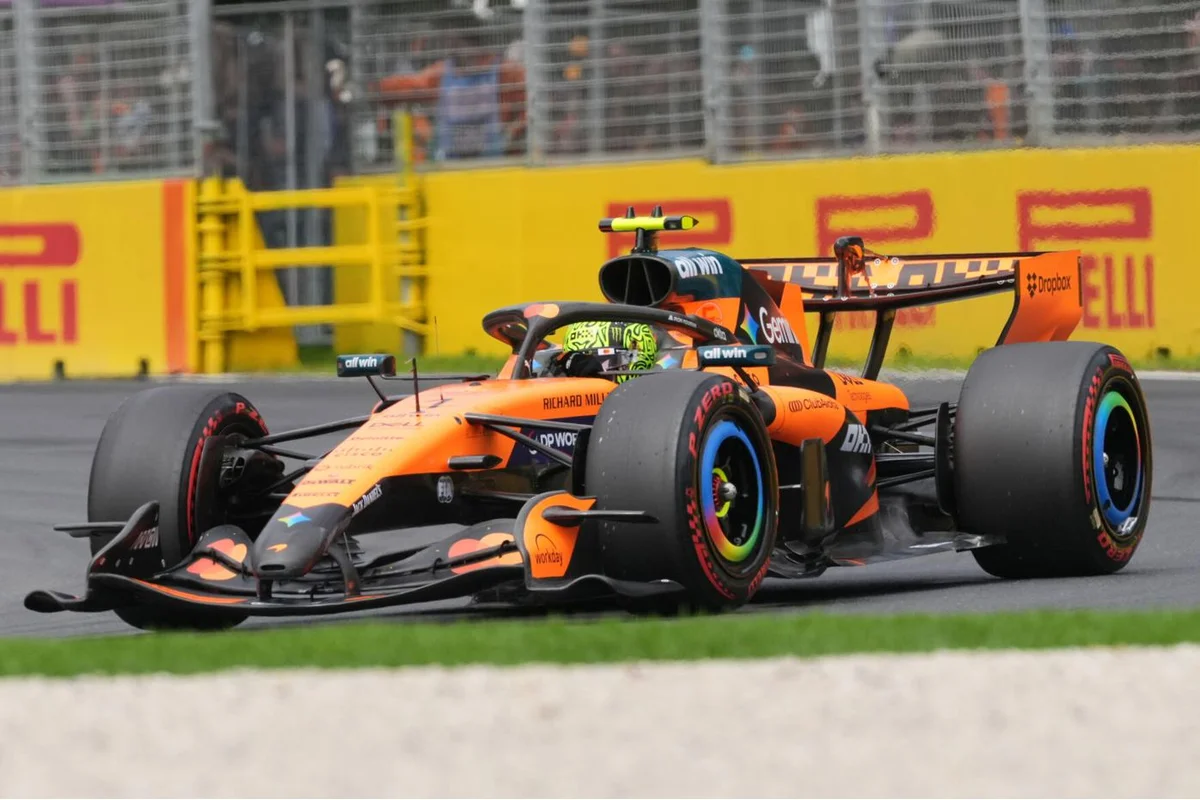
Compounding Norris’s difficulties during qualifying was damage to his McLaren MCL40’s front wing endplate in Q3. The incident apparently resulted from hitting debris on the track, specifically a cooling fan dropped by Andrea Kimi Antonelli’s Mercedes.
The driver pointed out that the new car’s energy management demands force him to monitor his steering wheel constantly, limiting his ability to spot hazards. He said,
“You know, I’m looking at my steering wheel, it’s why I don’t see the debris because I have to look at what the speed I’m going to get at the end of the straight and know if I need a brake 30 metres earlier, 10 metres later.”
Norris continued,
“So that’s also the problem, you have to look at the steering wheel every three seconds to see what’s going to happen otherwise you’re going to end up off the track.”
He lamented the steep decline in drivability:
“It’s just we’ve come from the best cars ever made in Formula One, and the nicest to drive to probably the worst, and it sucks, but you have to live with it, and then just maximise what you get given.”
He explained the complexity of the car’s systems further:
“It’s certainly different. It’s certainly not like it was last year. And it’s not like push this corner more, because sometimes you push more, you lose the battery and just go slower.”
Regarding team performance differences, Norris acknowledged that Mercedes has adapted better to the new regulations.
“So you have to understand how to do things. Mercedes have obviously understood that. They would understand, because they’re a good team, and it’s also their own engine. They’ve understood more than we have, and we’ll get there. It just takes a bit of time.”
Implications for F1 Season and Future Developments
Lando Norris’s outspoken assessment highlights a tense atmosphere among drivers adjusting to the sweeping technical changes this season. His comments reveal how the increased complexity and altered car behavior place greater demands on driver skill and race strategy, potentially influencing race outcomes and championship battles.
The clear advantage currently held by teams like Mercedes suggests a transitional period as others, including McLaren, strive to decode the new formula’s intricacies. Norris’s experience in Melbourne shows that mastering energy management and track awareness is critical in avoiding costly errors and extracting performance.
As the season progresses, the sport faces pressure to balance innovation with driving enjoyment and close racing. Norris’s critique may spur further technical refinements or regulatory revisits to enhance competitiveness and driver satisfaction. Meanwhile, fans and teams will be closely watching how the new cars continue to shape the dynamics of Formula 1 moving forward.
