
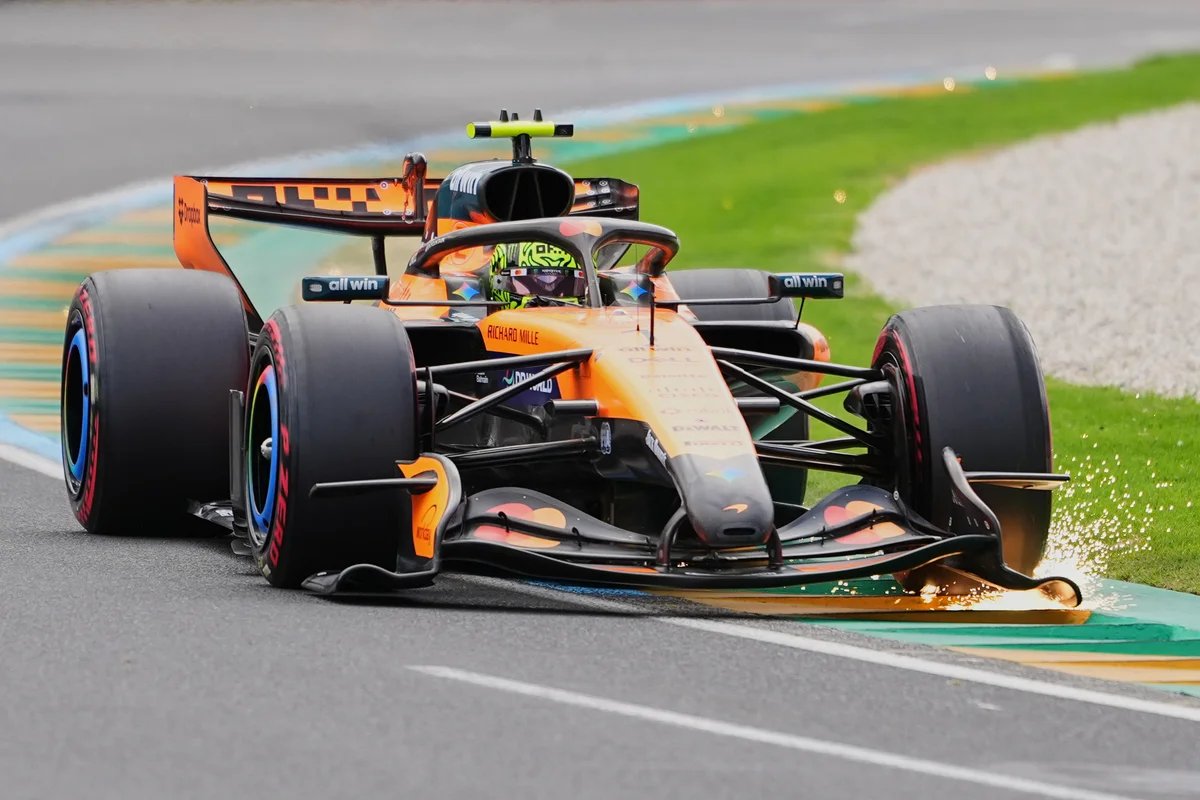
During qualifying for the Australian Grand Prix in Melbourne, Lando Norris harshly criticized the latest generation of Formula 1 cars, calling them “probably the worst” ever produced. Despite securing sixth place on the grid for Sunday’s race, Norris was nearly a second slower than George Russell, who claimed pole position driving for Mercedes. His frustration centered more on the new car designs and engines than on McLaren’s individual performance.
Drivers Struggle with New Engines Focused on Electrical Power
The updated Formula 1 cars introduced this season rely heavily on electrical power, presenting significant challenges to drivers. Norris and many of his peers expressed frustration over how these changes have affected handling and overall performance. With cars frequently decelerating on long straights due to difficulties in managing battery charge levels, lap times have suffered dramatically. For example, Russell’s pole time in Melbourne was three-and-a-half seconds slower than the fastest lap from last year’s qualifying at the same track.
Norris explained the issues with the cars in detail, noting the tricky balance required to keep the battery pack in an optimal state.
“Everyone knows what the issues are. It’s just the fact that it’s a 50/50 split and it just doesn’t work. You decelerate so much before corners, you have to lift everywhere to make sure the [battery] pack’s at the top. If the pack’s too high, you’re also screwed. It’s just difficult, but it’s what we have,”
he said.
Max Verstappen Also Expresses Discontent with New F1 Regulations
Max Verstappen, who crashed out early in qualifying, echoed Norris’s negativity regarding the cars. Speaking candidly during the drivers’ briefing, Verstappen admitted that he is not enjoying driving under the new regulations. He remarked,
“I’m definitely not having fun at all with these cars. I mean, you can make up your mind but I think, if you look at the onboard, you’ll see I’m right.”
Despite suggestions from the FIA to alter the rules to improve car performance, Verstappen remains skeptical about meaningful changes.
“There’s nothing you can do. You can only make it slower. Then you’d get a more normal speed trace, but it’s slower. The formula is just not correct and that is something that is a bit harder to change. But I think we need to,”
he added.
Other Highlights from the Australian Grand Prix Qualifying
The first qualifying session of the year showcased several notable moments beyond the criticisms of the cars. Kimi Antonelli impressed by qualifying second despite last-minute repairs to his Mercedes. Meanwhile, newcomer Isack Hadjar drew attention with a strong debut performance for Red Bull. However, the overarching theme remained the shared dissatisfaction with the car designs and their impact on driver performance and race dynamics.
Impact of the New Cars on the Season Ahead
The downgrade in car performance and driver satisfaction is significant, suggesting a challenging season for many competitors. Norris expressed his irritation succinctly:
“We’ve gone from the best cars ever made in Formula 1 and the nicest to drive to probably the worst. It sucks, but we have to live with it.”
This commentary highlights growing concerns about whether the current generation of cars aligns with the expectations of drivers and fans alike.
As frustrations mount among top drivers like Norris and Verstappen, the effectiveness of Formula 1’s new direction will remain under scrutiny. The performance setbacks and technical constraints could shape not only individual race outcomes but also the broader appeal and competitive balance of the sport this season. The FIA’s willingness and ability to adjust regulations may prove crucial in alleviating these ongoing issues.
