
Lando Norris, the McLaren driver, has openly criticized the upcoming 2026 Formula 1 regulations, describing them as excessively artificial and warning they could lead to serious safety issues. His concerns emerged following the chaotic Australian Grand Prix in Melbourne, where new rules involving chassis and power unit tech changes have drastically altered race dynamics.
The 2026 season introduces a major shift in Formula 1, including a move toward electric power with increased battery management playing a crucial role in race outcomes. Norris argues these changes have degraded car performance, suggesting that the sport has moved from having some of the best racing cars ever to possibly the worst in its history.
Rising Chaos on Track Reflects Norris’s Early Warnings
After securing sixth place in qualifying and finishing fifth in a race filled with tense, wheel-to-wheel action, Norris’s pre-season predictions about increasing disorder on the grid have proven accurate. Rather than excitement, the reigning world champion experiences frustration amid what he calls an overly chaotic environment.
On the Melbourne race’s unpredictable nature, Norris stated,
“Way too much. It’s chaos; you’re going to have a big accident, which is a shame. You’re driving, and we’re all just waiting for something to happen, something to go quite horribly wrong.”
His comments expose the anxiety drivers face navigating the unpredictable conditions birthed by these new regulations.
Drivers Losing Control Over Race Situations Due to New Rules
Norris also expressed annoyance with the seemingly arbitrary operations of the regulations, especially regarding power unit behavior. He observed that the fluctuating power output affects overtaking and race control to a worrying extent.
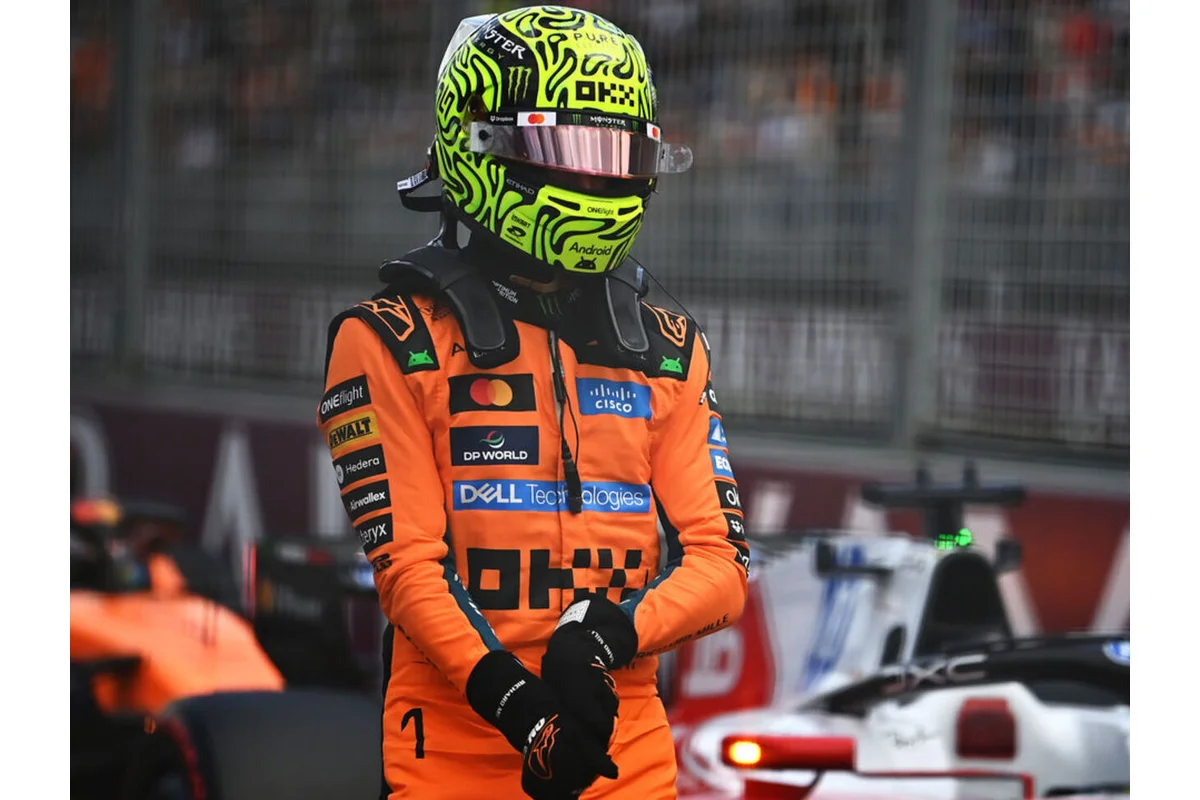
As Norris put it,
“It’s very artificial, depending on what the power unit decides to do and randomly does at times. You just get overtaken by five cars, or you can do nothing about it sometimes.”
This loss of driver agency reflects a deeper problem with the current formula’s impact on competition fairness and safety.
Risks from Speed Differences Due to Battery Management Pose Safety Concerns
A key issue highlighted is the speed variation caused when drivers consume and recover battery power mid-race. These disparities can create dangerous closing speeds on track, risking severe accidents.
Norris warned about the potential consequences:
“Just depending on what people do, you can have 30, 40, 50 kph speeds. When someone hits someone at that speed, you’re going to fly and you’re going to go over the fence and you’re going to do a lot of damage to yourself and maybe to others. That’s a pretty horrible thing to think about.”
His statement underscores fears about how current rules might lead to catastrophic crashes.
F1’s Future Faces Critical Reconsideration Amid Rising Concerns
With Norris’s urgent alarms echoing across the Formula 1 community, questions mount about whether the 2026 regulatory framework is taking the sport down a dangerous path. As fans and drivers brace for upcoming races, the call for revisiting these rules grows louder to protect both driver safety and the sport’s competitive spirit.
The 2026 season promises to be unforgettable, but Norris’s warnings signify a potential turning point requiring decisive action if Formula 1 seeks to avoid spiraling unpredictability and safety risks while preserving its legacy.
