
Charles Leclerc believes the major overhaul to Formula 1’s power unit regulations for 2026 is creating confusion that allows teams to mask their actual performance ahead of the Australian Grand Prix. While the introduction of new cars is attracting attention, it is the fresh engine formula that is stirring the most debate and uncertainty within the paddock.
Understanding Why New Engine Regulations Blur Performance Rankings
The new power unit formula has introduced complexities such as debates over compression ratio loopholes and the amount of engine revs permitted at race starts. These technical nuances have made it unclear which teams hold a genuine advantage, with Mercedes suspected of benefiting from the compression ratio, and Ferrari thought to have a lead with their higher launch revs.
As teams prepare for the Bahrain race, these issues remain on the agenda. The Power Unit Advisory Committee is set to meet, primarily involving Ferrari, Red Bull-Ford, Audi, and Honda—who oppose Mercedes’ compression ratio interpretation—while the Formula 1 Commission will discuss race start procedures on the first day of the Bahrain event.
The ongoing conversation in the paddock shows mixed opinions. Rival teams praise the Mercedes power unit as the benchmark, yet Mercedes’ leadership, including Toto Wolff, insists that Red Bull currently excels, particularly in terms of energy deployment strategies.
Mixed Signals in Engine Performance and Race Start Advantages
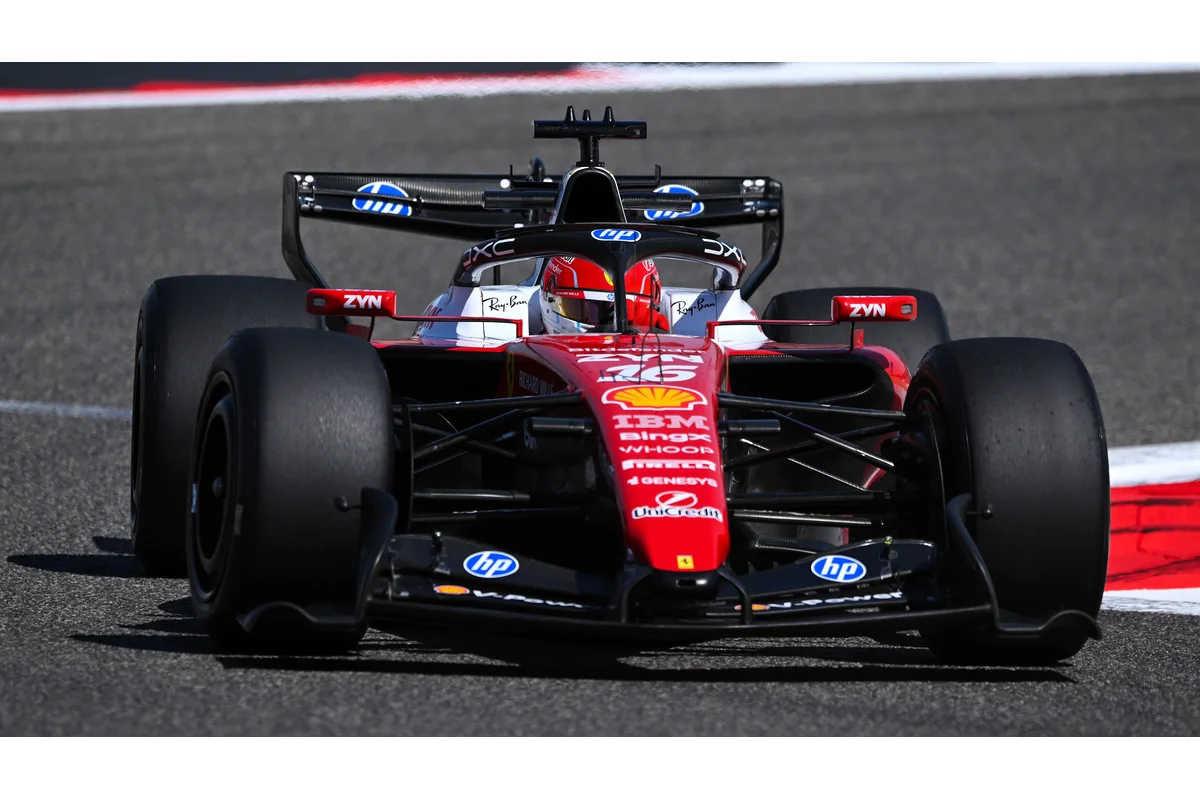
Adding to the uncertainty, George Russell claims Ferrari holds the edge on race starts this season, a sentiment echoed by Lando Norris, who suggests Ferrari’s SF-26 also performs well over race distances. Despite these assessments, the actual performance levels remain obscured since teams do not reveal their fuel loads, engine modes, or internal settings.
This secrecy allows each squad to potentially conceal their true pace or manipulate test results to mislead competitors. Leclerc, who secured second place behind Mercedes drivers during the series’ opening test alongside teammate Lewis Hamilton, acknowledges these tactics are widespread.
“I think everybody is trying to throw the ball to the other guys. It’s normal at this point of the season,”
Leclerc said.
“Also because it’s so difficult to understand. It was difficult with the previous generation of cars, but now with the hybrid and especially the electrical engine being so much more powerful, there are so many small tweaks that you can do, and you can hide the real potential of the car in many, many different ways now. So it’s very, very difficult for us to understand exactly where we stand. What I’m happy of is that we are going through our programme. We didn’t have any reliability issues so far. And this is a good start. Everything starts up with what we expected. So that’s a good base to then start to work on and to improve.”
Charles Leclerc, Ferrari driver
Leclerc’s View on the Current Hierarchy Among Top Teams
Regarding where teams currently rank, Leclerc suspects Red Bull leads the pack, with Mercedes a close second and Ferrari third. He notes the gap between teams is small but acknowledges ongoing uncertainty about McLaren’s performance.
“But from where I stand now, it’s Red Bull, Mercedes in front and then us. But it doesn’t seem to be too much of a gap for now.”
Charles Leclerc, Ferrari driver
Broader Implications for the 2026 Season and Future Races
The opaque situation caused by the regulations and energy deployment strategies could make precise predictions on team competitiveness difficult in the upcoming races. Maintaining reliability without technical failures has been a positive sign for Ferrari, laying a stable foundation for gradual improvement throughout the year.
The evolving landscape also highlights the strategic gamesmanship teams are engaging in, as they attempt to shield their strengths while probing rivals. As the season progresses, this dynamic will continue to shape the competition, leaving fans and analysts to decipher the real pecking order behind a carefully crafted smokescreen.

