
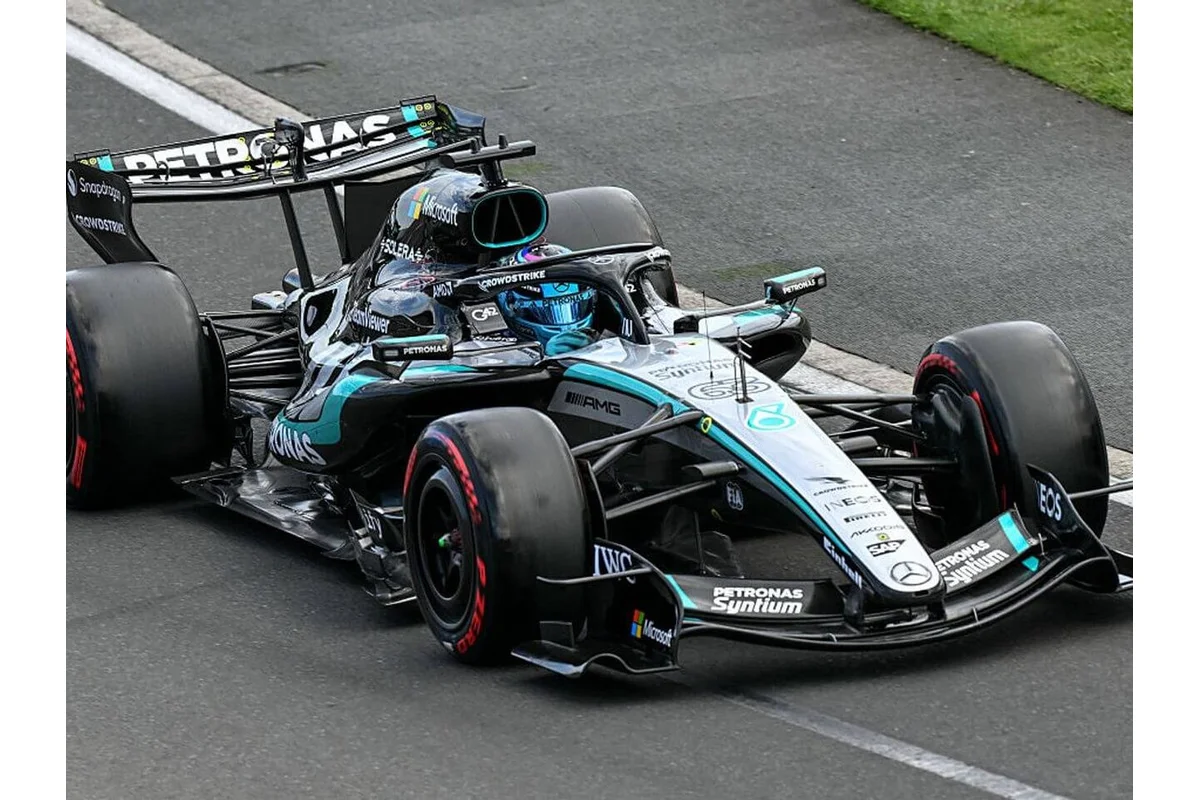
As the 2026 Formula 1 season kicked off in Australia, Lewis Hamilton raised questions about the source of Mercedes’ apparent engine superiority. After the Mercedes W18 displayed dominant pace in qualifying, outshining rivals including Ferrari, Hamilton called on the FIA to clarify how the Silver Arrows achieved this advantage, urging transparency amid ongoing debates over engine legality.
The controversy centers on Mercedes’ engine, which has drawn scrutiny for its presumed breach of the compression ratio regulations. Hamilton’s demand reflects unease about whether the team’s performance edge results from an unfair technical loophole or superior engineering, making the Mercedes engine a focal point in the early stages of the season.
Mercedes Raises Questions With Unprecedented Engine Performance
Mercedes’ dominance at the Australian Grand Prix marks a stark contrast to their cautious performances during pre-season testing and practice sessions, where they kept their full power under wraps. This strategy aimed to avoid early regulatory attention amid allegations regarding an innovative engine operating beyond the 16:1 compression ratio limit stipulated by the FIA.
The debate has intensified given that Mercedes’ rivals have been powerless to match the W18’s pace, prompting calls to investigate and address the possible exploitation of engine rules. The FIA responded in part by announcing tighter inspection protocols starting with the Monaco GP, shifting compression ratio testing to higher engine temperatures to close any loopholes under current ambient checks.
Despite these procedural changes, critics argue the measures have been introduced too late to counter Mercedes’ early-season advantage fully.
Hamilton Reflects on Mercedes’ Historical Engine Power and Current Scrutiny
Lewis Hamilton’s arrival in Formula 1 coincided with Mercedes’ entrance into a dominant hybrid era beginning in 2014, a period during which the team secured six of his seven world titles. Back then, Mercedes enjoyed a significant engine advantage without facing the intense rival challenges seen today.
He noted the environment has shifted considerably, with rival manufacturers now united in questioning the legality of Mercedes’ powertrain innovations. This scrutiny reflects the higher stakes and closer competition among engine suppliers in the current era.
Speaking to Sky Sports after his first qualifying session of 2026, Hamilton commented on the situation:
“What’s clear is they didn’t show the engine power through any of the practice, because there’s the whole talk of compression ratio.”
?Lewis Hamilton, F1 Driver
“They’ve obviously done a really good job with their engine, which we have as well. But I want to understand why it was [they were gaining] two tenths or more just through power, per sector.”
?Lewis Hamilton, F1 Driver
“So if it is the compression thing, I want to understand why the FIA haven’t done anything – what’s being done to rectify it.”
?Lewis Hamilton, F1 Driver
If it’s not [compression ratio] and just pure power, then we need to do a better job.
?Lewis Hamilton, F1 Driver
Challenges for FIA Enforcement Amid Mercedes’ Customer Teams
One complication in addressing the Mercedes engine issue is that several customer teams rely on the German manufacturer’s power units. Taking stringent action against Mercedes could have a ripple effect on multiple teams, which created reluctance within the FIA and other stakeholders to impose immediate penalties before the 2026 campaign began.
However, none of the Mercedes-powered customer teams have posed a genuine threat to the W18, weakening claims that these teams’ interests justify the delay in enforcement. This disparity between Mercedes and their customers adds further complexity to the championship battle and fuels debates about fairness and regulatory consistency.
Impact of 2026 Regulations and Political Tensions in Formula 1
The 2026 technical regulations were intended to create closer competition, learning from the mixed reception of rule changes introduced in 2022. While the ground-effect cars of the previous cycle allowed multiple teams to challenge at the front, the current regulations have introduced new challenges, such as complicated battery recharge cycles leading to unusual speed reductions at the end of straights.
These factors amplify the criticism surrounding Mercedes’ early season superiority, as teams and drivers grapple with fresh technical restrictions and unprecedented performance gaps. The political dimension within Formula 1 is intensifying, as team principals and drivers voice concerns while the FIA navigates the balance between enforcing rules and maintaining competitive stability.
Ultimately, the growing scrutiny of the Mercedes W18’s engine could shape the unfolding 2026 season, influencing team strategies and regulatory approaches as the championship progresses toward the European rounds.
