
Red Bull Racing’s Max Verstappen demonstrated exceptional skill on the opening day of pre-season testing at the Bahrain International Circuit, setting the second-fastest time behind Lando Norris. Completing more laps than any of his competitors, Verstappen’s performance highlighted his mastery of the newly important “clipping” technique under the latest Formula 1 regulations.
The Dutch driver’s strong showing has placed Red Bull in a favorable position early in the testing phase, offering promising evidence that Verstappen’s expertise with the “Max Verstappen clipping technique” could play a critical role as the season progresses.
Verstappen’s relentless pace and workload catch attention on first day
Verstappen was the first to leave the pit lane and finished the day with a remarkable 136 laps, setting his best time during the hottest period of the day. His commitment to gathering aerodynamic data while enhancing car performance was evident throughout Wednesday’s sessions. Following his intense testing stint, Verstappen will sit out Thursday, with Isack Hadjar stepping in for his public testing debut.
Sky Sports’ Ted Kravitz, reporting live from the pit lane, emphasized Verstappen’s command of the car and his focus on performance improvement.
“Max never doesn’t ever not work on performance. Whenever he was out there, he looked like he was on top of the car,”
said Kravitz, reflecting on the driver’s dominance during the session.
How Verstappen’s refined ‘clipping’ technique sets Red Bull apart
Toto Wolff, team principal of Mercedes, hinted that Red Bull might possess the fastest car on the grid given Verstappen’s impressive straight-line speed. While Wolff’s comments could be strategic posturing, the real standout was Verstappen’s advanced use of the “clipping” technique, rarely seen among other drivers during testing.
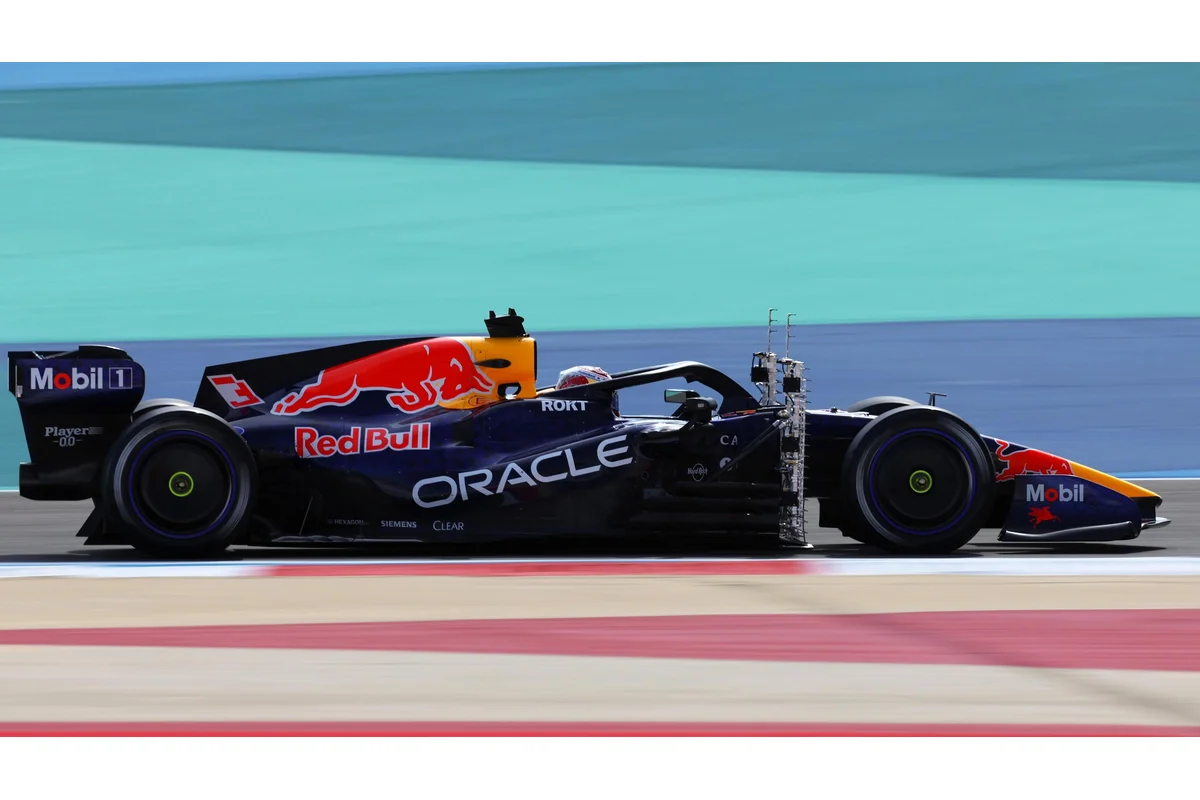
This technique involves managing the car’s energy recovery systems precisely to optimize battery recharge each lap, crucial under the current technical regulations. Kravitz noted the rapid cycling of Red Bull’s energy recovery system as Verstappen manipulated
“clipping light or regen light, or recharge light”
signals to fine-tune power deployment during his runs.
“So yeah, I think really that’s in many ways the story. 136 laps, P2 and looks good. Straight into the 1m 35s,”
Kravitz added, underscoring how Verstappen’s approach could be a game-changer.
The growing importance of energy management in Formula 1’s evolving landscape
With upcoming regulatory changes placing heavy emphasis on energy recovery and deployment, how drivers manage battery recharge each lap will be pivotal. Verstappen’s strategic downshifting into first gear at several points to maintain higher revs and accelerate battery charging exemplifies this skill.
Other drivers, like Audi’s Gabriel Bortoleto and Nico Hulkenberg, have also experimented with similar tactics, but none have matched Verstappen’s effectiveness yet. Experts speculate this method may have been honed extensively on simulators, given Verstappen’s known dedication to off-track preparation.
Veteran figures in the sport, including Damon Hill and Lewis Hamilton, have voiced concerns over the complexity of these new rules, with Hamilton noting fans might need
“a degree to know what’s going on.”
Yet, Verstappen’s ability to adapt rapidly might allow him and Red Bull to stay ahead as these technical demands evolve.
Red Bull’s confidence in Verstappen appears justified as testing progresses
Red Bull Racing has addressed several concerns raised by Verstappen prior to the season, reinforcing trust between driver and team. This mutual confidence was reaffirmed by Verstappen’s commanding testing performance, reflecting his readiness to contend for another championship.
The combination of advanced technical skill with a deep understanding of the car’s evolving systems positions Verstappen as a leading figure in the 2024 Formula 1 season. As testing continues, all eyes will remain on how effectively competitors can match Red Bull’s pace and Verstappen’s pioneering use of the clipping technique.
