
Max Verstappen has raised concerns regarding the new 2026 Formula 1 regulations and how they could affect the sport’s competitive dynamics, particularly with the Australian Grand Prix approaching. The Dutch driver expressed unease about the increasing emphasis on energy management under the updated rules, fearing it may shift focus away from outright driving skill.
Verstappen compared the evolving sport to Formula E, highlighting the stronger reliance on electric power and energy-saving strategies. He criticized the direction where success might depend more on conserving energy efficiently than on driver talent alone, reflecting his frustration with the rule changes.
Technical Adjustments Proposed to Address Energy Management Challenges
In response to concerns about energy conservation, McLaren proposed increasing the ‘super clipping’ – the electric power output from the MGU-K – to its full capacity of 350 kilowatts. This adjustment aims to reduce the need for ‘lift and coast’ techniques, where drivers ease off the throttle to save battery power. Alongside this, McLaren suggested capping the electrical power at 250 kilowatts to avoid rapid battery depletion, which would ideally lessen the strategic burden of energy saving during races.
When asked about the impact of lowering power levels, Verstappen expressed uncertainty, noting the complexity of the topic and its dependence on track layouts. He stated,
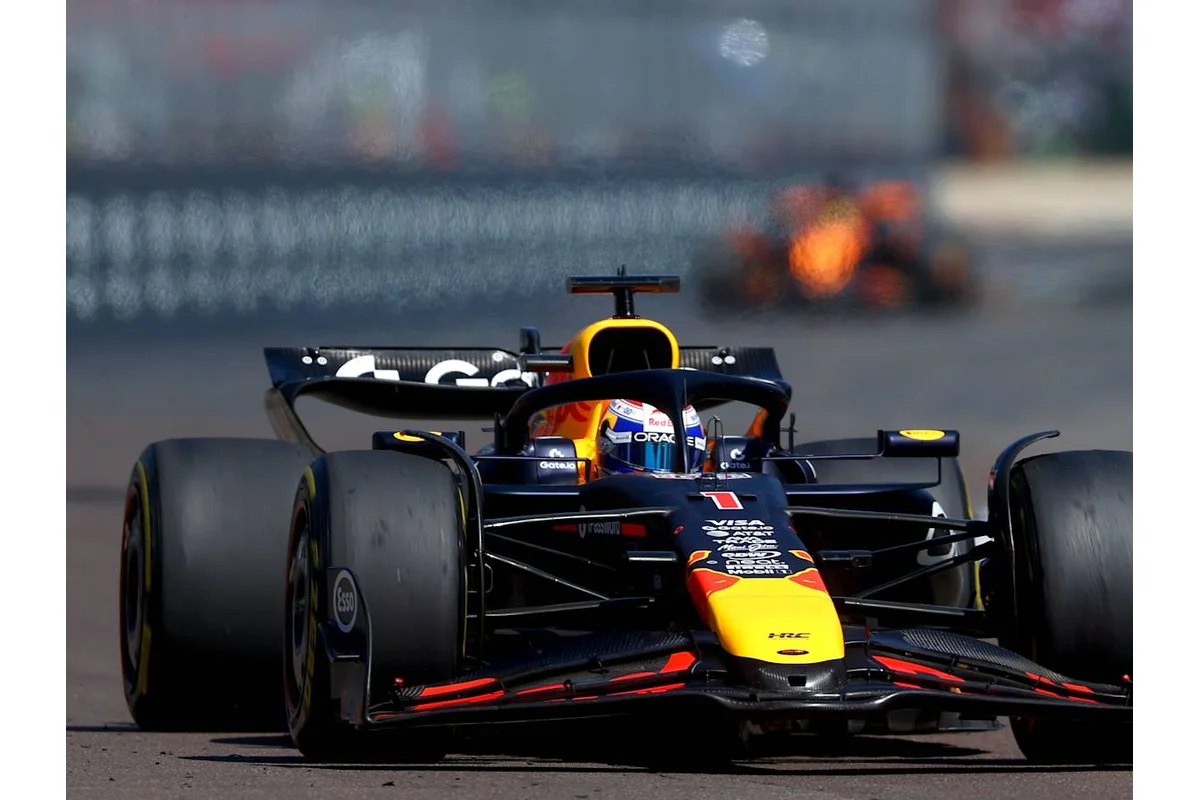
“I don’t know. I mean, it also just depends a lot on the track layout as well. So, yeah, I mean, you can reduce the power, but then of course, you also go slower in that time.”
I’m not sure I mean it’s a It’s a difficult difficult subject to actually say this is the best. You know what we have at the moment, I guess that’s why they also just want to see how it goes here, you know, in the first place, but yes, it’s all pretty complicated.
Speculations on Team Performances and Rivalries Ahead of the Season
With the new F1 season imminent, many predictions circulate regarding how teams will rank on the grid. George Russell raised eyebrows by suggesting that Red Bull’s pace unexpectedly dropped during recent testing sessions. Verstappen disagreed with these observations, focusing instead on his own team’s preparations. He commented,
No, no, I don’t know. I don’t really think about those things,
and
I am just focusing on what we do here; I’m not really too bothered with what other people say.
This season marks the first time since 2020 that Verstappen enters without holding the World Championship title, having narrowly lost to Lando Norris in 2025. Another strong contender last year was Oscar Piastri, who remained competitive until the final rounds but saw a drop in performance in the latter half of the season.
Verstappen’s Thoughts on Oscar Piastri’s Prospects Under New Regulations
When asked if Piastri might carry psychological pressure into the new season, Verstappen expressed confidence in his rival’s composure. He said,
I don’t think so. I mean, he looks pretty chill, but it also depends a lot on how strong their packages are against others,
adding that with how drastically the new rules affect car performance, past results may not indicate future success.
He further noted,
I mean, especially with these new rules, the cars drive so differently that pretty much what happened last year or what a team did. Yeah, it doesn’t really matter this year. I think he’s a calm guy. He’s very fast, so just needs to do his thing.
Implications of Regulatory Changes for the Future of Formula 1
The growing complexity of the 2026 regulations, particularly the shift toward energy efficiency, threatens to change the fundamental nature of Formula 1 racing. Verstappen’s anxiety about the sport prioritizing energy conservation over driving prowess reflects wider debates on how F1 will maintain its thrilling competition. The upcoming Australian Grand Prix will serve as a crucial test for these new rules, offering teams and drivers a clearer understanding of the evolving challenges ahead.
How teams adapt to these regulations, both technically and strategically, is likely to influence race outcomes significantly, making the next season a pivotal moment for the championship landscape. Max Verstappen’s cautious stance signals that even the most successful drivers are navigating uncertainty as Formula 1 enters this new era.
