
Max Verstappen expressed strong dissatisfaction with the 2026 Formula 1 cars following his crash during qualifying at the Australian Grand Prix. The Dutch driver revealed that he is emotionally exhausted and not enjoying driving the new vehicles, highlighting an intense level of frustration just as the new season begins.
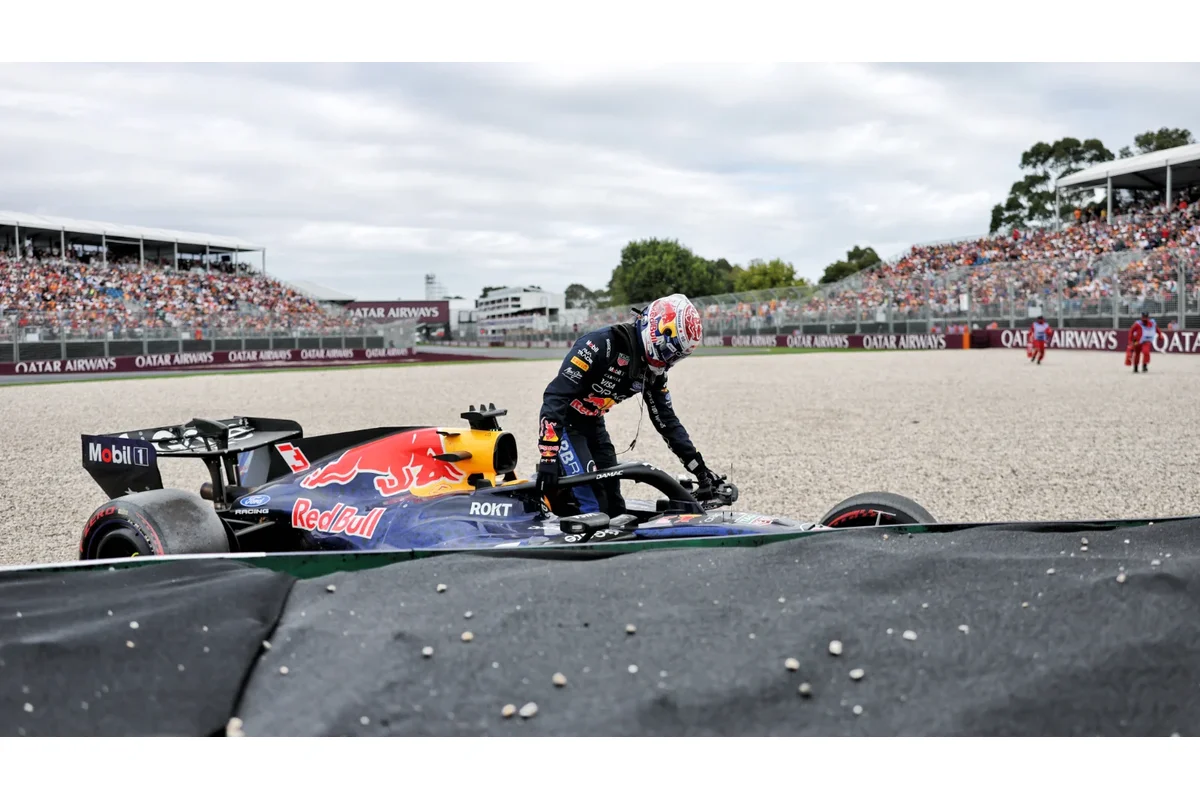
During the first qualifying session at the Australian GP, Verstappen’s Red Bull RB22 experienced a rear axle lock-up as he braked entering the first corner. This caused him to spin into the gravel and collide with the barriers, an incident marking a troubling start to the 2026 season for the four-time world champion.
Verstappen Shares Emotional Toll and Technical Concerns Behind His Driving Experience
After the crash, Verstappen openly admitted that driving the 2026 cars has been emotionally draining, emphasizing how the situation goes beyond a typical racing setback. He refrained from focusing on the crash itself but highlighted the lack of enjoyment and the mental strain involved with the new car dynamics.
“I’m not enjoying it at all, emotionally and feeling-wise I’m completely drained. This has very little to do with racing,” said Verstappen [via Erik van Haren on X].
Verstappen also voiced his concerns about the current formula’s technical demands, particularly the battery management required in the new cars. Drivers are forced to conserve energy through corners to maximize battery power on straights, a strategy he has criticized repeatedly. The hybrid power units now running on a 50% split between electric and combustion engine power mean the reliance on electric battery usage is much heavier, impacting the cars’ speed, especially on straights, as seen in Australia.
Urgent Call for Immediate Revisions to 2026 F1 Regulations
Following the Australian qualifying session, Verstappen emphasized that the 2026 regulations require urgent changes, stating the current setup is fundamentally flawed. He anticipates a challenging season ahead if the rules remain unchanged, underscoring the disconnect between the new car behavior and driver expectations.
“I’m definitely not having fun at all with these cars. I don’t know… You can make up your mind, but I think if you look at the onboard, you see enough, right? There’s nothing that you can do [to make changes to the energy management]. You can only make it slower, and then, of course, you get a bit more of a normal speed trace, but it’s a slower speed trace.”
“The formula is just not correct, and that is something that is a bit harder to change, but I think we need to. It’s going to be a long season, that’s what I’m telling you,” he added.
Expanding on his crash, Verstappen described the incident as a “weird” experience, explaining that the rear axle locked immediately when braking and that this had never happened to him before. The uncertainty surrounding the technical cause added to his frustration during the weekend.
Significance of Verstappen’s Critique and Its Potential Impact on F1’s Future
Max Verstappen’s candid comments shine a spotlight on the struggles drivers are facing with the 2026 Formula 1 cars under the new regulations. His emotional exhaustion and technical grievances suggest the governing body may need to reassess the current approach to hybrid power units and energy management. With Verstappen being a dominant figure and a vocal critic, his feedback could prompt serious discussions on the future competitiveness and safety of the sport.
As the 2026 season unfolds, the persistence of these challenges may affect not only driver performance but also fan engagement and team strategies. If no significant adjustments occur, Verstappen’s warning of a lengthy and difficult season could prove accurate, potentially defining this era of Formula 1.
https://twitter.com/ErikvHaren/status/2030179287362334945
