
At the Australian Grand Prix qualifying session in Melbourne, Mercedes cemented their dominance in Formula 1 with a striking one-two finish, led by George Russell on pole position. The performance gap left competitors reeling, as Red Bull’s Isack Hadjar trailed the leading pair by a significant eight-tenths of a second, an unusually large margin in current F1 standards.
Analysis of Mercedes’ Remarkable Speed and Questions About Sandbagging
Ferrari team principal Frederic Vasseur captured the paddock’s sentiment by describing Mercedes’ qualifying pace as being “on another planet,” fueling intense speculation about whether Mercedes had hidden their true strength during winter testing. Charles Leclerc openly questioned the scale of the gap after reviewing his data, saying,
“When we talked about it on Friday, I said the gap was around half a second. Now it’s eight tenths, so definitely more than I expected,”
adding,
“I looked at the data for the first time and had to reload it because I thought something was wrong with what I was seeing. I really couldn’t believe my eyes – so it’s really very, very impressive.”
Leclerc also expressed suspicions regarding Mercedes’ potential sandbagging during the preseason.
“I think they did a lot more sandbagging than everyone in the paddock thought. I don’t even know if they were driving at full power in qualifying. Maybe they held back a bit, because in training they were insane.”
Sky Deutschland commentator Timo Glock was similarly blunt about Mercedes’ prospects for the race, stating,
“It will be a walk in the park for Mercedes at the front.”
Concerns Raised Over Mercedes’ Power Unit and FIA Oversight
Lewis Hamilton, now racing for Ferrari, expressed skepticism about Mercedes’ sudden power surge and the FIA’s role in regulating it. He said,
“Mercedes’ power unit is, well… I don’t know… something’s off there, I don’t quite understand it. They didn’t show in the tests that they could be that much faster, and now they’ve suddenly found this extra power. We need to understand what it is. I hope it’s not that compression ratio thing. Hopefully it’s pure power and we just need to get better.”
Hamilton went on to add,
“But if it’s the compression issue, then I’m disappointed that the FIA allowed it, as it’s not in accordance with the regulations.”
He also highlighted how even a steady advantage over seven races could severely damage the championship prospects, stating,
“Then the season’s over. Well, not over, but you lose a lot of points in seven races if you’re a second slower in qualifying.”
Mercedes Drivers and Leadership Respond to Sandbagging Accusations
George Russell dismissed claims that Mercedes engaged in sandbagging, suggesting instead that other teams had shown more than expected during winter testing. “I think it wasn’t a case of sandbagging. I think it was more a case of some of the other teams showing more than we would have expected in winter testing.
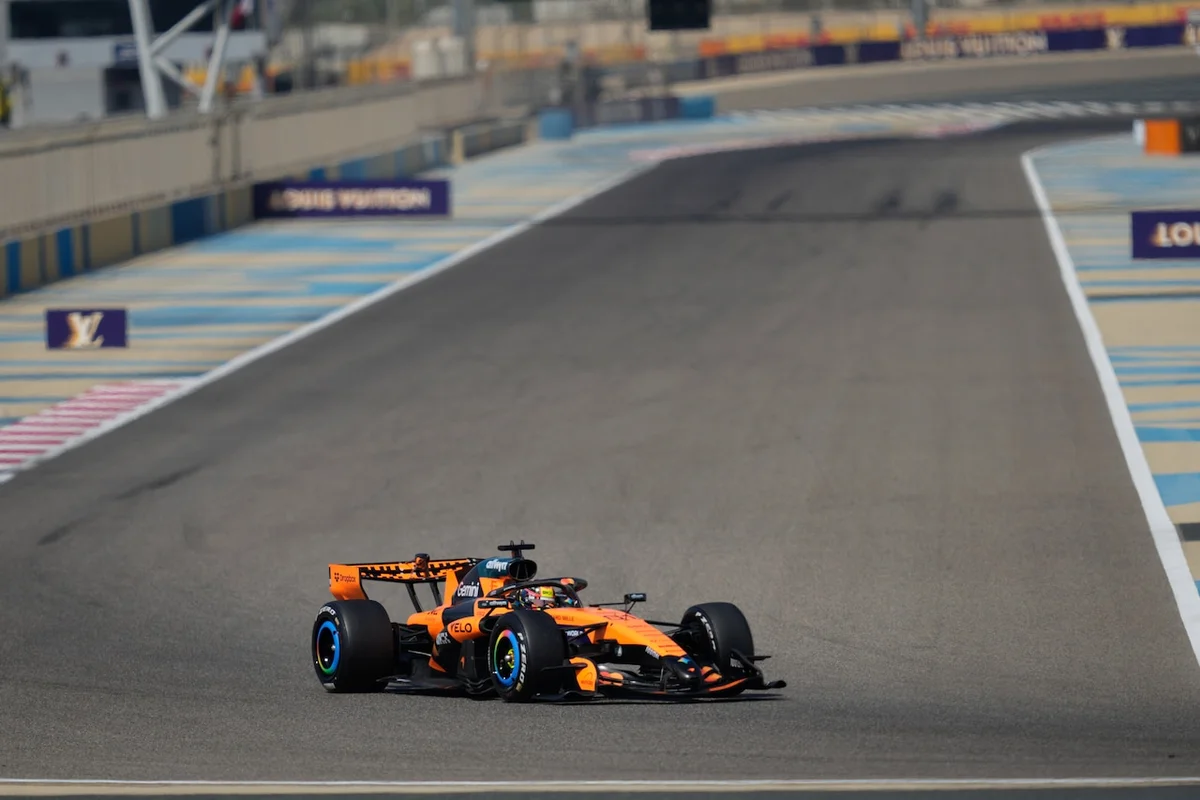
“I think we’ve got a really great engine beneath us. However, I think we’ve also got a really amazing car beneath us, and I think that probably hasn’t been highlighted enough in the press these past few weeks.”
Mercedes team principal Toto Wolff also offered a measured perspective, cautioning against drawing parallels with the dominant Mercedes era that began in 2014.
“I don’t want to get too carried away and compare it to 2014,”
he said.
“We’ve started with speed, the car is handling very well and it gives the drivers confidence. We have to go out tomorrow – we don’t know how that energy management will be in the race, so we have to stay calm for now.”
Wolff acknowledged the surprise over the performance margin, adding,
“This difference of six or seven tenths is a surprise to us, but we’ll take it.”
Technical Perspectives on Mercedes’ Advantage
DAZN’s technical analyst and former F1 engineer Toni Cuquerella rejected the idea that Mercedes was using unique software superiority. He explained,
“They’ve done a good job on the chassis as well,”
highlighting that deliberately supplying customer teams with inferior engines would be illegal and heavily prosecuted.
McLaren technical director Andrea Stella said their team is thoroughly analyzing Russell’s qualifying lap for insights. “We’ve discussed what we’re doing differently than what we saw in Russell’s lap. I think we understand this better now.
“We first needed a qualification with the same power source and the same conditions, to get a good reference for what is achievable. This has nothing to do with hardware, but with understanding the hardware and determining how to get the most out of it.”
Red Bull Maintains Optimism Despite Deficit
Red Bull team principal Laurent Mekies refused to concede the battle after qualifying, pointing out that Max Verstappen suffered energy management issues.
“He would have been about three-tenths of a second behind the fastest Mercedes.”
Red Bull technical director Pierre Wache added,
“The battle isn’t over yet. The deficit is surmountable.”
Their confidence indicates that while Mercedes has set a high benchmark, the fight for race wins and the championship remains fiercely contested.
Implications for the Remainder of the Formula 1 Season
Mercedes’ commanding qualifying performance underscores a potential early-season imbalance, raising concerns among rival teams and stirring debate over regulatory fairness, especially regarding power unit limits. As the season progresses, energy management strategies and fine-tuning vehicle performance will be critical in determining which teams can close the notable gap. Rival outfits like Ferrari, Red Bull, and McLaren face significant pressure to decode and counter Mercedes’ advantage in both engine performance and chassis design.
How the FIA addresses the questions around power unit legality and how rival teams respond on track will likely shape the championship fight in the coming races, with team principals, analysts, and drivers watching closely for any shifts in competitive dynamics.
