
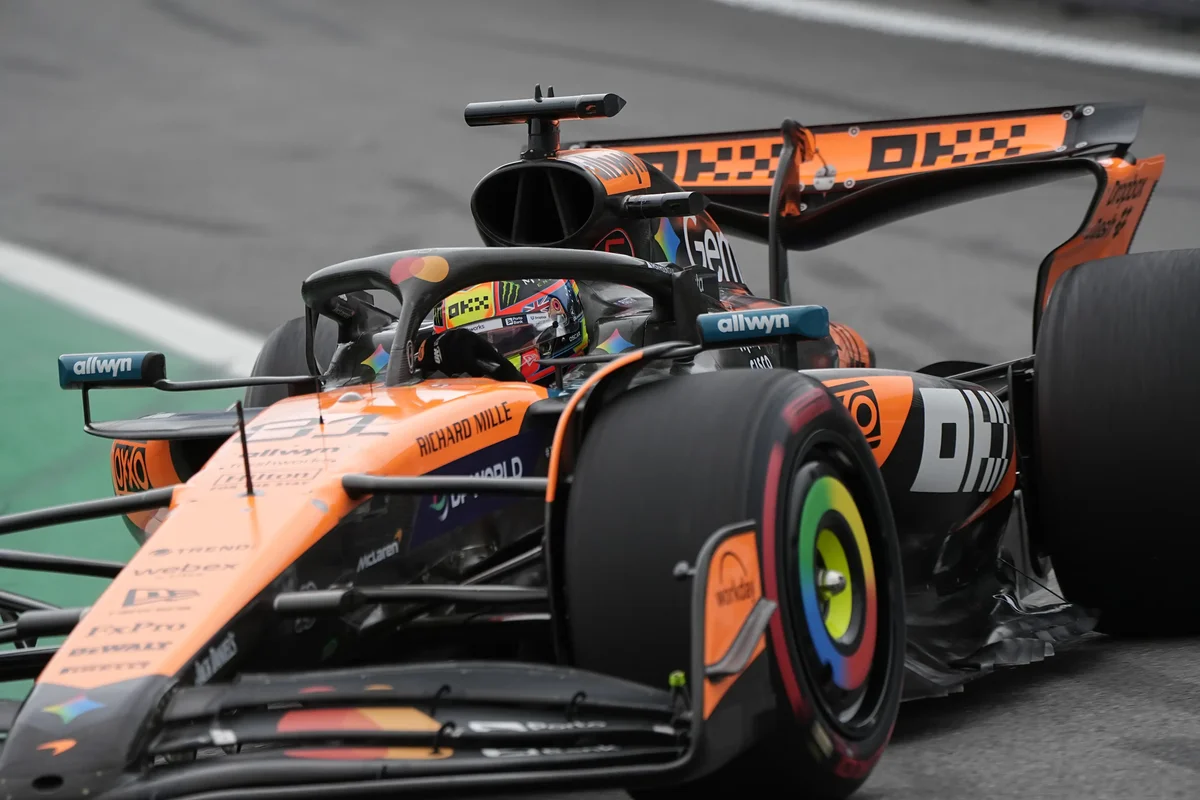
During the 2026 Formula 1 pre-season test in Bahrain, McLaren driver Oscar Piastri encountered significant tyre degradation issues affecting his performance, according to data analysis from the sessions at the Sakhir circuit. While Max Verstappen, driving for Red Bull, appeared to manage his Pirelli tyres more effectively, Piastri’s McLaren MCL40 showed signs of accelerated wear despite using the hardest C1 compound, highlighting a potential handicap in upcoming race conditions.
The testing took place as teams prepared for the Bahrain Grand Prix scheduled for April 12, utilizing long-run simulations under the circuit’s typically hot daytime temperatures. This environment reflects conditions that have prompted Formula 1 to run races at night in Bahrain since 2014.
Comparative Performance Between Piastri and Verstappen
Ruth Buscombe, a former Ferrari strategist, analyzed the race simulation data from the Thursday test and suggested that Piastri would have overtaken Verstappen by lap 19 of a hypothetical Bahrain Grand Prix. The Australian driver was then predicted to build a seven-second advantage before Verstappen regained the lead on lap 50, demonstrating a competitive but ultimately challenging battle.
However, Piastri’s rapid tyre degradation hampered his ability to sustain pace in the latter stints. Buscombe noted on the F1 world feed,
“Oscar did look like he was suffering a bit on the first stint on C1s, [an] interesting start tyre choice for a virtual race [but it] doesn’t matter so much.”
She further remarked on the impact of wear:
But honestly, it looked like it was the cumulative degradation that made a difference. Actually, towards the end of his stints, you’re really hammering those tyres and it looked like tyre deg made the best of it.
Buscombe summarized the test’s comparative outcomes by stating:
Today, it is a virtual win for sim racer legend, Max Verstappen.
Implications of Tyre Wear for Piastri and McLaren’s Race Prospects
Tyre degradation continues to present a substantial hurdle for McLaren’s drivers, with Piastri and teammate Lando Norris facing an uphill battle as they adapt to the 2026 F1 regulations and new car dynamics. McLaren has updated their steering wheel design to assist both drivers in monitoring energy consumption closely amid these challenges.
Norris has occasionally appeared fatigued during testing, a reflection of the demanding nature of the new power unit formula that accompanies the updated technical standards. Should McLaren’s tyre wear issues persist relative to rivals such as Red Bull, their race strategy and overall competitiveness could be compromised significantly.
Ferrari’s Aerodynamic Innovations Highlight Testing Session
A notable development at the Bahrain test involved Ferrari’s introduction of a radical rear wing that rotates 180 degrees, designed to comply with the active aerodynamic tools permitted under the 2026 regulations, replacing the previous DRS system. Lewis Hamilton demonstrated this new Scuderia innovation on track, posting the fourth-fastest time during the session.
This technical breakthrough indicates Ferrari’s intent to contend strongly in the upcoming season, while McLaren’s ongoing difficulties underscore the challenges teams face adjusting to the sweeping changes in regulations and vehicle performance demands.
Looking Ahead: Challenges and Opportunities for McLaren and Piastri
Oscar Piastri’s tyre degradation problems during the Bahrain pre-season test underline a critical area McLaren must address to boost race competitiveness. The severity of tyre wear has direct implications for race pace, strategy, and driver stamina, particularly given the complex energy management required under the new engine regulations.
As the season opener approaches, McLaren’s ability to optimize tyre performance while adjusting to the updated car setup will likely play a pivotal role in Piastri’s success. Meanwhile, Red Bull and Ferrari’s promising test performances set the stage for a highly competitive year in F1.
