
Oscar Piastri has called for urgent discussions before the upcoming Australian Grand Prix, expressing deep safety concerns regarding race starts and the challenges posed by overtaking with the new Formula 1 cars. His main worry centers on managing 22 of the new low-downforce vehicles on race circuits, which he believes could create dangerous situations during race launches. This worry comes amid efforts to adapt to regulations and new power units for the 2026 F1 season.
Drivers’ Mixed Reactions to New 2026 F1 Cars After Bahrain Testing
The first official pre-season test of the 2026 F1 cars took place recently in Bahrain, sparking varied feedback from the drivers. Piastri’s McLaren teammate and reigning World Champion, Lando Norris, described the new cars as “a lot of fun,” while George Russell expressed cautious optimism, calling it a “step forward.” In contrast, several high-profile drivers such as Fernando Alonso, Lewis Hamilton, and Max Verstappen voiced their apprehensions. Verstappen offered perhaps the sharpest critique, labeling the new regulations as “anti-racing” and likening the cars to “Formula E on steroids.”
Piastri himself completed extensive running during the Bahrain test, accumulating 161 laps in the McLaren car on the final day, gaining vital experience with the new machinery. Despite the technical challenges, he acknowledged that the competition among top manufacturers like McLaren, Mercedes, Red Bull, and Ferrari remains intense, though exact rankings are still unclear.
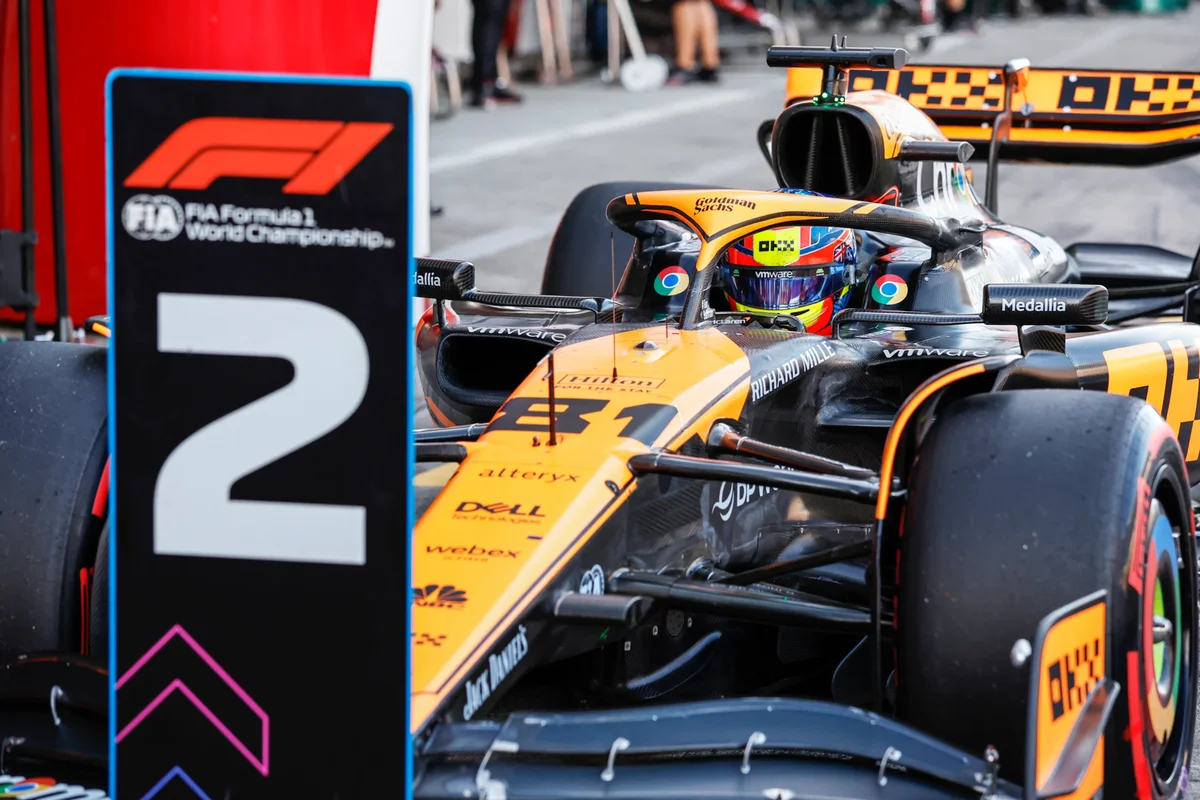
Where we are in the pecking order, I don’t know,
Piastri stated.
“I think it kind of looks like the top four teams are still the top four teams, but I don’t know where exactly we sit in that at the moment.”
The new cars feel markedly different, especially at high speeds where downforce has dropped substantially compared to last season. However, Piastri noted that lower-speed corners may feel smoother thanks to the cars’ lighter weight.
And we’ve been learning a lot about how to get the most out of the power unit this week, which, yeah, is unconventional, definitely. But, new challenges.
The power units of 2026 use a 50/50 split between electric and biofuel energy, adding a complex new dynamic to driving styles and race strategies.
Concerns Over Launch Procedures and Practice Starts in Bahrain
One highlighted issue from the Bahrain tests is the car launch procedure for race starts. During a practice launch late in the testing session, several drivers, including Piastri, experienced delayed starts, and Alpine’s Franco Colapinto nearly crashed after spinning his rear tires to generate heat.
Piastri clarified that these hitches were not related to the new engines themselves but rather a misunderstanding in instructions among teams.
I think the start today was just a mix-up in instructions,
Piastri explained.
“I got told to wait until whoever was in front of me had gone and then do my own launch, and not do it to the lights. Clearly, some other people had a different idea. So that was nothing to do with the power units.”
Despite this, Piastri emphasized the need to improve race start procedures before Melbourne, describing them as both complicated and unsafe in their current form.
Starts need to be addressed, because, probably as we’ve all seen, it’s a pretty complicated process now to have a safe start, let alone a competitive one,
he remarked.
So it’s something that we’ll talk about between now and Melbourne, I’m sure.
More Topics for Pre-Melbourne Discussions: Overtaking and Race Dynamics
Beyond starts, Piastri believes numerous other crucial issues must be discussed before the season-opening race. One key consideration is how overtaking will evolve under the new regulations. With the removal of the Drag Reduction System (DRS), drivers will instead rely on electrical boosts and overtake modes to maneuver on track.
DRS was obviously just a pure advantage used to gain, whereas now, with the energy boost, you’ve obviously got to harvest that extra energy somehow and then deploy it, which with some of the rules in place, is not always that straightforward,
Piastri explained.
Manufacturers are expected to continue optimizing systems to enhance overtaking opportunities, though Piastri noted that following other cars remains similar to last year, which does not come as a surprise.
I think following is very similar to last year, in all honesty, which is not a big surprise to me, but there’s definitely a lot of things to talk about and address before Melbourne.
When asked about his overall impression of the new F1 2026 cars, Piastri described the experience as complex and challenging, especially as drivers adapt to new requirements like lifting on straights—a counterintuitive action after years of different driving demands.
He conveyed that while the cars are slower and have less downforce, they offer more corner exit power, which presents its own difficulties in control and consistency.
That aspect is kind of one thing, and then there’s all the aspects that are new and need some reform.
The McLaren driver still feels the vehicles maintain the essential grip expected of an F1 car, though managing the “crazy amount of power” out of corners can be tough at times.
But I think we also need to remember that the cars we had last year were at some tracks, the fastest F1 cars ever, so anything that feels worse than that is always going to be not quite as fun at the start,
Piastri commented.
So I think it still feels sensible. There’s just a lot of other things that are very different.
Why Race Starts Are the Primary Safety Concern for Piastri
Piastri singled out race starts as his key safety concern, more so than the potential closing speeds during overtakes. He worries that having a group of 22 cars with significantly reduced downforce racing closely resembles a dangerous scenario.
I think the starts is probably the most obvious one for now,
he explained. “Overtaking, it’s always going to be tough to manage until you’ve actually had a race. Whether we use straight mode at the start or not as well.
I think a pack of 22 cars with a couple hundred points less downforce sounds like a recipe for disaster to me, but there’s a few of those aspects that need to be spoke about.
Piastri acknowledged that discussions around race starts could become politically charged among manufacturers, given the different needs and unknowns that every team faces when determining optimal launch strategies.
He emphasized that drivers and teams are still figuring out what exactly is required:
“The thing is, everyone’s going to need different things for the start. And to be completely honest with you, I’m not sure any of us know exactly what we need yet. We’ve probably got rough ideas.”
According to Piastri, unlike previous seasons where a poor start meant losing a few meters due to wheelspin or reaction time, this year the situation could be much worse, potentially costing multiple places and resembling incidents seen in Formula 2 races when anti-stall activates unexpectedly.
So, there’s a lot of things.
He concluded by reiterating how many issues still require clarification and on-track testing to ensure even a baseline of safety in race starts.
There’s so many things just from an even borderline safety point of view that need to be kind of figured out on track, that do need addressing.
Implications for the Upcoming Season and Ongoing Development
Piastri’s concerns highlight the tense atmosphere within Formula 1 as teams and drivers adapt to substantial regulatory and technological changes in 2026. With safety questions hovering over race starts and overtaking mechanics still being refined, the early part of the season will likely be shaped by ongoing discussions and rapid adaptation.
Teams such as McLaren, Mercedes, Red Bull, and Ferrari will continue to compete fiercely, but the complexities introduced by new power units and aerodynamic regulations suggest that racecraft and strategic calls will be under intense scrutiny.
How the sport addresses these “recipe for disaster” start conditions will likely dictate not just safety but also the overall spectacle and competitiveness of Formula 1 in the coming years. Efforts to resolve these issues before the Australian Grand Prix are expected, with feedback from drivers like Piastri playing a critical role.
