
During the qualifying session of the Australian Grand Prix, four-time Formula 1 champion Max Verstappen suffered a surprising crash when the rear tires of his car unexpectedly locked up. This sudden loss of control happened earlier than anticipated, causing Verstappen to collide heavily with the barrier. The incident left the Dutch driver perplexed as he struggled to understand how the rear tires locked suddenly just before Turn 1.
After completing a couple of preparation laps in Q1, Verstappen embarked on his first flying lap, only to lose command of his car prior to reaching Turn 1. Replays confirmed that the rear tires locked before he could negotiate the corner, causing the RB22 to launch across the gravel trap and crash. Questions arose about whether the issue was the brake bias, mechanical failure, or something else entirely.
Software Problem in the Hybrid System Linked to Rear Tyre Lockup
The root cause of Verstappen’s crash was identified as a software glitch affecting the regeneration system of the car’s hybrid unit. For the 2026 season, the FIA introduced significant regulatory changes, including an updated power unit that removed the MGU-H and increased the size of the battery and motor. The MGU-K (Motor Generator Unit – Kinetic), which is connected to the rear axle and responsible for recharging the battery during deceleration, had to operate much more intensively due to these changes.
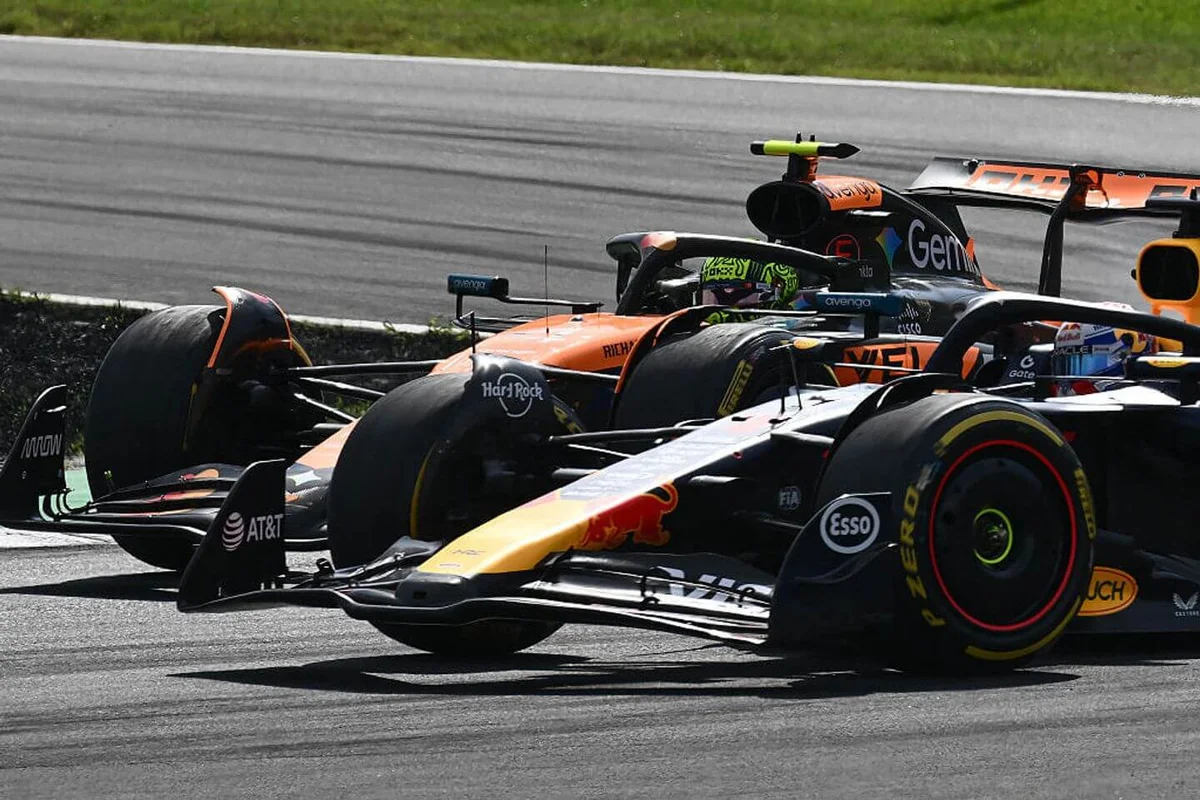
The teams use sophisticated software to regulate the level of regenerative braking applied by the MGU-K, which directly impacts how quickly the car slows when the driver lifts off the throttle or applies the brakes. Greater regeneration results in stronger slowing force but more energy recovery, while less regeneration allows the car to coast faster through corners.
In Verstappen’s situation, the software incorrectly set the regeneration amount excessively high. This caused the rear tires to lock as soon as he lifted off the accelerator and pressed the brake, triggering the sudden loss of traction that led to the crash. Pierre Wache, a Red Bull engineer, described the flaw as an easily fixable error and added that without the crash, Verstappen would likely have qualified just three-tenths of a second slower than George Russell, who held pole position at the time.
Max Verstappen Recounts the Impact of the Crash and His Condition
Following the crash, Verstappen was taken to the medical centre for evaluation and later spoke with the media about the incident. He described the moment the rear axle locked as unprecedented in his career, highlighting how sudden and uncontrollable the situation was.
“I just hit the brakes and suddenly the rear axle just completely locked out of the blue. I don’t know why that happened or how that happened. I’ve never experienced something like that before in my career. The rear axle just completely locked on, then of course you can’t save that anymore at that speed.” ?Max Verstappen, F1 Driver
The abrupt jerking of the steering wheel during the crash caused Verstappen to injure his wrist, though he remained conscious throughout and was cleared medically soon after. He gave an update on his condition, reassuring fans despite the severity of the accident.
“The barrier hit was not that bad–the wheel just snapped out of my hands and that’s why I had to go to the medical centre, but all good.” ?Max Verstappen, F1 Driver
As a result of the crash, Verstappen will start the race from the back of the grid in P20. Meanwhile, his new teammate Isack Hadjar performed strongly in qualifying, securing P3 behind George Russell and Kimi Antonelli.
Implications for Verstappen and the Red Bull Team Moving Forward
This incident underscores the challenges teams face adapting to the 2026 hybrid power unit regulations and highlights the critical role software stability plays in race performance and safety. For Verstappen, the crash was a significant setback, impacting his starting position and potentially affecting his championship campaign.
Red Bull will likely prioritize resolving this software bug swiftly to prevent future occurrences and ensure Verstappen and Hadjar can compete reliably. The team’s ability to adapt and optimize the new hybrid systems will be crucial as the season progresses, especially against competitors like George Russell, who are demonstrating strong qualifying pace.
Looking ahead, this crash serves as a stark reminder of how even minor technical errors can produce major consequences in Formula 1, emphasizing the balance required between high-performance innovation and driver safety on the track.
