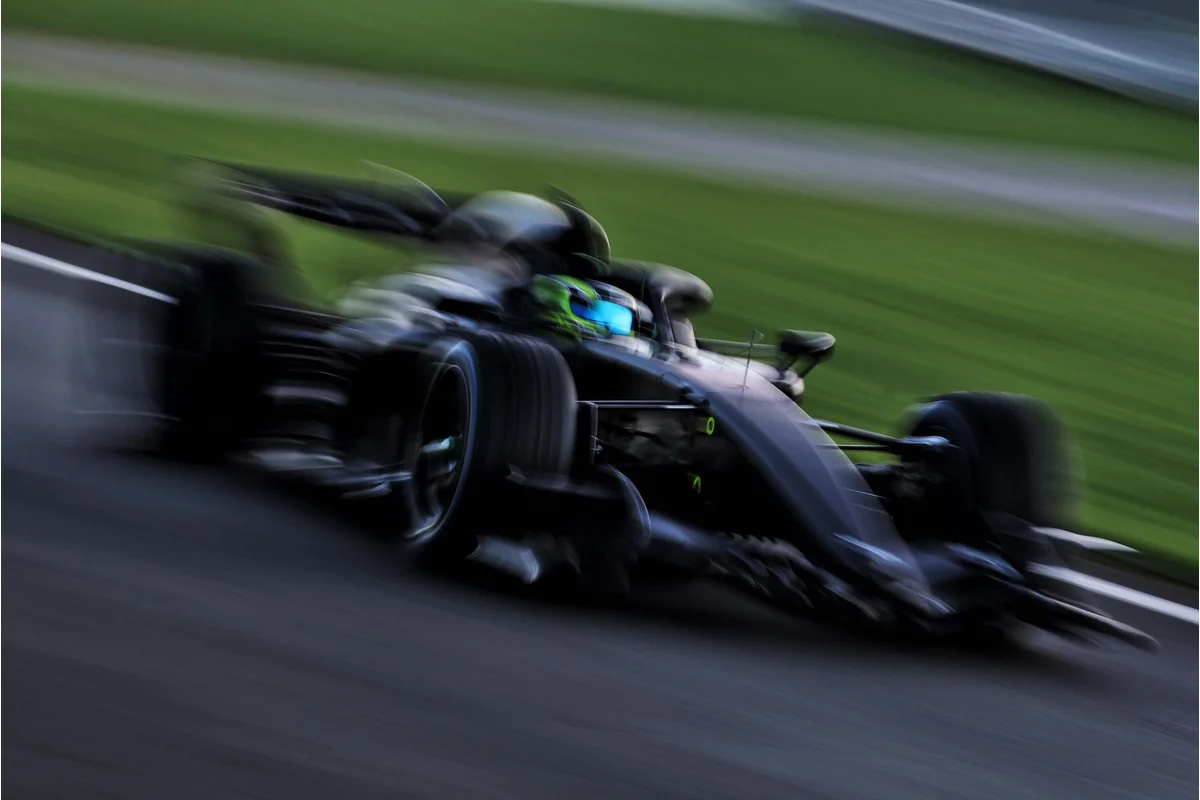
Williams team principal James Vowles revealed that the decision to skip the entire Barcelona shakedown week was one of the most difficult he has faced since leading the team. The omission was part of a strategic focus on preparing for the 2026 season, emphasizing long-term competitiveness despite the immediate setbacks. The choice to delay the FW48’s debut on track came as the team unveiled its 2026 livery through digital renderings rather than a physical launch car.
Unable to conduct the planned real-world launch following delays, Williams relied heavily on simulator work and Virtual Track Test sessions instead of live track evaluations in Spain. Vowles acknowledged the challenging nature of this winter for the team’s ongoing rebuilding process but asserted that their fundamental approach remains intact, prioritizing investments directed at success in 2026 rather than short-term results.
Strategic Choices Reflect Commitment to Long-Term Progress
According to Vowles, Williams made deliberate decisions in 2025 that aimed to strengthen the team’s foundation for future growth. He stated,
“The decisions made in 2025 were the right ones – investing upstream for 2026,”
emphasizing a clear progression. Although improvements have been made, Vowles was careful to moderate expectations about immediate gains, explaining that the team is not ready to compete for championships just yet.
This is underlined by his candid remark:
Image of: Formula 1
“World champion in 2027 is not realistic,”
signaling that Williams has set more attainable goals for the near future, specifically targeting consolidation at the top of the midfield.
Clear Targets Set to Build on 2025 Midfield Finish
Williams aims to maintain or improve upon their fifth-place finish in the 2025 constructors’ standings. Vowles commented on the difficulty of climbing higher up the grid, warning that moving from fifth to fourth — and beyond — becomes increasingly challenging.
“P5 is the base level I want us to be at,”
he said.
“But it’s exponentially harder to go from P5 to P4, and even harder again to P3, P2, P1. The path to P2 or P1 simply isn’t planned for 2026. We still have work to do.”
Driver Continuity Critical to Rebuilding Efforts
The stability of having drivers committed beyond a single season is fundamental to Williams’ strategy. Vowles highlighted the importance of retaining Alex Albon and Carlos Sainz, who have both signed contracts extending into the future.
“They’ve signed for more than a year because they want to be part of a project,”
he said.
“That was an agreement I made with them.”
Delays Reveal Internal Challenges but Spur Necessary Change
Reflecting on the issues that caused the team to miss early testing opportunities, Vowles expressed regret but also saw the setback as a crucial moment for uncovering internal weaknesses. He acknowledged,
“I wish we hadn’t had to confront it so aggressively to discover all the weaknesses,”
especially regarding communication and organizational processes within Williams.
“But if we’d known the limitations of our processes – how we communicate, how we move pieces within the company – we would have changed the program earlier.”
He added,
“What pleases me, in a strange way, is that if you avoid a problem, it doesn’t hurt enough to dig deep and fix it. This won’t happen again. You have to let the pain of failure drive change.”
Simulator Work Helps Team Stay Ready for Bahrain
Despite missing the physical track sessions in Barcelona, Vowles expressed confidence that extensive simulator work and Virtual Track Test activities have adequately prepared Williams for the season opener in Bahrain.
“I would have preferred to be in Barcelona,”
he admitted.
“We wanted to get ahead. We didn’t achieve that. But our VTT testing was a success, and the work we did with Carlos and Alex in the simulator while others were running in Spain was extremely valuable.”
Strong Collaboration with Mercedes Provides Competitive Edge
Williams benefits from a deep and long-standing partnership with Mercedes, particularly valuable as teams adapt to the new power units and gearboxes ahead of the 2026 regulations. Vowles praised the advantages this relationship offers.
“We’re fortunate Mercedes has enough drivers and teams running their package,”
he said.
“We’re receiving a lot of information on both the power unit and the gearbox, which allows us to get ahead for Bahrain.”
Observations on Rival Teams’ Progress
While assessing the early impressions of their competitors, Vowles noted Red Bull’s notable progress, especially in power unit reliability, and acknowledged Ferrari’s consistency despite uncertainties about ultimate pace. Mercedes, as usual, adapted effectively to the new rules.
“Red Bull were very impressive, especially on the power unit side,”
he observed.
“To build a power unit from scratch and have it be that reliable is remarkable. Ferrari’s consistency is also impressive, even if ultimate pace is unclear. Mercedes, as always, are very good at adapting to regulation changes.”
Williams’ Position Compared to Other Mercedes Customer Teams
Williams’ integration with Mercedes is deeper than some other teams, including Alpine, which recently switched to the same power unit and gearbox setup. Vowles believes this continuity gives Williams an advantage.
“I think Alpine’s learning curve is steeper than ours,”
he said.
“We’ve been integrated with Mercedes for a very long time, and we also use their gearbox, which sets us apart from McLaren. That could give us an advantage.”
However, he cautioned that definitive rankings remain unclear until on-track data is available.
“At this moment, nobody knows the hierarchy – and I really mean nobody,”
Vowles said.
“Especially us, because we haven’t been on track.”