
The 2026 Formula 1 preseason testing took place at Bahrain International Circuit, marking a significant shift in the sport due to revamped regulations emphasizing roughly equal contributions from internal combustion and electric power in hybrid units. These rules also introduced reduced downforce and smaller car sizes, challenging teams to adapt quickly over six days of trials focusing on reliability, energy management, and overall pace. Ferrari’s Charles Leclerc set a leading time of 1m31.992s, signaling strong potential, but many teams, including Mercedes, are believed to have concealed their true performance ahead of the upcoming Australian Grand Prix at Melbourne.
Ferrari and Mercedes Battle at the Front of the Field
Ferrari emerged strongly, with Leclerc’s top qualifying time paired with encouraging long-run performance in race simulations, suggesting competitive race pace under the new regulations. Mercedes appeared to hold back some speed, reinforcing their status as pre-race favorites for the season opener. Mercedes driver Kimi Antonelli posted consistent stints in the 1m36s-1m37s range using C3 tires despite some reliability issues, such as power unit replacements. Drivers praised Ferrari’s agile handling and lively response on softer tire compounds, though they noted some instability in the rear under load.
Intense Rivalry Between McLaren and Red Bull Near the Front
The defending champions McLaren demonstrated slight advantages in single-lap pace, with Lando Norris and Oscar Piastri matching Red Bull’s performance during race simulations in the 1m38s-1m39s lap time window. Red Bull debuted their newly developed in-house power unit, which encountered minor teething problems, yet Max Verstappen commended the unit’s reliability following extensive running. McLaren’s Andrea Stella identified Ferrari and Mercedes as the main contenders while acknowledging his team’s progress, positioning McLaren and Red Bull as close competitors separated by mere tenths of a second.
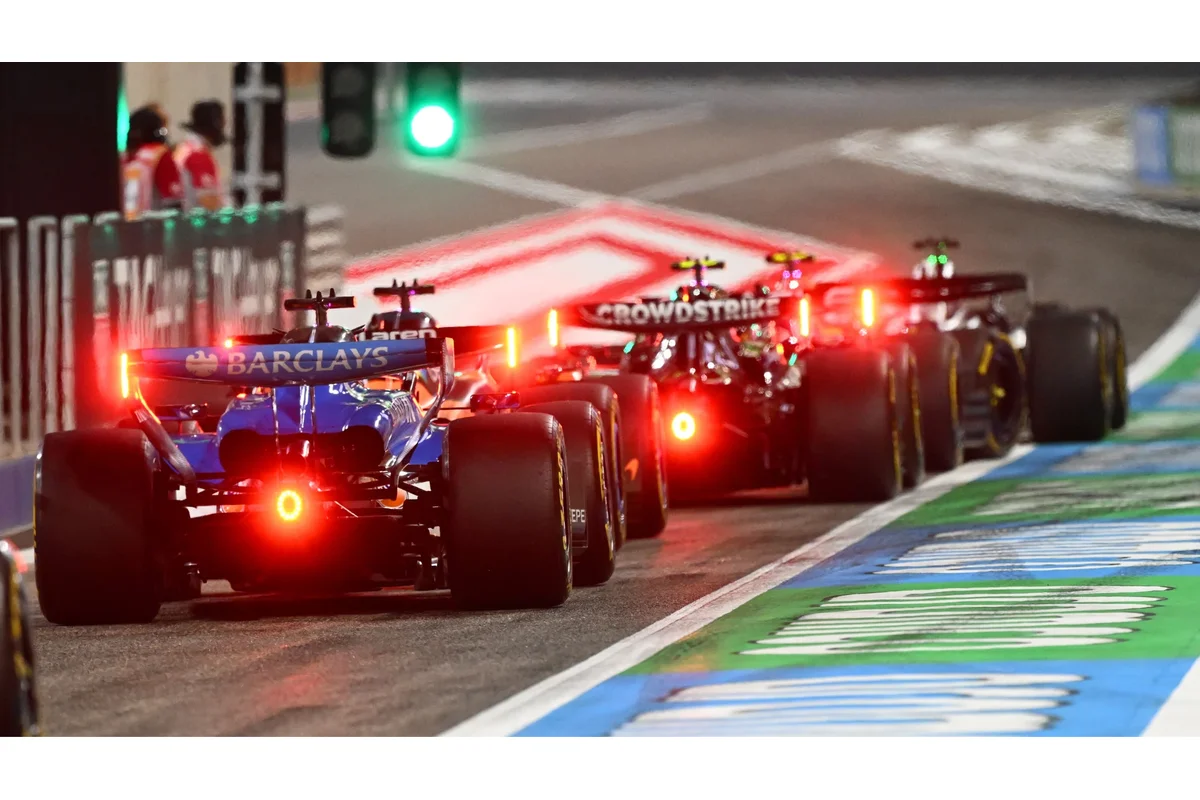
Midfield Shifts: Alpine and Haas Show Strong Potential
A clear division in the grid pace appears likely, with the leading four teams about one second ahead of the midfield pack. Alpine, having switched to Mercedes engines, surprised observers by shedding their previous status as the slowest Mercedes-powered team and competing effectively at the midfield’s forefront alongside Ferrari-powered Haas. Drivers Pierre Gasly and Franco Colapinto enjoyed their cars’ balance, achieving consistent race pace in the 1m38s-1m39s range on C2 tires. Haas impressed with both reliability and garage efficiency, completing extensive running and demonstrating improved operational processes. Additionally, Racing Bulls rookies showed promising consistency near the top of the midfield group.
Established Teams Face Setbacks: Aston Martin and Williams Struggle
Aston Martin endured a difficult testing program, hampered by unreliable Honda power units, inadequate power output, and spare parts shortages. These issues resulted in the fewest laps completed and performance deficit of about four seconds from top competitors during simulations. Despite these setbacks, Fernando Alonso expressed optimism about resolving challenges within the next few months. Williams also faltered due to a notably overweight car—estimated at 25 to 40 kilograms above target—which negatively affected lap times and forced the team into catch-up mode following missed shakedown testing in Barcelona. Alex Albon noted that start performance varied, and overall the team remains in the lower midfield tier.
New Entrants Audi and Cadillac Deliver Respectable Initial Performances
Audi, evolving from the Sauber project with a new power unit, delivered a steady if unspectacular midfield debut by covering nearly 5,000 kilometers of running while aiming to reach the lower quarter of Q2 qualifying sessions. Reliability gradually improved, with Nico Hulkenberg conducting long runs clocked between 1m39s and 1m41s. Cadillac, entering Formula 1 for the first time, successfully met development goals and maintained solid reliability, although it lagged approximately four seconds behind the frontrunners in conservative operational modes. Cadillac completed 266 laps amid minor technical issues but avoided breaching the 107% qualifying rule, marking a credible start for a new team.
Technical Innovations Flourish Despite Restrictive Regulations
Concerns over homogenized car designs were unfounded, as teams introduced several unique aerodynamic innovations within the strict new parameters. Ferrari unveiled a rotating active rear wing equipped with a gearbox-mounted winglet, while Audi developed distinctive sidepods and Mercedes added a fourth element to its rear wing assembly. Power unit variations influenced factors such as noise, energy deployment strategies, and gear usage. Teams adapted by employing higher gears through corners and applying lift-and-coast techniques during qualifying laps. The FIA also trialed “Plan B” engine modes, deploying up to 300kW of electric power to aid battery charging on energy-demanding circuits like Albert Park in Melbourne.
You spin me right round! 😵💫
Here’s Ferrari’s innovative solution to moving the upper flap of the rear wing as part of this season’s active aero introduction 👀 #F1 #F1Testing pic.twitter.com/yY0ZcI1Kph
— Formula 1 (@F1) February 19, 2026
Performance Targets Achieved; Starting Procedures and Reliability Vary
Fears that the 2026 cars would be significantly slower were largely eased, with Leclerc’s best lap only 2.151 seconds slower than last year’s pole position, fitting neatly within anticipated performance windows of 1 to 2 seconds. Initial concerns related to turbo lag during race starts were addressed through a mandatory five-second hold procedure before lights out. However, start speed discrepancies persist, particularly favoring teams equipped with Mercedes engines. Reliability varied across teams: while Mercedes and Red Bull encountered minor issues, Ferrari and Haas demonstrated routine dependability throughout testing.
Emerging Hierarchy and What Lies Ahead in 2026
The provisional pecking order positions Mercedes and Ferrari at the front, closely followed by McLaren and Red Bull. The midfield cluster comprises Alpine, Haas, Racing Bulls, Audi, and Williams, while Aston Martin and Cadillac are expected to fight from the rear. The testing period was notably smoother than previous technical revolutions thanks to more mature preparation and protocols. Yet, ongoing in-season development will be vital, especially for smaller outfits like Haas. As many teams engaged in sandbagging during preseason, the upcoming Australian Grand Prix in Melbourne will provide a clearer picture of competitive dynamics. The revamped regulations have reinvigorated car agility and introduced fresh challenges, promising an exciting and unpredictable 2026 Formula 1 season.
You spin me right round! 😵💫
Here's Ferrari's innovative solution to moving the upper flap of the rear wing as part of this season's active aero introduction 👀 #F1 #F1Testing pic.twitter.com/yY0ZcI1Kph
— Formula 1 (@F1) February 19, 2026
