
Max Verstappen and Red Bull delivered an impressive performance during the Bahrain Formula 1 testing on Wednesday, with Verstappen recording the second-fastest lap time, trailing world champion Lando Norris by just over a tenth of a second. More significantly, Verstappen completed 136 laps, the highest among all drivers, signaling Red Bull’s strong reliability and pace.
Toto Wolff, Mercedes team principal, expressed confidence that Red Bull not only have the fastest car but also possess the best engine after careful analysis of their Bahrain performance. This is particularly notable given Red Bull’s status as a new power unit manufacturer in F1.
Energy Management Becomes a Key Factor for Drivers
With Formula 1 set to become nearly 50% electric by 2026, drivers will need to manage energy deployment with increasing skill. Verstappen has begun developing a sophisticated gear-shifting approach that enhances energy recovery, especially on straights, which could give him an advantage as the sport moves toward hybrid and electric integration.
Liam Lawson Attempts to Emulate Verstappen’s Gear Strategy
During the Bahrain tests, Verstappen experimented with taking corners in lower gears to keep engine revs higher, thereby improving energy recovery. This strategy has gained attention, with drivers like Lando Norris, Alex Albon, and Pierre Gasly reportedly trying similar techniques, likely influenced by Verstappen’s example, according to trackside observer Scott Mitchell-Malm.
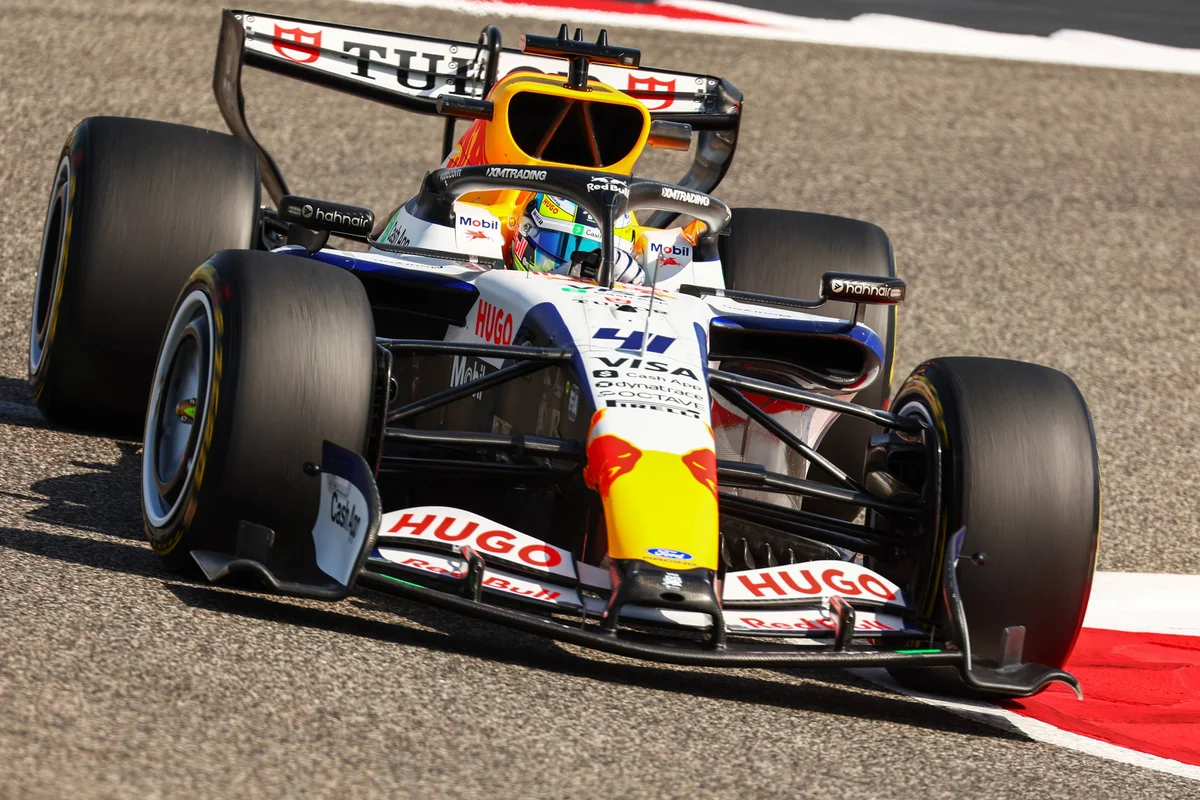
Liam Lawson, competing with Racing Bulls and running a Red Bull power unit, attempted to apply this same gear technique. However, the adaptation has not been smooth for him. The method carries a risk of causing rear instability, which Lawson struggled with, especially at challenging sections like the tight, downhill, and off-camber turn 10. He appeared more confident when using second gear at that apex.
New Engineering Partnership Presents Additional Challenges for Lawson
Red Bull’s engine performance could be a game-changer for Lawson in the 2026 season, especially considering Adrian Newey’s forecast that engine power will have a more decisive influence than aerodynamics under upcoming regulations. However, Lawson’s transition is complicated by a change in his engineering support team.
For 2026, Alexandre Iliopoulos replaced Ernesto Desiderio as Lawson’s race engineer at Racing Bulls. This shift comes at a critical moment, as driver-engineer collaboration becomes increasingly vital due to the technical complexity of the new rules.
Importance of Adaptation Amidst a Transforming F1 Landscape
Lawson’s struggle to fully adopt Verstappen’s driving technique, combined with a new engineer on board, underscores the challenges faced by young drivers adapting to evolving car technologies and race strategies. Success in 2026 will depend not only on raw talent but also on mastering energy management and building strong partnerships with the engineering team. As the season progresses, how well Lawson adjusts to these factors could determine his trajectory within the highly competitive Red Bull environment.
“Verstappen started taking corners in a lower gear so that the engine revs were higher, which helps with energy recovery. The drivers are having to experiment more so than ever before in testing.” ?Scott Mitchell-Malm, Trackside Observer
“There’s a trade-off to using a lower gear, which can trigger rear instability. Lawson looked more settled using second gear at the tight, off-camber, downhill turn 10 apex.” ?The Race Report
“Adrian Newey has predicted that F1 will be an engine formula in 2026, which effectively means power unit performance will play a greater role in determining the pecking order than aerodynamic efficiency.” ?Industry Analyst
