
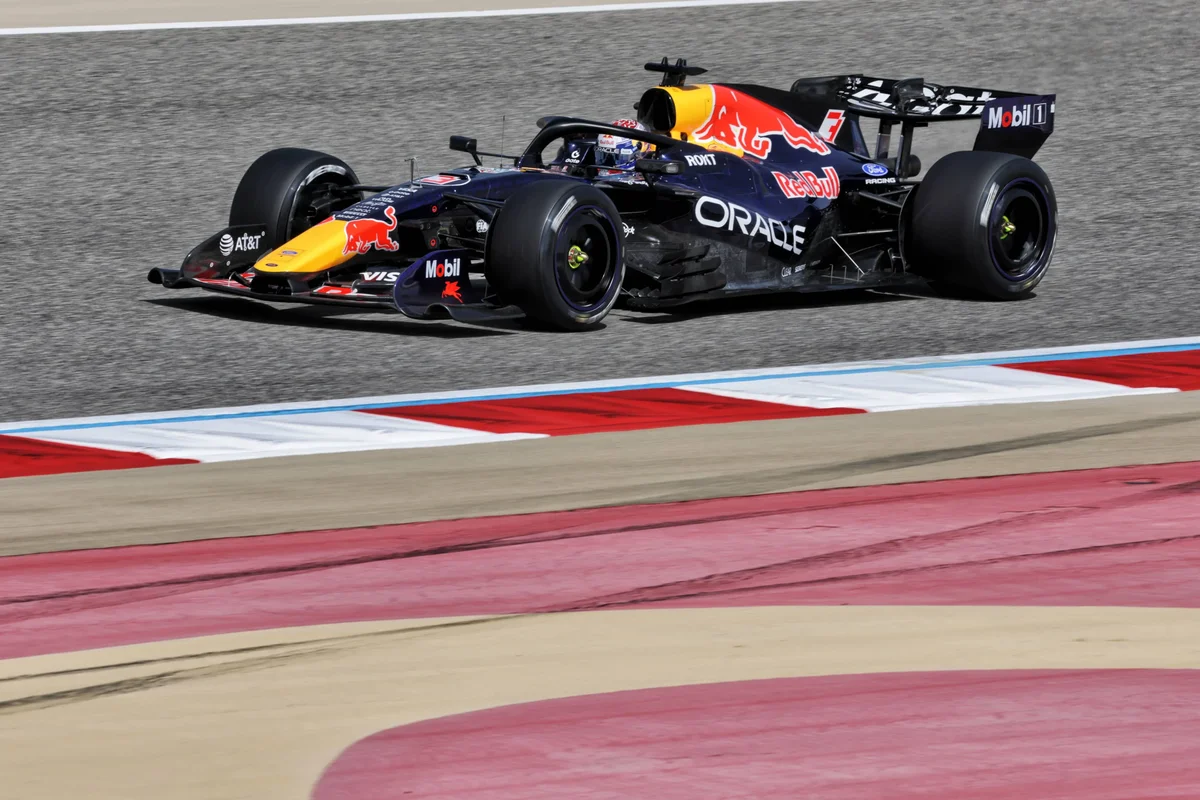
Max Verstappen’s Red Bull showcased a strong performance during the first day of Formula 1’s pre-season testing at the Bahrain International Circuit, surprising many rivals despite Lando Norris of McLaren topping the timesheets. The three-day test, held in Bahrain, is part of an extended pre-season schedule aimed at helping teams adjust to the new power unit and chassis regulations set to take effect in 2026. Verstappen’s impressive pace combined with significant mileage completed drew particular attention across the paddock.
Red Bull’s Strong Showing Reinforces Confidence in New Power Unit
Red Bull, manufacturing their own engine for the first time since their 2005 debut, had already made a solid impression during last month’s shakedown in Barcelona. On Wednesday, the team reinforced their potential in Bahrain as Verstappen was the first driver on track and led the times for much of the day, completing an extensive 136 laps, including noteworthy long runs during the second four-hour session. Although Norris eventually surpassed Verstappen’s lap time by a slim margin of 0.129 seconds, securing pole with a 1:34.669, Red Bull’s pace and reliability stood out.
Despite the early lap time leaderboard, experts cautioned against reading too much into individual times at this stage because teams may be focusing on reliability and gathering data rather than outright speed. Additionally, some teams, such as Mercedes, appeared to be concealing their true pace ahead of qualifying in Melbourne, with George Russell finishing sixth and 1.5 seconds behind the leader.
Challenges Faced by Other Teams as Bahrain Test Unfolds
Mercedes encountered a disrupted afternoon when Kimi Antonelli spent more than half of the final session off track, eventually completing 30 laps and placing 11th by day’s end. Meanwhile, Ferrari’s Charles Leclerc was half a second off Norris’s pace, indicating a respectable but cautious start. However, Ferrari’s car remained difficult to manage, as demonstrated by Lewis Hamilton’s morning spin, which highlighted ongoing handling challenges.
The day saw two red flags: Alpine’s Franco Colapinto caused the first but returned to the track quickly, and Audi’s Nico Hulkenberg’s stoppage briefly interrupted the afternoon session before racing resumed. Williams enjoyed a positive start with Carlos Sainz and Alex Albon achieving a combined 145 laps, the highest total for any team on Wednesday. Aston Martin, by contrast, faced difficulties when power unit issues limited Lance Stroll to just 36 laps, placing him more than five seconds behind the leaders. Cadillac, the brand-new team for 2026, maintained steady progress with Valtteri Bottas and Sergio Perez together completing 107 laps.
Industry Leaders Acknowledge Red Bull’s Benchmark Status
Mercedes team principal Toto Wolff acknowledged Red Bull as the current standard in Bahrain, expressing surprise at the team’s strong performance. Wolff said,
“I was hoping they would be worse than they are. They have done a very good job.”
He added,
“The car, the power unit, are the benchmark at the moment I would say. Then obviously you have Max in the car, the combination is strong.”
“I would say that as per today, on the first official day of testing, which is always the caveat of that, they’ve set the benchmark today.”
Toto Wolff, Mercedes Team Principal
Williams team principal James Vowles corroborated these impressions, noting data indicating Red Bull’s substantial advantage on the Bahrain straight. He remarked,
“We are seeing six tenths consistently. Into Turn 1, we can’t get close to that. Their speed into Turn 1 is mightily impressive.”
“The Red Bull from scratch to be built on an entirely new programme, to deliver it, be reliable and deliver performance with it. They have achieved all of that.”
James Vowles, Williams Team Principal
McLaren’s Zak Brown tempered expectations by highlighting the challenges of drawing firm conclusions at this stage, but he commended the top teams’ performances. Speaking prior to Norris supplanting Verstappen at the top, Brown observed,
“I think we can’t come to any firm conclusions. If I had to go Vegas (to bet on it), it looks like the big four are the big four, kind of hard to tell in what order.”
“Mercedes were very strong in Spain. Max has done some great lap times around here. But it kind of looks like the grid is in a similar position.”
Zak Brown, McLaren Chief
Ongoing Controversy Surrounding Mercedes Engine Legality
A significant subplot emerging from the test involves scrutiny over Mercedes’ power unit, with the sport’s other four power unit manufacturers reportedly challenging the legality of its compression ratio following regulatory changes. Despite these disputes, Wolff affirmed his team’s engine complies fully with regulations. Lewis Hamilton, a former Mercedes driver, voiced concerns urging the FIA to ensure fairness across all teams, stating the need for
“we’re all starting on an equal playing field.”
Overview of Bahrain Testing Sessions and Schedule
The Bahrain test is divided into two phases, with the first event spanning February 12 and 13, and a follow-up running from February 18 to 20. Each day features morning and afternoon sessions that provide teams additional track time to evaluate their cars ahead of the 2026 season opener in Melbourne on March 8. The extended testing format allows careful analysis of how the new 2026 regulations are affecting car performance and reliability.
Fans can follow live coverage and detailed analysis of the sessions on Sky Sports, with scheduled wrap-ups and expert insights offered each evening. This ongoing testing period is critical as teams vie to understand the intricacies of newly designed power units and chassis solutions under the updated technical rules.
What the Bahrain Test Results Suggest About the 2026 Season
Max Verstappen’s Red Bull performance confirmed during the Bahrain tests suggests that the Milton Keynes-based team may continue to be a dominant force under the new 2026 regulations. Their ability to combine strong lap times with consistent energy deployment and durability during long runs places them ahead of rivals early on. The efficient power unit and competitive chassis present Red Bull as the team to beat heading into the new season.
While McLaren, Ferrari, and Mercedes showed competitive pace and reliability, uncertainties surrounding Mercedes’ engine legality and the ongoing development challenges could impact their championship bids. Meanwhile, teams like Williams and Cadillac demonstrated solid progress, hinting at a more competitive grid overall.
As testing progresses over the coming weeks, teams will refine setups and strategies, making further developments crucial in determining the pecking order before the Australian Grand Prix signals the start of the official season.
