
On the first day of week two at the Bahrain International Circuit, George Russell and Oscar Piastri delivered the fastest laps during the Formula 1 preseason testing, demonstrating the effectiveness of the Mercedes engine with an unconventional 1:18 compression ratio. Their performances highlight the ongoing technical advancements teams are pursuing in preparation for the upcoming season.
Tight Competition Among Leading Drivers
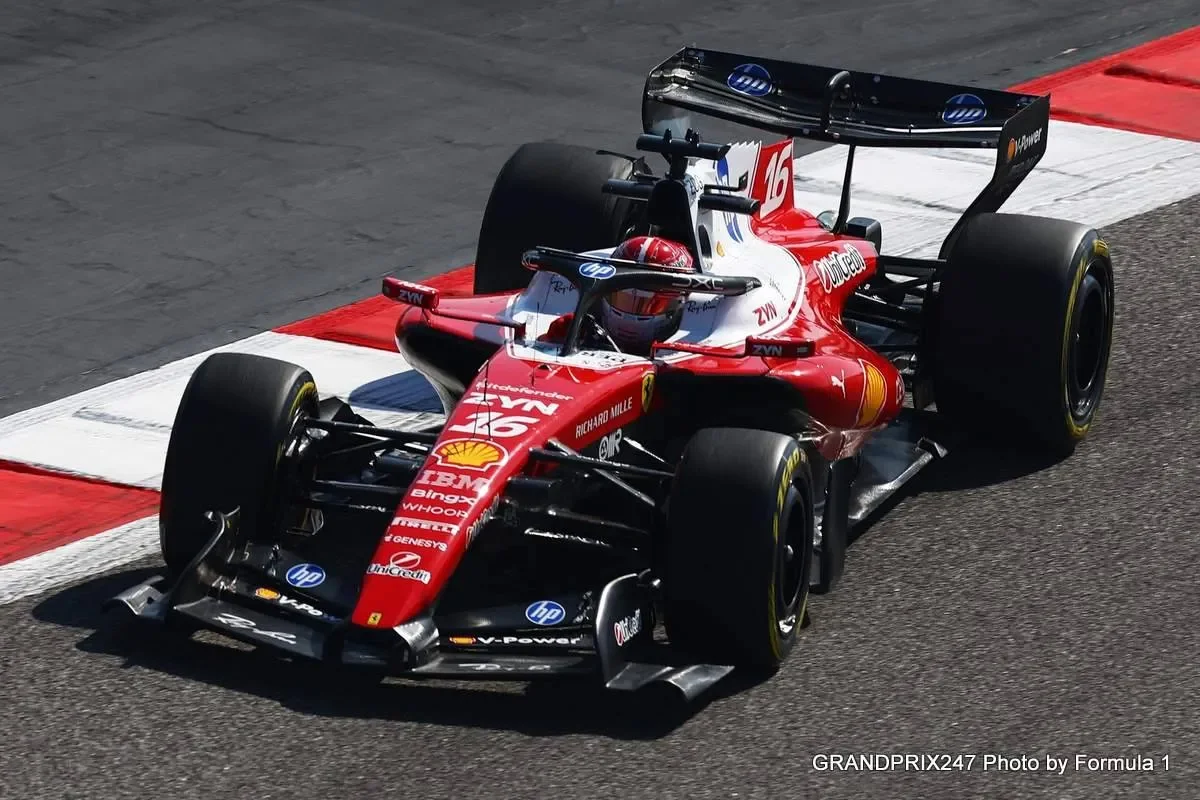
Russell secured the quickest lap with a time of 1m33.459s in his #63 Mercedes, narrowly edging out Piastri’s #81 McLaren Mercedes by a mere 0.010 seconds. Despite this close margin, both drivers are yet to fully unlock the potential of McLaren’s cars, engineered by Rob Marshall, suggesting faster times could emerge as testing continues. Charles Leclerc maintained a strong third place, trailing Russell by 0.280 seconds.
Lando Norris, Piastri’s McLaren teammate, followed in fourth with a time 0.593 seconds off the lead, while Kimi Antonelli took fifth place, 0.699 seconds behind Russell. Just outside the top five, Isack Hadjar managed a solid sixth position, ahead of Lewis Hamilton. Carlos Sainz, Gabriel Bortoleto, and Colapinto also placed in the top ten, showing a competitive midfield pack.
Midfield Standouts and Team Performances
Alex Albon put Williams ahead in 11th place, followed by Racing Bulls’ Liam Lawson and Bearman. Pierre Gasly completed the lineup for Alpine, while Stroll rounded out this segment of the standings. Further back, Esteban Ocon positioned Haas 16th, with Fernando Alonso, Nico Hulkenberg, and Arvid Lindblad making notable mileage. Lindblad notably logged the second-highest number of laps for the day at 75. The Cadillac duo of Valtteri Bottas and Sergio Perez closed the order, reflecting ongoing adjustments within their teams.
Driver Rotations and New Procedure Trials
Most teams switched their drivers before the day’s second session, with Red Bull as the exception, keeping Hadjar behind the wheel of the RB22 because of limited morning track time due to car maintenance. As the session concluded, all teams participated in a trial for a revised race start light procedure intended for 2026. This included two formation laps and a new sequence where five seconds of blue lights signal the start, allowing cars to properly spool their turbochargers before the main start lights illuminate.
The demonstration proceeded smoothly, with no engine stalls, alleviating concerns about potential complications in turbocharger readiness during race starts.
Implications for the Upcoming Formula 1 Season
The early dominance of Russell and Piastri underscores the continuing influence of Mercedes-powered vehicles on the field, while the promising lap times by McLaren’s pair indicate close competition ahead. The successful test of the updated starting light procedure signals preparedness for evolving race protocols, aimed at improving safety and fairness at race commencements. As testing progresses at Bahrain, teams are expected to refine their setups and strategies, offering a glimpse of the battles likely to unfold during the season.
Race Start Procedure test for 2026! ‼️ pic.twitter.com/Wkkkjrioyl
— deni (@fiagirly) February 18, 2026
