
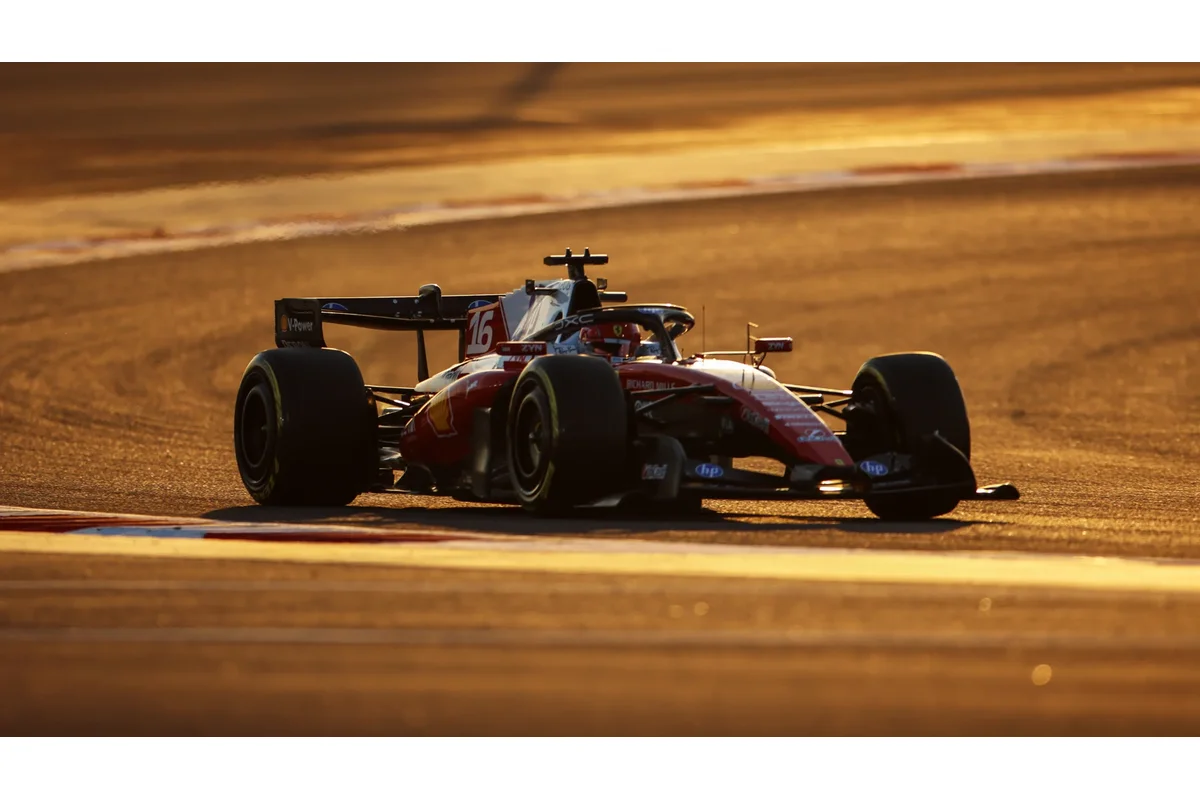
Charles Leclerc completed the final day of preseason Formula 1 testing in Bahrain by setting the fastest lap, drawing attention to Ferrari’s strong potential for the 2026 season. His remarkable performance positioned him nearly a full second ahead of second-place Lando Norris, reinforcing the narrative of Ferrari’s return as a leading contender as the season opener in Melbourne approaches on March 8.
Leclerc’s Commanding Pace in Final Testing Session
Leclerc’s fastest time in Bahrain exceeded competitors by a significant margin, finishing almost 0.9 seconds ahead of McLaren’s Lando Norris and nearly a full second quicker than Mercedes’ George Russell. These times were set during the closing hour of the final day, signaling Ferrari’s notable progress under the new regulations. The Italian team’s strongest showing in many years stokes optimism among fans, recalling Ferrari’s last drivers’ title from 2007 and constructors’ crown from 2008.
Throughout the concluding session, Leclerc continuously posted the fastest laps, showcasing an exceptional start off the line. This suggests Ferrari holds an edge over rivals in race launch performance, partly attributed to their smaller turbocharger design offering improved turbo spool-up times.
In addition to his pace, Leclerc completed 132 laps, including a comprehensive race simulation that highlighted his consistency and endurance. His efforts place him and seven-time world champion teammate Lewis Hamilton in the spotlight ahead of the Australian Grand Prix, setting expectations for a tightly contested championship battle.
Assessing Mercedes’ and Other Teams’ Testing Output
Despite Russell’s strong lap times, there is widespread skepticism within the paddock regarding Mercedes’ true pace, as the team appeared to hold back their full performance throughout the Bahrain sessions. Russell himself described his practice starts this year as
worse than my worst ever start,
underscoring ongoing challenges in the new turbo era. His teammate Kimi Antonelli also struggled with race starts, especially compared to Ferrari’s improved launch performance.
Mercedes’ cautious approach leaves uncertainty over how McLaren and Red Bull will rank relative to Ferrari and Mercedes once the season begins. Norris’ efforts, which placed him second fastest on the final day, showed signs of progress with improved starts after earlier struggles. Meanwhile, Red Bull’s Max Verstappen managed a solid third-best time, signaling the team remains competitive in the evolving landscape.
Struggles of Aston Martin Highlighted During Testing
The final day also cast a spotlight on Aston Martin’s difficulties, with their season marred by severe power unit problems linked to their new Honda engine partnership. The team managed only six laps before cutting testing short due to unresolved issues. Despite significant investment from Canadian owner Lawrence Stroll and guidance from F1 design figure Adrian Newey, Aston Martin’s prospects remain grim for the near term.
Aston Martin has faced challenges integrating the new power unit and developing a bespoke gearbox following their split from Mercedes. This has dampened hopes of immediate title contention under 2026 regulations, with concerns growing that the team will fight merely to avoid trailing at the back of the grid. Early-season struggles suggest the promised step forward is unlikely before the first race in Melbourne.
Additional Team Performances and Testing Highlights
Alpine, powered by customer engines supplied by Ferrari, logged substantial mileage with Pierre Gasly contributing 118 laps. However, it was the Ferrari-powered Haas team that led track time, with Oliver Bearman and Esteban Ocon accumulating a combined total of 170 laps during testing.
Rookie driver Arvid Lindblad also impressed by completing 165 laps for Racing Bulls, building valuable experience ahead of his F1 debut. Williams driver Carlos Sainz completed 141 laps despite the team missing earlier private testing events, indicating progress in preparation.
Manufacturer debutants Audi, having taken over the Sauber operation, achieved a productive 135 laps. Similarly, new team Cadillac managed 99 laps split between experienced drivers Sergio Perez and Valtteri Bottas, signaling a solid foundation for their entry into the championship.
Final Lap Times from Bahrain Testing
The conclusive timing sheets reflect the breadth of activity and performance levels across the teams:
- Charles Leclerc (Ferrari) – 1:31.992, 132 laps
- Lando Norris (McLaren) – 1:32.871, 47 laps
- Max Verstappen (Red Bull) – 1:33.109, 65 laps
- George Russell (Mercedes) – 1:33.197, 82 laps
- Pierre Gasly (Alpine) – 1:33.421, 118 laps
- Oliver Bearman (Haas) – 1:33.487, 88 laps
- Gabriel Bortoleto (Audi) – 1:33.755, 71 laps
- Kimi Antonelli (Mercedes) – 1:33.916, 49 laps
- Arvid Lindblad (Racing Bulls) – 1:34.149, 165 laps
- Carlos Sainz (Williams) – 1:34.342, 141 laps
- Oscar Piastri (McLaren) – 1:34.352, 66 laps
- Esteban Ocon (Haas) – 1:34.494, 82 laps
- Isack Hadjar (Red Bull) – 1:34.511, 59 laps
- Valtteri Bottas (Cadillac) – 1:35.290, 38 laps
- Nico Hulkenberg (Audi) – 1:36.019, 64 laps
- Sergio Perez (Cadillac) – 1:40.842, 61 laps
- Lance Stroll (Aston Martin) – no time set, 6 laps
Implications for the Upcoming Season
The dominance exhibited by Charles Leclerc and Ferrari in the final tests positions them as early favourites under the sweeping Formula 1 rules introduced for 2026, particularly due to advances in engine packaging and launch control. However, the lack of full transparency from Mercedes and uncertainty about Red Bull and McLaren’s final capabilities suggest the championship battle remains open.
Aston Martin’s difficulties reflect challenges teams face adapting to the new hybrid power units and bespoke components, reinforcing that not all teams are equally prepared for the regulatory overhaul. As the sport moves forward, several teams will continue developing their packages, making the opening race in Melbourne a critical indicator of true performance levels.
With testing complete, all eyes will be on how Charles Leclerc and Ferrari translate this Bahrain pace into race success as the drivers and constructors fight for the first major trophies in nearly two decades.
