
The 2026 Formula 1 season marks a pivotal moment in the sport’s history, with sweeping technical changes poised to reshape competition across the grid. Set to unfold worldwide throughout the year, these regulations create a more level playing field, where every team starts from a comparable baseline. This Formula 1 2026 preview explores how new cars, engines, and rules promise to intensify battles for supremacy in unprecedented ways.
Formula 1 has traditionally been about pushing the limits of speed and innovation, but the 2026 overhaul is exceptional. The sport’s traditional combustion engines are now balanced with powerful electric components, and active aerodynamics will redefine driver strategies. Teams and drivers alike face a season where established reputations carry less weight and results will become the only currency of success.
Technical Innovations and Their Impact on Racing
The 2026 regulations introduce substantial innovations aimed at enhancing speed, safety, and environmental sustainability. The cars themselves will be smaller and lighter, shedding 30 kilograms compared to previous models. Their reduced size and weight will deliver quicker response times and sharper cornering, increasing the spectacle for fans.
The power units have undergone a revolutionary redesign, featuring a near-even split between electric and petrol power. Electric systems are tripled in strength, while traditional combustion engines run exclusively on sustainable fuels, signaling Formula 1’s commitment to greener racing without abandoning its heritage. This hybrid approach is expected to make races more dynamic and strategic.
Six engine manufacturers will participate in 2026, intensifying competition at the powertrain level. Ferrari, Mercedes, Renault, Honda, Audi, and Ford (in partnership with Red Bull) will supply engines, offering teams a variety of technically advanced options and fostering fierce rivalry behind the scenes.
One of the more visible changes will be the introduction of active aerodynamics, allowing both front and rear wings to adjust dynamically between cornering and straight-line modes. This smarter system will enhance grip and increase top speeds, moving beyond the current Drag Reduction System (DRS) seen only on rear wings.
Adding to on-track excitement, a Manual Override System grants drivers an extra burst of electric power when they are within one second of the car ahead, making overtaking more frequent and unpredictable. This feature mimics a more controlled and tactical form of DRS but requires precise energy management.
Insights from Industry Experts on the 2026 Shift
With these changes, experts in the paddock anticipate a season where energy management and strategic intelligence will be paramount. Karun Chandhok, a former Formula 1 driver of Indian origin who has closely studied the new cars on simulators and in team briefings, offers a grounded perspective amidst the hype.
Chandhok points out a significant shift in qualifying sessions, where managing hybrid energy systems complicates the previously “pure” nature of a one-lap sprint. Drivers may not be able to push flat out as freely, depending on the circuit’s characteristics.
“In races, drivers have always managed something,”
Chandhok notes, referring to past challenges such as turbo boost control, fuel conservation, and tire wear. Now, qualifying laps will join that list of strategic demands, but not universally—circuits like Bahrain with multiple braking zones allow batteries to recharge rapidly, easing energy constraints, whereas venues like Melbourne may prove tougher.
Chandhok describes driving the new cars as “incredibly quick,” crediting their lighter weighting, enhanced hybrid power, and active aerodynamics for notable performance gains, especially up to speeds of around 290 km/h. Yet beyond this, energy limitations become more apparent, requiring smarter racecraft.
“This era will reward intelligent drivers,”
he explains.
“Think ahead, manage your energy wisely, and you gain an edge.”
Failing to do so could leave a driver vulnerable several corners later, turning races into a complex mental chess match.
Addressing fans’ concerns about potential power boosts running out during overtakes—as seen in some pre-season testing footage—Chandhok reassures that such scenarios are often misunderstood. The boost system has long been a component of Formula 1 powertrains under various guises, and the clips usually capture the difference between laps focused on energy harvesting versus outright pushing.
“Just watch it for what it is,”
Chandhok advises, emphasizing that deep technical analysis belongs to those inside the paddock. Despite all changes, he stresses,
“The essence of the sport has not changed.”
Team Profiles: Drivers and Prospects for the New Season
McLaren — Lando Norris & Oscar Piastri
McLaren returns as the reigning World Champions, with Lando Norris clinching his first title narrowly in 2025 after a gripping duel with Max Verstappen. Norris proudly displays the number 1 on his car. His teammate Oscar Piastri, winner of seven races last year, remains a fierce competitor who narrowly missed the championship crown. Both drivers operate under McLaren’s famous papaya rules, granting them equal status within the team—a dynamic likely to inspire captivating intra-team rivalry in 2026.
Red Bull Racing — Max Verstappen & Isack Hadjar
Red Bull is determined to reclaim their championship throne with Max Verstappen, a four-time world champion and recent title favorite. Verstappen staged an incredible comeback last season, closing a 104-point gap to nearly take the crown, making him a formidable contender for 2026. The team’s second seat is filled by French rookie Isack Hadjar, promoted from the sister team Racing Bulls. Hadjar faces high expectations to establish himself amid Red Bull’s intense pressure cooker environment, where many promising drivers have found the transition challenging.
Ferrari — Charles Leclerc & Lewis Hamilton
Ferrari enters 2026 eager to reverse last year’s disappointing fourth-place finish in the Constructors’ Championship. Charles Leclerc enters his eighth season with Ferrari still hunting for more victories, while Lewis Hamilton embarks on his second year with the team after a difficult debut that yielded no podiums. Early in the previous season, Ferrari shifted focus toward the 2026 regulations, betting on long-term gains. If their gamble pays off, they could become serious title contenders once again.
Mercedes — George Russell & Kimi Antonelli
Mercedes approaches the season with cautious optimism. George Russell nearly fought for the title late into 2025, and his young teammate Kimi Antonelli, an Italian teenager showing flashes of brilliance in his rookie season, is poised to improve. The key question is whether Mercedes has engineered a car capable of consistently competing for wins at the front, a hurdle the team has been striving to overcome.
Aston Martin — Fernando Alonso & Lance Stroll
Aston Martin stands as one of the most intriguing teams heading into 2026, boosted by the arrival of legendary designer Adrian Newey and a new engine partnership with Honda. Yet winter testing revealed severe reliability issues, particularly engine vibrations that have limited the driving time of Fernando Alonso and Lance Stroll due to physical strain. Resolving these problems is essential before Aston Martin can challenge for strong results.
Williams — Carlos Sainz & Alexander Albon
Williams approaches the new season building on positive momentum. They amassed more points last year than in the prior seven combined, with drivers Carlos Sainz and Alexander Albon proving an effective midfield pairing. Sainz’s podium in Azerbaijan and subsequent top finishes underscore the team’s progress under James Vowles’s leadership. The squad quietly believes the gap to the front is narrowing.
Alpine — Pierre Gasly & Franco Colapinto
Alpine experienced a tough 2025, finishing last in the Constructors’ Championship after prioritizing 2026 car development over the previous season’s performance. Pierre Gasly brings experience and resolve as team leader, while Franco Colapinto showed promise in the latter part of the year. Team principal Flavio Briatore has openly set a sixth-place goal in the standings, which could be achievable given the reset in regulations.
Audi — Nico Hulkenberg & Gabriel Bortoleto
Audi continues a patient, long-term approach, with Nico Hulkenberg celebrating his first podium after 239 starts last year. Alongside him, rising Brazilian talent Gabriel Bortoleto looks ready to take another developmental step. Audi’s ambition is clear: they aim to win a championship by 2030, focusing now on consistency and building a competitive foundation.
Racing Bulls — Liam Lawson & Arvid Lindblad
Racing Bulls boasts one of the season’s most captivating lineups. Liam Lawson seeks redemption after a challenging stint with Red Bull in early 2025, while teammate Arvid Lindblad enters the sport as the only rookie at 18 years old, already the youngest race winner in Formula 2 history. Heavy expectations surround Lindblad, and his adaptation will be a compelling storyline throughout the year.
Haas — Esteban Ocon & Ollie Bearman
Haas has quietly matured into a team capable of pressuring their midfield rivals. Veteran Esteban Ocon offers reliability and experience, while Ollie Bearman emerges as one of the sport’s more exciting young drivers. Haas believes its new car incorporates lessons learned from previous seasons, with ambitions to lead the midfield battles.
Cadillac — Sergio Perez & Valtteri Bottas
As newcomers, Cadillac field experienced drivers Sergio Perez and Valtteri Bottas, both returning after a one-year hiatus. Their combined knowledge injects credibility into the fledgling team, which expects a learning curve during its debut season but aims to establish a strong foundation quickly.
Highlights from Australian Grand Prix Qualifying
Qualifying in Melbourne brought clarity to the championship picture. Mercedes answered earlier uncertainties emphatically, with George Russell securing pole position—the ninth of his career—dominating all qualifying stages. His teammate Kimi Antonelli completed a rare front-row lockout, the first for Mercedes since the 2024 British Grand Prix, signaling a highly competitive package.
Russell attributed the performance to favorable cooler track temperatures, which suited the Mercedes car perfectly.
“It really came alive this afternoon,”
he said.
Antonelli’s front-row start was remarkable given a crash in final practice damaged his car extensively, yet his team managed rapid repairs allowing him to make the session. His strong qualifying effort confirmed his growing potential.
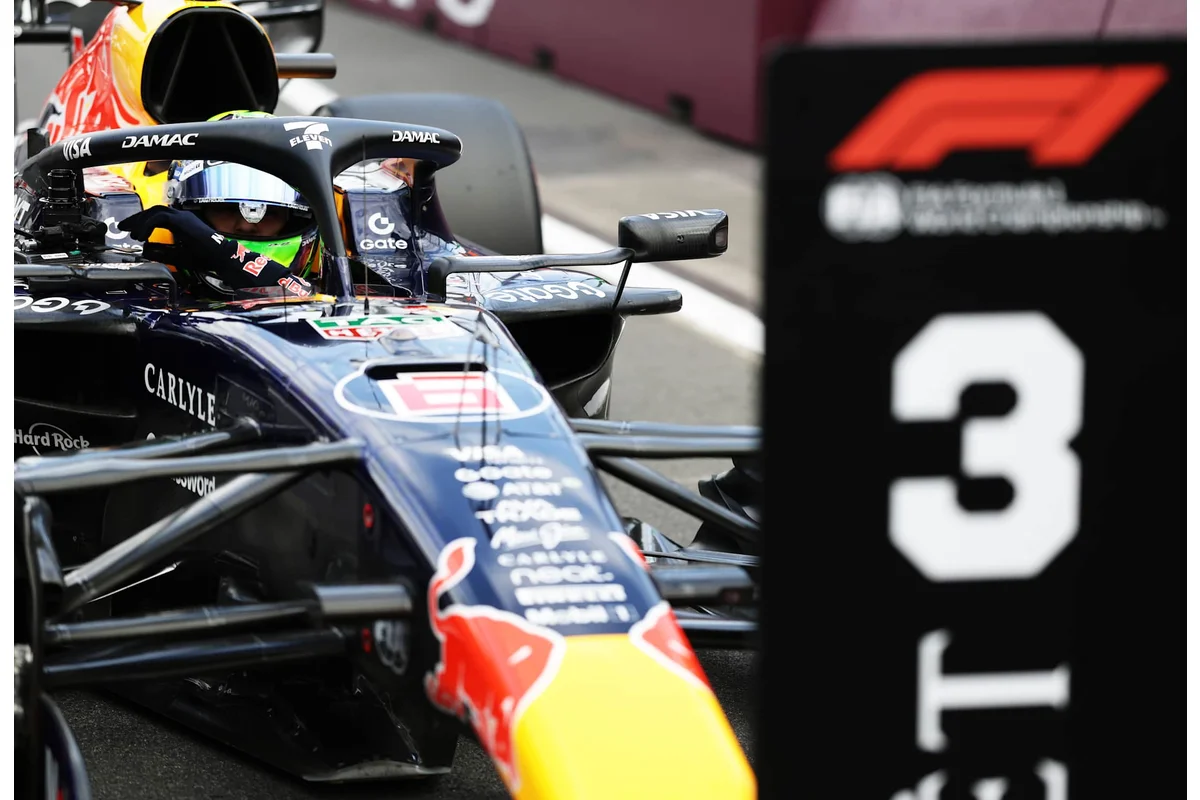
Midfield storylines centered on Red Bull’s new driver Isack Hadjar, who impressed by qualifying third on his senior team debut. However, veteran Max Verstappen suffered a dramatic brake lockup in Q1, causing a crash that ended his session and relegated him to start at the back of the grid—a major setback for the title favorite.
Ferrari and McLaren appeared closely matched in raw pace behind the frontrunners. Charles Leclerc qualified fourth, with Oscar Piastri, Lando Norris, and Lewis Hamilton tightly packed from fifth through seventh within a mere 0.15 seconds.
Racing Bulls showed genuine progress with Liam Lawson in eighth and rookie Arvid Lindblad ninth, marking a strong introduction to the sport for the teenager.
The race ahead promises to be an intense test of speed, strategy, and adaptability as new regulations challenge drivers and teams alike.
Looking Forward: The Road Ahead in Formula 1’s New Era
The 2026 Formula 1 season is set to be transformative, with innovation influencing every aspect of competition. The combination of radically redesigned cars, hybrid powertrains, and strategic energy management will demand unprecedented adaptability from drivers and engineers.
Teams like McLaren and Mercedes begin as strong favorites, but with so many educated guesses in a redefined technical landscape, underdogs may rise, and former powerhouses could struggle.
Fan anticipation is high, as races have the potential to feature more overtaking, tighter battles, and evolving storylines fostered by the intricate interplay between man, machine, and strategy. How quickly teams like Aston Martin can solve early-season reliability woes or how rookies such as Arvid Lindblad adapt may decide championship trajectories.
Ultimately, this season could herald a new balance of power in Formula 1, where smart thinking and technical mastery become as crucial as raw speed—defining a captivating and unpredictable future for the sport.
