
Oscar Piastri has raised alarms that Formula 1 drivers might routinely lose six or seven positions during race starts under the 2026 regulations, emphasizing the need for urgent action before the Australian Grand Prix in Melbourne. This warning comes after drivers practiced race starts at the Bahrain pit lane and concluded Day Three on the grid, revealing persistent challenges linked to the new power unit configurations.
Drivers voiced worries about turbo lag complications during race starts
The complexity of race starts under the new rules has sparked unease across the F1 paddock. George Russell described the launches as “not straightforward,” while Esteban Ocon highlighted the turbo lag as a significant concern, stating,
“the turbo lag is a very big topic”
. Alpine’s Pierre Gasly also hinted at the potential for dramatic race starts saying,
“Well, I advise you to be sitting with your TV on in Australia, because [it] could be one that everybody remembers,”
further emphasizing the unpredictable nature of the new launches.
These difficulties stem largely from the removal of the MGU-H component, which previously helped suppress turbo lag at lower engine speeds. Without it, drivers require considerably more time to get their cars into the optimal starting condition, intensifying the risk of poor launches.
Turbo lag challenges could result in significant position losses off the line
Piastri expressed his concern that these technical changes might cause drivers to lose multiple spots on the opening meters of a race. Drawing parallels with the anti-stall systems seen in Formula 2 races and referencing his own experience at last year’s Azerbaijan Grand Prix, he explained that the starts this season could be notably trickier.
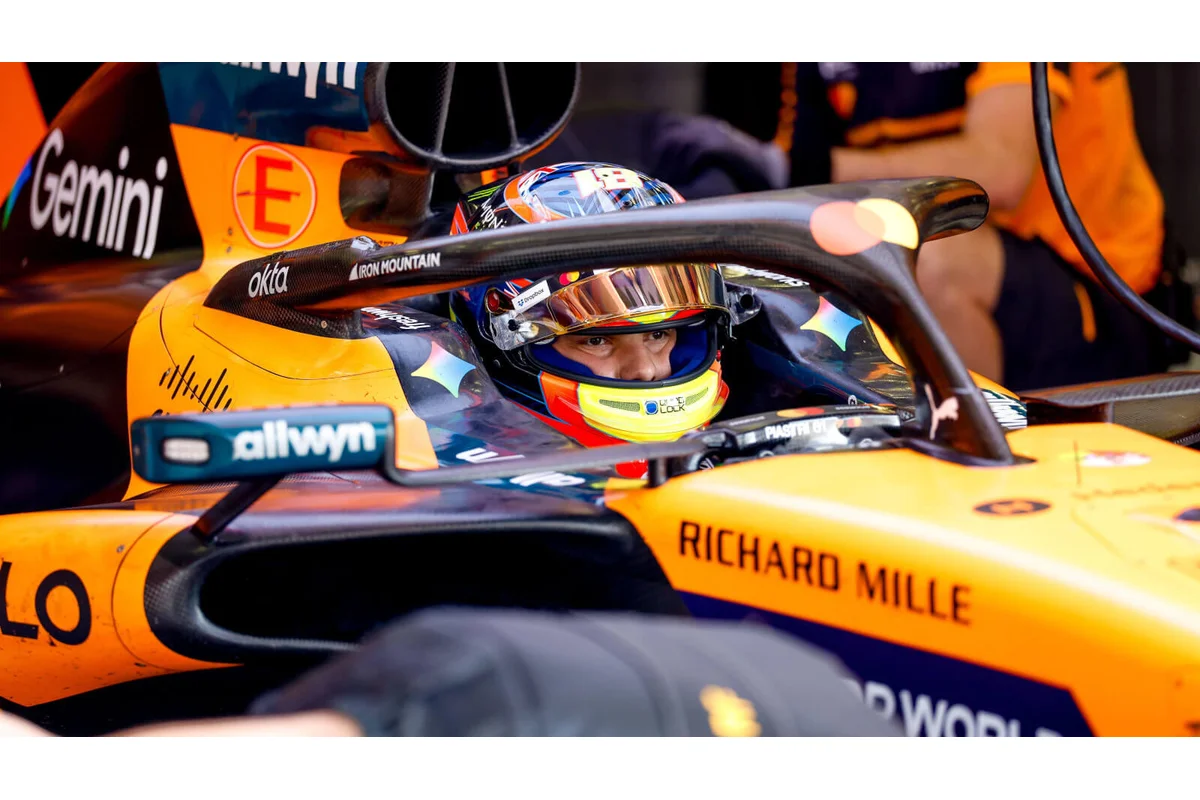
He said,
“Everyone’s going to need different things for the start, and to be completely honest with you, I’m not sure any of us know exactly what we need yet,”
underscoring the uncertainty facing drivers. He added,
“I think we’ve probably got rough ideas, I’m sure we’ll find a way to do a proper start.”
Highlighting how the differences between good and bad starts were previously limited to minor issues like wheelspin or reaction times, Piastri warned,
“This year, it could be effectively like an F2 race where you almost go into anti-stall or something. You’re not just losing five metres or so, you could be losing six or seven spots if it goes wrong.”
Calls for Formula 1 and FIA to address start concerns before season opener
With the 2026 season approaching, these issues are scheduled for discussion at the forthcoming F1 Commission meeting. The FIA has already implemented various technical checks during the Bahrain test sessions to better understand the situation. Piastri emphasized the complexity of achieving safe and competitive starts in the new era, urging prompt attention.
He stated,
“Starts need to be addressed, because, probably as we’ve all seen, it’s a pretty complicated process now to have a safe start, let alone a competitive one,”
and continued,
“So it’s something that we’ll talk about between now and Melbourne, I’m sure.”
Piastri also pointed to other areas for improvement ahead of the season, noting,
“And there’s plenty of topics to address, starts, overtaking.”
He acknowledged that overtaking dynamics would also change with the new regulations:
“Overtaking is certainly going to be different as well.”
Discussions may include altering the start light procedure or introducing a minimum or delayed minimum time for the last car to settle on the grid, aiming to ensure orderly and safer launches.
Lando Norris shares similar concerns about launch challenges
Piastri’s McLaren teammate and current world champion Lando Norris also spoke about the increased difficulty of race starts this season. He explained,
“It’s more tricky the starts, because of the turbo and all of these things,”
pointing to the technological challenges, including a reduced battery level available over a lap.
Norris added,
“So yeah, certainly a bigger challenge, more demanding on the driver to kind of get things right.”
Implications for the 2026 season and potential future resolutions
The warnings from Oscar Piastri, George Russell, Esteban Ocon, and other drivers highlight the significant influence the 2026 power unit changes will have on race starts. The possibility of dropping multiple positions immediately upon launch introduces a heightened level of unpredictability and risk, which could affect race strategies and overall competition.
As Formula 1 officials and teams work through these challenges, technical and procedural adjustments are expected to be key topics before the campaign begins in Melbourne. Ensuring safer and more consistent race starts will be critical to maintaining fair competition and driver safety, with ongoing monitoring throughout the season likely.
